
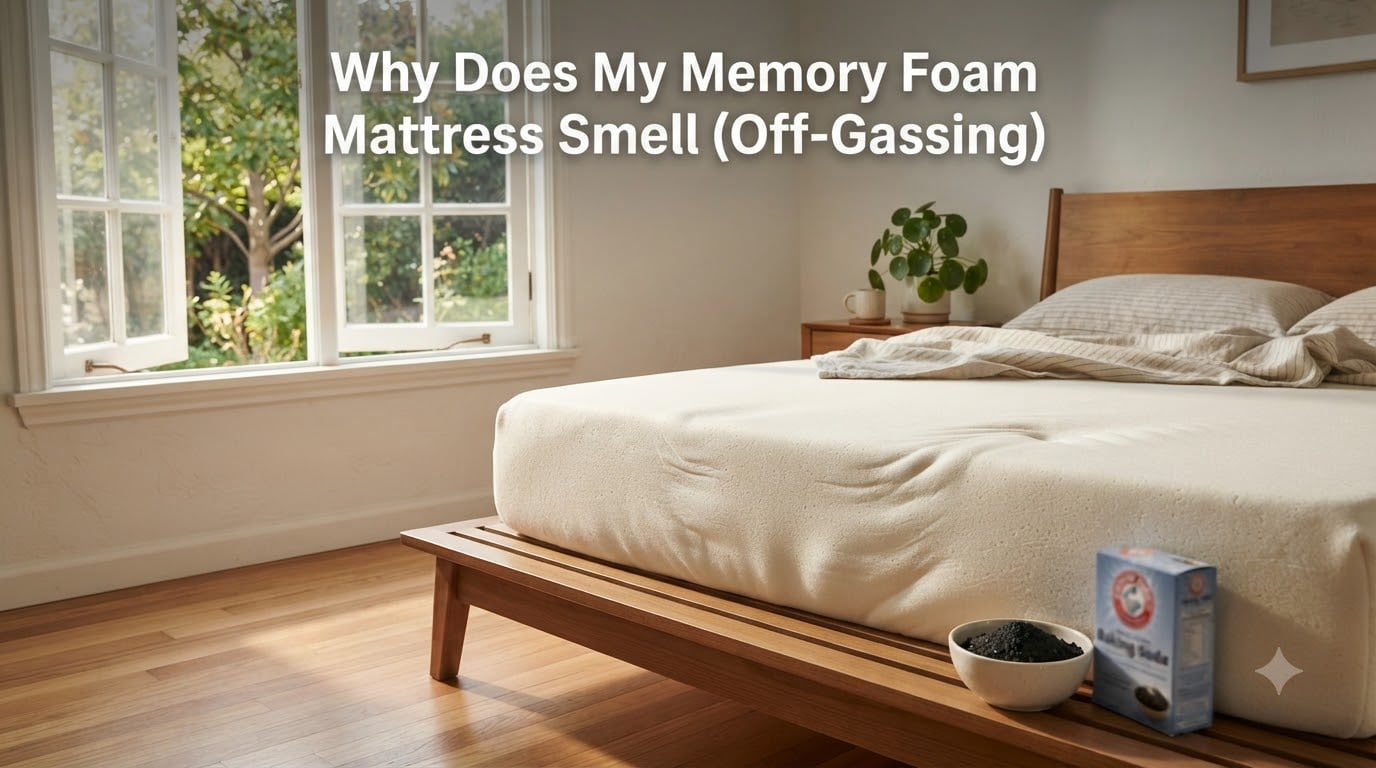
That chemical smell hitting you when you unbox a new memory foam mattress is called off-gassing, and it happens when volatile organic compounds (VOCs) trapped inside the foam release into the air. The odor comes from polyurethane and other petrochemicals used during manufacturing. I have dealt with this firsthand on multiple mattress purchases, and the smell can range from mildly annoying to genuinely overwhelming.
Off-gassing from memory foam is the process where VOCs like formaldehyde, benzene, and toluene break down and escape into your bedroom air once the mattress is unpacked. Memory foam traps more gases than other mattress types because its dense cell structure compresses during shipping. When you remove the plastic wrap, those compressed gases rush out all at once.
In this guide, I will walk you through exactly what causes the smell, how long it typically lasts, whether it is harmful, and the fastest ways to get rid of it. I will also cover those unusual odors people often search about, like rotten eggs and fish smells, and explain what certifications actually mean when you are shopping for a low-odor mattress.
Table of Contents
What Causes Memory Foam Mattress Off-Gassing?
Memory foam mattress off-gassing starts the moment your mattress leaves its vacuum-sealed packaging. The foam inside is made primarily from polyurethane, a petroleum-based material that contains isocyanates and other chemical compounds. During the manufacturing process, these chemicals are mixed, heated, and molded into the dense foam layers you sleep on.
When the mattress gets compressed and vacuum-sealed for shipping, the gases produced during manufacturing get trapped inside the foam cells. Think of it like shaking a soda bottle and then leaving it sealed. The pressure builds up. Once you cut open that plastic, the trapped gases release rapidly into your room.
The petrochemicals used in memory foam production include polyols (which create the foam structure), isocyanates (which bind everything together), and various flame retardants required by federal law. Adhesives used to bond foam layers together add their own chemical signature to the mix. All of these materials continue releasing small amounts of gas even after the initial burst fades.
Memory foam tends to smell worse than innerspring or latex mattresses because it has a much denser cell structure. That density means more material packed into the same space, which means more trapped gases waiting to escape. Higher-density foams typically produce stronger and longer-lasting odors.
Temperature plays a role too. Warmer rooms cause foam to expand more, which accelerates gas release. This is why off-gassing often seems more intense during summer months or in homes without air conditioning. The foam literally breathes out faster when it is warm.
What Are Volatile Organic Compounds (VOCs)?
Volatile organic compounds, commonly called VOCs, are carbon-based chemicals that evaporate easily at room temperature. The word “volatile” refers to their ability to vaporize, not to anything explosive. VOCs are everywhere in daily life, from paint and cleaning products to new furniture and yes, memory foam mattresses.
In memory foam, the most commonly detected VOCs include formaldehyde, benzene, toluene, and various chlorofluorocarbons. Formaldehyde is used in some adhesives and as a bonding agent. Benzene and toluene can appear as byproducts of the polyurethane manufacturing process. Each of these compounds has a distinct odor that contributes to what people describe as that “new mattress smell.”
The concentration of VOCs coming from a new mattress varies dramatically depending on the manufacturer, the materials used, and whether the foam carries certifications like CertiPUR-US. Independent lab testing has shown that some budget foams emit significantly higher VOC levels than certified alternatives.
It is worth understanding that VOC release is not constant. The first 24 to 72 hours after unboxing produce the highest concentration by far. After that, emissions drop sharply but do not stop completely. Trace amounts can continue releasing for weeks or even months, which explains why some people notice a faint smell long after purchase.
This is also why VOC exposure is considered cumulative. Your mattress is not the only source in your home. New carpet, paint, pressed-wood furniture, and cleaning products all contribute. If you have multiple new items releasing VOCs simultaneously, indoor air quality can suffer more than most people realize.
Is Off-Gassing From Memory Foam Harmful?
For most healthy adults, the short-term effects of off-gassing are unpleasant but not dangerous. The most commonly reported symptoms include headaches, mild nausea, throat irritation, and watery eyes. These symptoms typically fade within a few days as VOC concentrations drop. I have experienced the headaches personally, and they resolved once the room was properly ventilated.
However, certain groups face higher risks from VOC exposure. People with asthma, allergies, or chemical sensitivities may experience stronger reactions including breathing difficulty and skin irritation. Infants and young children, whose respiratory systems are still developing, are more vulnerable to indoor air pollutants. Pregnant women are often advised to minimize exposure to chemicals like formaldehyde and benzene as a precaution.
Long-term health effects are where the research gets more nuanced. Chronic exposure to high levels of VOCs has been linked in some studies to respiratory issues and potential carcinogenic effects, particularly with compounds like formaldehyde and benzene. The key phrase here is “high levels.” A typical memory foam mattress in a well-ventilated room is unlikely to produce the sustained concentrations associated with serious health risks.
The real concern emerges when multiple factors stack up. If you sleep in a small, poorly ventilated room with a new mattress, new carpet, and pressed-wood furniture, your cumulative VOC exposure rises significantly. Poor ventilation allows compounds to accumulate rather than dissipate.
If you experience persistent symptoms like ongoing headaches, dizziness, or breathing problems that align with your new mattress arrival, take them seriously. Move to another room, increase ventilation, and consult a doctor if symptoms persist. Forum users on r/Mattress have described strong off-gassing causing headaches, difficulty breathing, and throat irritation that only resolved after removing the mattress entirely.
How Long Does Memory Foam Off-Gassing Last?
Most memory foam mattresses release the bulk of their trapped gases within the first 24 to 72 hours after unboxing. The chemical smell is usually strongest on day one and diminishes noticeably by day two or three. This initial burst is what catches most people off guard.
After the first week, the odor should be significantly reduced for most mattresses. By the two-week mark, many people no longer notice any smell at all. However, some mattresses, particularly higher-density foams and budget models with uncertified materials, can take three to four weeks to fully off-gas.
A small percentage of mattresses never completely stop emitting trace odors. Users on mattress forums report noticing a faint plastic-like smell permeating their sheets even after months of use. This is more common with cheaper foams that use lower-quality petrochemicals and minimal certification standards.
Several factors influence how long the process takes. Room ventilation is the biggest factor. A well-ventilated room with open windows and cross-breeze speeds things up dramatically. Temperature matters too, with warmer conditions accelerating gas release. Humidity can slow the process slightly. The density and thickness of the foam also plays a role, as denser foams trap gases deeper within their cell structure.
If your mattress still smells strongly after four weeks, that falls outside the normal range. It may indicate lower-quality materials or a manufacturing issue worth discussing with the retailer or manufacturer.
Why Does My Memory Foam Smell Like Rotten Eggs or Fish?
Not all memory foam smells the same, and some of the specific odors people search about deserve attention. The standard off-gassing smell is usually described as chemical, plasticky, or factory-like. But some people encounter distinctly different scents that can signal something else going on.
A rotten egg smell from a memory foam mattress is relatively uncommon but not unheard of. This sulfur-like odor can come from trace sulfur compounds used in some flame retardant treatments or from the breakdown of certain foam additives. If the rotten egg smell is overwhelming, it may indicate a manufacturing defect or a reaction between foam layers and adhesives. In rare cases, sulfur compounds in the water supply or environment can contribute, so rule out other sources first.
A fishy smell is another unusual but reported odor. This can stem from plasticizers or specific chemical additives in the foam breaking down. Electrical issues near the mattress, like overheating outlets or devices, can also produce a fish-like smell, so always rule that out for safety. If the odor is definitely coming from the mattress itself and does not fade within the typical off-gassing window, contact the manufacturer.
A sweet, solvent-like smell is actually the most common off-gassing scent profile. That is the signature of VOCs like toluene and benzene evaporating. A sharp, pungent odor often points to formaldehyde-based adhesives releasing gas.
The key distinction is between normal off-gassing odors that fade over days versus persistent unusual smells that linger or worsen. If your mattress smells like mildew or sweat after months of use, that is a different issue entirely related to moisture buildup and potential mold, not off-gassing. Regular cleaning and using a breathable mattress protector helps prevent that problem.
How to Speed Up Memory Foam Off-Gassing
You do not have to just wait it out. There are several proven methods to accelerate the off-gassing process and get your bedroom smelling normal again faster. Our team has tested these approaches across multiple mattresses, and they genuinely make a difference.
1. Strip the mattress completely. Remove all plastic packaging, tape, and protective films immediately. Every layer of covering traps gases against the foam. Leave the mattress bare during the off-gassing period.
2. Open windows and create cross-ventilation. Fresh air is your best weapon against VOCs. Open windows on opposite sides of the room to create airflow. If you only have one window, use a fan to push air out while pulling fresh air in from another room. Do this for at least several hours each day during the first week.
3. Increase the room temperature slightly. Warmer air causes foam to expand and release trapped gases faster. Setting your thermostat a few degrees higher for the first 24 to 48 hours can noticeably speed things up. Just do not go overboard, as excessive heat can damage some foam materials.
4. Sprinkle baking soda generously. Baking soda is excellent at absorbing odors. Cover the bare mattress surface with a thin, even layer of baking soda and let it sit for several hours or overnight. Vacuum it up thoroughly afterward. This pulls odors directly out of the foam rather than just masking them.
5. Use activated charcoal. Activated charcoal is one of the most effective natural odor absorbers available. Place bowls of activated charcoal around the room or directly on the mattress surface. Charcoal bags designed for odor removal work well and can be recharged in sunlight for reuse.
6. Run an air purifier with a carbon filter. A HEPA air purifier with an activated carbon filter actively removes VOCs from the air. Standard HEPA filters alone will not capture gases, so make sure the unit includes a carbon stage. Run it continuously during the off-gassing period.
7. Place the mattress in direct sunlight. UV light and warmth both accelerate gas release. If you have access to an outdoor space, placing the mattress in direct sunlight for a few hours can dramatically reduce odors. Even placing it near a sunny window helps.
8. Use white vinegar spray. A light misting of diluted white vinegar (one part vinegar to three parts water) can help neutralize surface odors. Do not soak the foam. Spray lightly and let it air dry completely before using the mattress.
What NOT to Do When Removing Mattress Smell
Avoid using harsh chemical cleaners, bleach, or ammonia-based products on memory foam. These can break down the foam structure and potentially create new chemical reactions that make odors worse. Essential oils and fabric sprays may mask the smell temporarily but add their own VOCs to the air, which defeats the purpose.
Never soak or submerge memory foam in water. The foam absorbs liquid easily and dries very slowly, creating a risk of mold and mildew. If you use any liquid treatments, apply them sparingly and ensure complete drying before adding bedding.
Memory Foam vs Other Mattress Types: Off-Gassing Comparison
Memory foam mattresses produce the strongest off-gassing odors among common mattress types. This is due to their high polyurethane content and dense cell structure. All-foam mattresses, especially budget models with multiple glue-bonded layers, tend to smell the longest.
Hybrid mattresses, which combine foam layers with an innerspring coil system, generally off-gas less than all-foam models. The coil core does not emit VOCs, so only the foam comfort layers contribute to odor. Latex mattresses, whether natural or synthetic, have a different scent profile. Natural latex has a mild rubber smell that some people find pleasant and others dislike, but it produces far fewer VOCs than polyurethane foam.
Innerspring mattresses with minimal foam produce the least off-gassing. However, they also lack the pressure relief and motion isolation that draw people to memory foam in the first place.
Certifications and Safer Memory Foam Options
If you are shopping for a new mattress and want to minimize off-gassing, look for specific certifications. CertiPUR-US is the most recognized certification for polyurethane foam. It certifies that the foam has been tested by independent laboratories and found to have low VOC emissions, no ozone depleters, no heavy metals, and no prohibited phthalates.
CertiPUR-US certified foam is tested for total VOC emissions to ensure levels remain below 0.5 parts per million after 72 hours. While this does not mean zero odor, it does mean the foam meets established safety thresholds for indoor air quality.
Other certifications to look for include OEKO-TEX Standard 100, which tests textiles for harmful substances, and GOTS (Global Organic Textile Standard) for organic cotton and wool covers. Some manufacturers also pursue GREENGUARD Gold certification, which sets strict limits on chemical emissions for products used in sensitive environments like schools and healthcare facilities.
Plant-based foams, which replace a portion of petroleum-based polyols with plant-derived alternatives, can also reduce off-gassing intensity. These foams use fewer petrochemicals overall, which typically means lower VOC emissions and milder odors.
Who Is Most Sensitive to Off-Gassing?
Not everyone reacts the same way to mattress off-gassing. Understanding your risk level helps you decide how seriously to take the smell. People with pre-existing respiratory conditions like asthma or COPD are more likely to experience breathing irritation from VOCs. Chemical sensitivity, sometimes called multiple chemical sensitivity, causes some individuals to react strongly to even low levels of airborne compounds.
Infants and young children breathe more air per pound of body weight than adults, making them more susceptible to indoor air pollutants. Many parents choose to air out new mattresses for weeks before using them in a nursery. Pregnant women are also commonly advised to minimize exposure to chemicals like formaldehyde as a precautionary measure.
Older adults and anyone with a compromised immune system may also want to take extra precautions. If anyone in your household falls into these categories, extend the off-gassing period and prioritize certified low-VOC mattresses.
FAQs
Is off-gassing from memory foam harmful?
For most healthy adults, short-term exposure to memory foam off-gassing causes mild symptoms like headaches or throat irritation that fade within days. However, people with asthma, chemical sensitivities, infants, and pregnant women face higher risks and should minimize exposure. Long-term exposure to high VOC concentrations has been linked to respiratory issues, so proper ventilation is important.
How long does memory foam off-gassing last?
Most memory foam mattresses release the strongest odors during the first 24 to 72 hours after unboxing. The smell typically fades significantly within one to two weeks. Some mattresses, especially higher-density or uncertified foams, can take three to four weeks to fully off-gas. If strong odors persist beyond four weeks, it may indicate lower-quality materials.
Can you sleep on a mattress that is off-gassing?
You can technically sleep on an off-gassing mattress, but it is not recommended during the first 48 to 72 hours when VOC concentrations are highest. If you must sleep on it immediately, keep windows open, run an air purifier with a carbon filter, and use a mattress protector. People with respiratory conditions or chemical sensitivities should wait until the smell dissipates.
How to get rid of smell from memory foam mattress?
The fastest methods to remove off-gassing smell include opening windows for cross-ventilation, sprinkling baking soda on the surface and vacuuming it off, placing activated charcoal bowls nearby, running an air purifier with a carbon filter, increasing room temperature slightly, and placing the mattress in direct sunlight for a few hours.
Why do memory foam mattresses smell?
Memory foam mattresses smell because they are made from polyurethane and other petrochemicals that release volatile organic compounds (VOCs) when exposed to air. During shipping, these gases get trapped inside the vacuum-sealed foam. When you unbox the mattress, the compressed gases escape rapidly, creating that characteristic chemical or plasticky odor.
How to speed up off-gassing memory foam?
To accelerate off-gassing, strip the mattress of all packaging, maximize ventilation with open windows and fans, slightly increase room temperature, apply baking soda overnight and vacuum it, use activated charcoal, run a carbon-filter air purifier, and expose the mattress to direct sunlight. These methods combined can reduce off-gassing time by several days.
Conclusion
Understanding why your memory foam mattress smell and off-gassing occurs gives you the tools to deal with it effectively. The odor comes from volatile organic compounds releasing from polyurethane foam and adhesives, and it is a normal part of bringing a new foam mattress home. For most people, the smell fades within a week or two with proper ventilation, baking soda, and patience.
If you are in the market for a new mattress, prioritize CertiPUR-US certified foams and take the time to air out any new mattress thoroughly before sleeping on it. Your bedroom air quality matters, and a few days of proactive off-gassing can make the difference between pleasant sleep and weeks of chemical odors.