
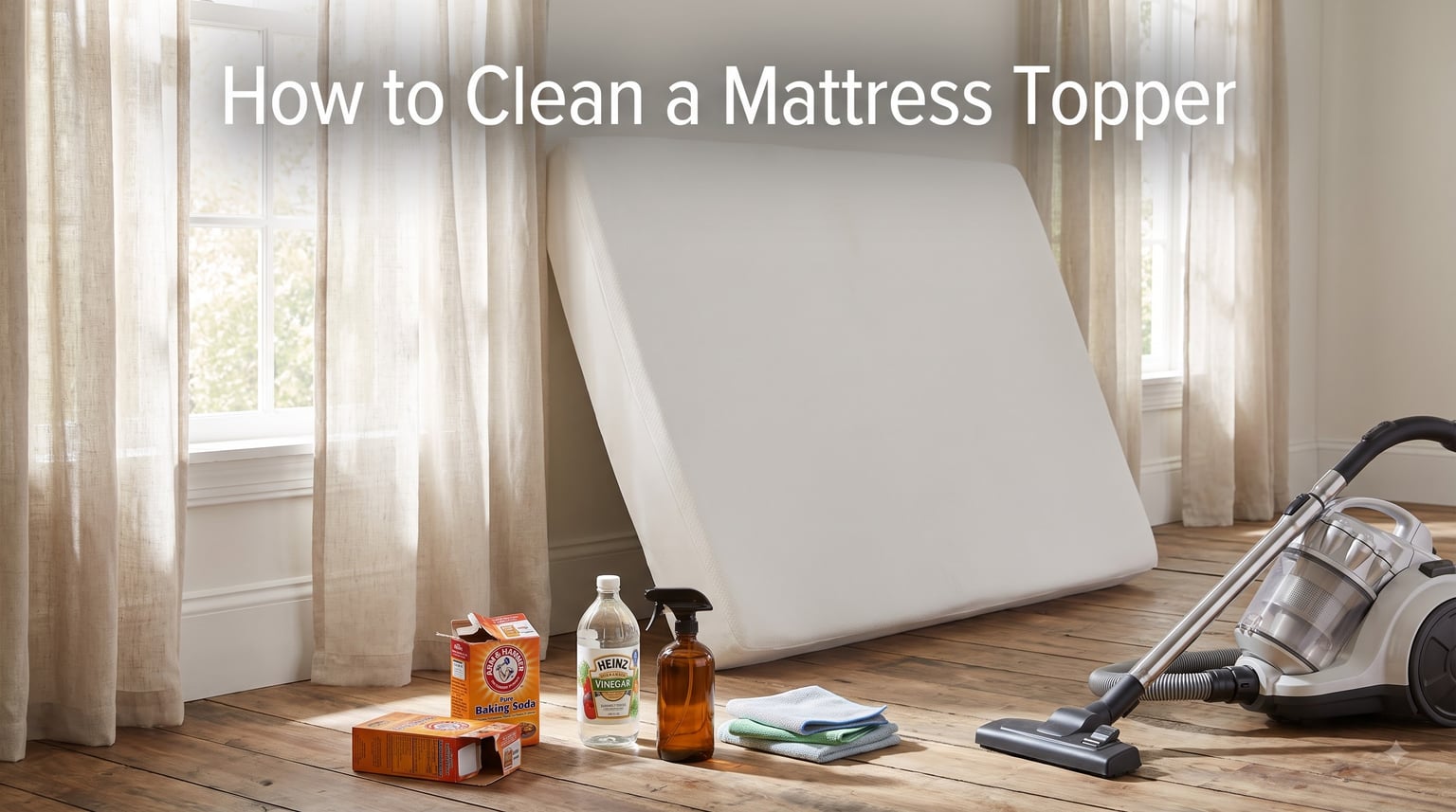
Your mattress topper quietly absorbs sweat, body oils, dust, and dead skin cells every single night. After just a few months of regular use, that clean-looking surface can hold grams of organic matter and millions of dust mites. Knowing how to clean a mattress topper the right way protects your sleep, your allergies, and your wallet. I have refreshed toppers of every material from memory foam to wool, and this guide walks through what actually works.
Inside you will find the five-step method that covers most situations, plus tailored instructions for memory foam, latex, down, and wool. I have also added a stain-by-stain guide, answers to the top questions people ask, and a maintenance routine that keeps your topper fresher between washes. By the end, you will know exactly how to spot clean, deodorize, deep clean, and decide when it is time to replace your topper altogether.
Table of Contents
Why Cleaning Your Mattress Topper Matters
Your mattress topper is the layer that takes the most abuse. It sits directly under your sheets but above the mattress, which means it collects the body sweat, dead skin, hair, and accidental spills that never reach the mattress below. Over weeks and months, that buildup creates a perfect home for dust mites and bacteria. The Sleep Foundation estimates a used bed can carry anywhere from 100,000 to 10 million dust mites, and most of them start their life cycle on the topper.
Beyond allergens, body oils and moisture slowly break down foam fibers and yellow the surface. Sweat contains salts that oxidize into those stubborn brown patches you may have already noticed. A topper left uncleaned loses its loft, develops odors, and starts to feel grimy long before the foam itself wears out. Regular cleaning restores comfort and can easily double the useful life of a mid-range topper.
For allergy and asthma sufferers, the stakes are higher. Dust mite waste is one of the most common indoor triggers for allergy symptoms. Vacuuming, deodorizing with baking soda, and rotating the topper all interrupt the dust mite life cycle. The same routine also helps with pet dander and pollen that gets trapped in bedding. In short, a clean topper is a healthier sleep surface and a longer-lasting one.
How Often Should You Clean a Mattress Topper
You should clean a mattress topper every two to three months for routine maintenance, with light vacuuming once a month and a full refresh every quarter. Spills, odors, pet accidents, or allergy flare-ups call for immediate spot cleaning regardless of the schedule. Following this rhythm keeps the surface hygienic without over-wetting the foam or fabric.
Here is the cadence I use in my own home and recommend to friends:
Weekly: Strip the sheets, air out the topper for 30 minutes, replace the bedding.
Monthly: Vacuum the surface with an upholstery attachment.
Every 2 to 3 months: Spot clean stains and deodorize with baking soda.
Every 6 months: Deep clean following the step-by-step method below.
Immediately: Treat urine, vomit, blood, or spilled drinks the moment they happen.
Households with pets, small children, or allergy sufferers should treat the “every 2 to 3 months” line as the minimum. Move that up to once a month if anyone in the home has respiratory sensitivities or if a pet sleeps on the bed.
Supplies You Need to Clean a Mattress Topper
Gather these household items before you start. Most people already own everything on the list, and there is no need to buy a specialty cleaner unless you are dealing with biological stains.
Vacuum cleaner with an upholstery attachment
Baking soda (one full standard box)
White distilled vinegar
Cool or lukewarm water
Mild liquid dish soap or gentle laundry detergent
Clean spray bottle
Two or three microfiber cloths
Soft-bristled brush (an old toothbrush works)
Enzyme cleaner (only for biological stains like urine, vomit, or blood)
Optional: 3 percent hydrogen peroxide for stubborn yellow stains
Avoid hot water, bleach, or harsh solvents. Hot water sets protein stains and can warp foam. Bleach breaks down foam cells and weakens fibers over time. Stick with the gentle items above and you will not damage the topper.
How to Clean a Mattress Topper Step by Step
The five-step method below is the safest baseline for every topper type. Skip steps only if your care label clearly says otherwise. I run through this routine every six months on my own memory foam topper and it has held up beautifully for years.
Step 1: Vacuum the Surface Thoroughly
Strip all bedding and pillows off the topper. Use the upholstery attachment on your vacuum and work in slow, overlapping rows across the entire surface. Pay extra attention to seams, edges, and corners where dust collects. Flip the topper if it is light enough to handle safely and vacuum the underside too. This step alone removes surface dust, hair, and the visible grime that builds up between washes.
Step 2: Spot Treat Any Stains
Mix one part white vinegar with two parts cool water in your spray bottle for general stains. For biological stains like urine or vomit, use an enzyme cleaner straight from the bottle. Lightly mist the stained area only, do not soak it. Let the solution sit for 5 to 10 minutes, then blot with a clean microfiber cloth, working from the outside of the stain toward the center. Repeat once if needed.
Step 3: Deodorize With Baking Soda
Sprinkle a generous, even layer of baking soda across the entire topper surface. Use the full box if your topper is queen or king size. Gently work the powder into the fabric with a soft-bristled brush so it reaches the lower layers. Let it sit for at least 8 hours, overnight is even better. Baking soda absorbs odors and moisture without leaving residue behind, which is why it shows up in nearly every expert cleaning guide.
Step 4: Vacuum Up the Baking Soda
After the baking soda has had time to work, vacuum it all up using the upholstery attachment. Go slowly and pass over each section twice to lift every trace of powder. If you smell any vinegar left from the spot treatment, give the topper a few extra passes. The surface should feel clean and smell neutral when you finish.
Step 5: Air Dry Completely Before Use
If the topper feels damp at all from spot cleaning, let it air dry before putting sheets back on. Place it in a well-ventilated room or near a fan with windows open. Aim for 8 to 12 hours of drying time if you used any liquid at all. Trapped moisture is the number one cause of mold and mildew growth inside a topper, so do not rush this step.
How to Clean Specific Mattress Topper Types
Different materials react differently to water, agitation, and cleaning agents. Use the guidance below for your specific topper type. When in doubt, follow the manufacturer label, but these rules apply to most products on the market today.
Memory Foam Mattress Toppers
Memory foam cannot be machine washed or fully soaked. Submerging it tears the foam cells and leaves the topper permanently waterlogged. Instead, stick with the vacuum, spot treat, baking soda, and air dry method above. For tougher stains, mix a small amount of mild detergent into cool water, apply with a cloth, and blot dry. I have also soaked memory foam in a bathtub with cool water and a tablespoon of detergent, then rolled it gently to press water out before a 24-hour air dry. It works in a pinch but never use hot water or wring the foam.
Latex Mattress Toppers
Natural and synthetic latex both tolerate slightly more moisture than memory foam. You can spot clean with a vinegar and water solution, then wipe with a damp cloth and air dry. Avoid harsh detergents and never machine wash or tumble dry latex, as the agitation breaks down the material. A baking soda deodorize every few months keeps latex smelling fresh.
Down and Feather Mattress Toppers
Down and feather toppers often come with a washable cover. If yours does, remove the cover and wash it according to the label, usually in cool water on a gentle cycle. The down fill itself can be refreshed by sprinkling baking soda across the surface, letting it sit for several hours, and vacuuming it off. If the entire topper needs washing and the label permits, use a large front-loading washer on a delicate cycle with a mild detergent, then tumble dry on low heat with dryer balls to break up clumps.
Wool Mattress Toppers
Wool is naturally odor-resistant and benefits most from airing and vacuuming. Spot clean with cool water and a tiny amount of wool-safe detergent, then blot dry. Avoid soaking wool toppers, as prolonged moisture causes shrinkage and felting. A few hours of fresh air and sunshine does wonders for wool, but keep direct sun exposure short so the fibers do not dry out and become brittle.
How to Remove Common Stains From a Mattress Topper
Different stains call for different treatments. Use this quick reference guide to match the stain to the right method. Always blot, never rub, and test any solution on a small hidden corner first.
Urine Stains (Human or Pet)
Blot up as much liquid as possible with paper towels, pressing firmly without rubbing. Apply an enzyme cleaner generously and let it sit for 10 to 15 minutes. Enzyme cleaners break down the uric acid crystals that cause lingering odor. Blot dry, then follow with the baking soda deodorize step. For stubborn stains, lightly mist 3 percent hydrogen peroxide mixed with a drop of dish soap, let it bubble for a few minutes, then blot clean. Repeat if needed but do not over-saturate the foam.
Sweat and Body Oil Stains
Mist the yellowed area with a 50/50 white vinegar and cool water mix. Let it sit for 10 minutes, then sprinkle baking soda on top. The vinegar breaks down oils while the baking soda absorbs them. After 30 minutes, vacuum and blot with a clean damp cloth. Repeat once for older stains.
Blood Stains
Use only cold water on blood. Heat sets the stain permanently. Lightly dampen a cloth with cold water and blot, or apply hydrogen peroxide directly to the spot and let it foam. Blot dry and repeat. Enzyme cleaners also work well on fresh blood stains.
Food and Drink Spills
Blot up the spill right away. Mix a teaspoon of mild dish soap into a cup of cool water and work into the stain with a microfiber cloth. Blot dry, then mist lightly with vinegar solution to remove any sticky residue. Air dry completely before making the bed.
Mold and Mildew Spots
Mix one part white vinegar with three parts water and spray the affected area. Let it sit for 20 minutes, then scrub gently with a soft brush. Blot dry and allow full air drying in sunlight if possible. If the mold covers more than a small patch or has penetrated the foam, replace the topper. Mold spores are a serious health risk and cannot be fully removed from foam once they take hold.
Can You Machine Wash a Mattress Topper
Most mattress toppers cannot be machine washed, especially memory foam, latex, and wool toppers. The agitation and water exposure breaks down foam, causes wool to felt, and can permanently distort the shape of the topper. Only certain down, feather, or fiberfill toppers with a machine-washable care label can safely go in a washing machine, and even those require a large front-loading machine on a gentle, cold cycle.
If your topper has a removable cover, take the cover off and wash that separately. This handles most of the surface grime without putting the foam or fill at risk. Always check the care tag before any washing attempt. When the label says “spot clean only,” take it literally. The cleaning method above is safer and gets the job done without risk.
Deep Cleaning vs Regular Maintenance
Regular maintenance covers vacuuming, deodorizing, and spot treating as needed. It takes 20 to 30 minutes and should happen every couple of months. Deep cleaning goes further by treating the entire surface, addressing multiple stains, and giving the topper a longer airing out. Plan a deep clean every 6 months, or sooner if the topper has visible stains, strong odors, or has been through an illness.
Think of maintenance as brushing your teeth and deep cleaning as the dentist visit. Both matter, but you do not need an aggressive scrub every time. For most households, sticking to the five-step method on a six-month rotation keeps things hygienic without wearing out the materials.
How to Keep Your Mattress Topper Fresh Longer
Preventing buildup is easier than removing it. A few small habits make a big difference in how long your topper stays fresh.
Use a washable mattress protector over the topper and wash it weekly with your sheets.
Air out the bed every morning by pulling back the covers for 20 to 30 minutes.
Rotate the topper head to foot every three months to even out wear.
Vacuum monthly even when there are no visible stains.
Keep pets off the bed or use a dedicated pet blanket on top.
Avoid eating or drinking in bed to cut down on spills and crumbs.
Sprinkle baking soda on the surface when changing sheets for ongoing freshness.
A quality protector is the single best investment. It shields the topper from sweat, spills, and dust, and it is far easier to wash a protector every week than to deep clean the topper every month. Pair it with a consistent airing routine and most toppers stay fresh for years with very little extra work.
Why Your Mattress Topper Is Turning Yellow (and What to Do)
The most common cause of yellowing is body sweat and oil oxidation. Perspiration contains urea, salts, and oils that build up in the foam and slowly turn yellow over time. Even the cleanest sleeper produces noticeable sweat overnight. Other culprits include urine residue, moisture exposure, and the natural aging of foam itself, which yellows with time regardless of cleaning.
To slow yellowing, use a washable protector, air out the bed every morning, and avoid letting moisture sit on the surface. For existing yellow patches, treat with the vinegar and baking soda method above. If the topper is heavily yellowed and feels brittle or crumbly, it has likely reached the end of its life and should be replaced.
When to Replace vs Clean Your Mattress Topper?
Replace the topper when cleaning no longer restores comfort or hygiene. Telltale signs include persistent odor after washing, visible mold that has spread into the foam, lumps or permanent indentations that do not spring back, deep staining across more than half the surface, or foam that feels brittle and crumbles when touched. Most quality memory foam and latex toppers last 3 to 5 years with regular care, while down and wool toppers can last longer when maintained well.
If your topper is under three years old and still feels supportive, a deep clean is usually enough. Beyond that, weigh the cost of replacement against the cost of sleeping on a worn-out surface. A new topper is one of the most affordable upgrades for sleep quality, and it pays for itself in better rest.
Frequently Asked Questions
How often are you supposed to wash a mattress topper?
You should wash a mattress topper every two to three months as a baseline. Vacuum monthly, deodorize with baking soda quarterly, and deep clean every six months. Clean immediately after any spill, urine accident, or strong odor, regardless of schedule.
Can a mattress topper be washed in a washing machine?
Most mattress toppers cannot go in the washing machine, especially memory foam, latex, and wool. Only certain down or fiberfill toppers with a machine-washable care label can handle a gentle, cold cycle in a large front-loading washer. Always check the tag before attempting machine washing.
How do you clean a mattress topper that has been peed on?
Blot up the urine right away, then apply an enzyme cleaner generously and let it sit for 10 to 15 minutes. Blot dry, sprinkle baking soda across the area, let it sit overnight, and vacuum it off in the morning. Repeat if odor remains, and air dry completely before remaking the bed.
Why is my mattress topper turning brown?
Body sweat, oils, and urine residue oxidize over time and cause yellow or brown discoloration on foam toppers. Moisture exposure and natural foam aging also contribute. To slow browning, use a washable protector, air out the bed every morning, and treat stains quickly with vinegar and baking soda.
Final Thoughts on How to Clean a Mattress Topper
Learning how to clean a mattress topper is one of the easiest ways to improve your sleep environment. A few minutes of monthly vacuuming, a quarterly baking soda deodorize, and a six-month deep clean will keep dust, odors, and stains under control without risking damage to the foam or fill. Pair the routine with a washable protector and your topper will stay fresh, supportive, and hygienic for years.
Start with the five-step method above the next time you change your sheets. From there, adjust the frequency to match your household, and use the stain guide whenever something unexpected happens. A clean topper means better sleep, fewer allergens, and a longer-lasting product, and now you have everything you need to keep yours in great shape.