
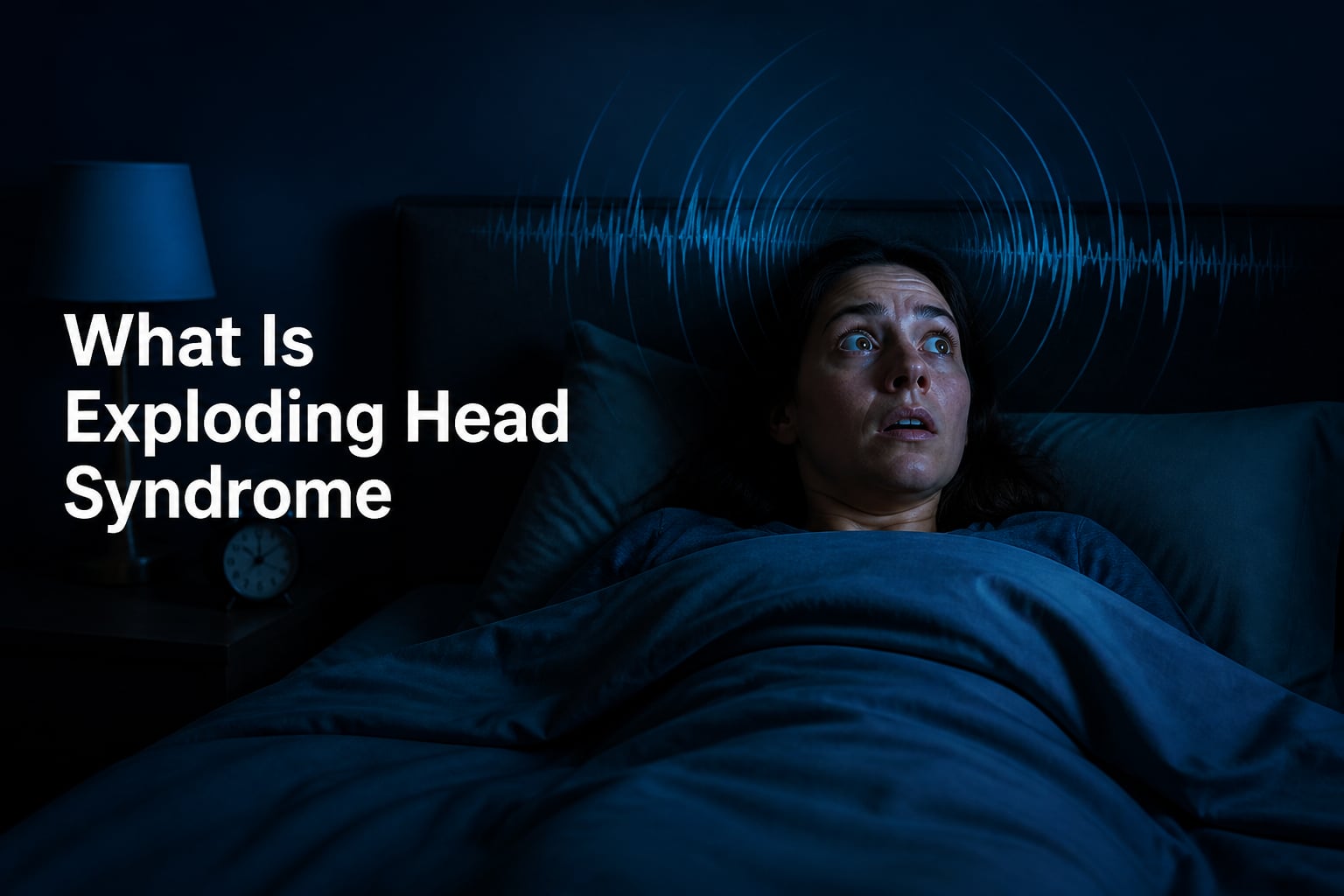
Imagine you are drifting off to sleep, the room is quiet, and then BAM. A bomb goes off inside your head. You jolt awake, heart racing, only to find that nothing happened. No explosion. No danger. Just silence. If this sounds familiar, you are not going crazy. You likely experienced what doctors call exploding head syndrome.
Exploding head syndrome (EHS) is a harmless sleep disorder where you hear loud, sudden, imagined sounds as you fall asleep or wake up. The noise might feel like a gunshot, a bomb, or a cymbal crash. Despite the terrifying name and the panic it causes, the condition poses no physical danger to your brain or body.
In this guide, we will walk through what exploding head syndrome is, what the episodes actually feel like, the leading theories about causes, and practical ways to manage it. We will also address the misconceptions that make this condition so frightening, including the common worry that EHS is linked to mental illness or seizures.
If you have been losing sleep over these episodes, take a breath. Understanding what is happening is the first step toward managing it. Many people feel immediate relief just learning the condition has a name.
Table of Contents
What Is Exploding Head Syndrome
Exploding head syndrome is a type of parasomnia, a category of sleep disorders that involves unusual experiences or behaviors during sleep transitions. EHS falls specifically under sensory parasomnia, meaning it affects how your brain processes sensory information at the boundary between wakefulness and sleep.
The key characteristic of EHS is the perception of a sudden, extremely loud sound that seems to originate inside your head. No actual noise occurs. The sound is entirely generated by your brain as it shifts between sleep stages. Episodes typically last only a second or two but leave people wide awake, startled, and sometimes afraid to go back to sleep.
First described in medical literature as far back as the 1870s, EHS has carried several names over the decades. The phrase “exploding head syndrome” was coined in 1988 by neurologist John M. S. Pearce, and it stuck. While the name is attention-grabbing, it also causes unnecessary alarm. Nothing in your head actually explodes.
How Common Is It
Exploding head syndrome is more common than most people realize. A widely cited 2014 study published in the Journal of Sleep Research surveyed nearly 5,000 college students and found that approximately 18% had experienced EHS at least once. Among people with diagnosed sleep disorders, the rates run even higher.
The condition can affect anyone, but studies suggest it most frequently appears in people over 50. It also occurs in children and young adults. Women and men appear to experience EHS at roughly equal rates, and there is no evidence that it runs in families.
Because so many people are too embarrassed or frightened to mention these episodes to a doctor, the true prevalence may be significantly underreported. Many people only discover the name of the condition years, or even decades, after their first episode.
Who Experiences EHS
Certain factors increase the likelihood of experiencing exploding head syndrome. High stress levels, sleep deprivation, and irregular sleep schedules top the list. People who work shifts, travel frequently across time zones, or deal with chronic anxiety seem more prone to episodes.
Forum discussions on Reddit communities like r/sleep and r/ExplodingHeadSyndrome reveal that many people with EHS also report co-occurring conditions. Some users mention ADHD, temporomandibular joint (TMJ) issues, and migraine histories alongside their EHS episodes. While researchers have not confirmed strong causal links, these patterns interest sleep specialists.
Exploding Head Syndrome Symptoms and What It Feels Like
People who have experienced exploding head syndrome describe the sensation in vivid, sometimes alarming terms. The defining symptom is a sudden, perceived loud noise that jolts you awake or startles you as you are falling asleep. Understanding the full range of symptoms helps distinguish EHS from other sleep-related events.
The core symptoms of exploding head syndrome include:
A sudden, loud sound perceived inside the head, often described as a bomb, gunshot, or cymbal crash
A flash of light or visual sensation that accompanies the noise
A feeling of electrical sensation or tingling, sometimes starting at the base of the neck and moving upward
Involuntary muscle twitching or a jolt in the body
Rapid heartbeat, sweating, and a surge of fear or panic after the episode
Difficulty falling back asleep due to anxiety about a repeat episode
Episodes almost always occur during the sleep-wake transition, the drowsy period just before you fall asleep or just as you begin to wake. Some people experience clusters of episodes over several nights, followed by long stretches without any.
What the Sounds Are Like
The imagined sounds vary widely from person to person. Some describe a deafening explosion, while others hear what sounds like a gunshot, a door slamming, or a loud buzzing. Reports from online forums range from “a giant bee flying by” to the sensation that “someone shot my face.”
One Reddit user described the experience as “a tingling at the base of my neck moving up into my head with a loud rushing sound, then a huge explosion.” Another said it felt like “being kicked in the head with a boot.” The intensity of the noise is what makes EHS so frightening, even though the sound is not real.
Physical and Emotional Aftereffects
While the noise itself lasts only a split second, the physical and emotional aftermath can linger. Many people experience a racing heart, chest tightness, and a full adrenaline response. Some report sweating, rapid breathing, and a lingering sense of dread.
The emotional toll can be significant. Several people in online support groups describe developing sleep anxiety, where they actively fear bedtime because of the unpredictability of episodes. This fear creates a vicious cycle, as anxiety and sleep deprivation can actually increase the frequency of EHS events.
Daytime sleepiness is a common secondary symptom, not because EHS itself causes fatigue, but because the disrupted sleep and anxiety about episodes degrade overall sleep quality over time.
What Causes Exploding Head Syndrome
Researchers have not pinpointed a single definitive cause of exploding head syndrome, but several theories explain what might be happening in the brain. All of them center on the sleep-wake transition, the vulnerable moment when your brain shifts gears between consciousness and sleep.
The Brain Misfire Theory
The leading theory suggests that EHS results from a momentary glitch in how your brain powers down for sleep. As you transition from wakefulness to sleep, different parts of your brain begin shutting down in sequence. In EHS, the areas responsible for processing sound may fire inappropriately, creating the perception of a loud noise that does not exist.
Think of it like a computer shutting down. Occasionally, a program sends one last burst of data through the speakers as the system powers off, producing a sudden pop or click. Your brain may be doing something similar with its auditory processing centers during the shutdown sequence into sleep.
Some researchers have drawn connections to the temporal lobe, the brain region involved in processing sound and sensory information. Abnormal electrical activity in this area during sleep transitions could explain why the perceived noise feels so vivid and so physically real.
Triggers and Risk Factors
Several factors appear to increase the likelihood and frequency of EHS episodes. The most common triggers include the following:
High stress and anxiety levels
Sleep deprivation or irregular sleep patterns
Jet lag and rapid time zone changes
Shift work or frequently disrupted sleep schedules
Extreme fatigue and overexertion
Certain medications, including some that affect sleep architecture
Many people report that their episodes cluster during particularly stressful periods at work, school, or home. When stress decreases and sleep regularity improves, episodes often become less frequent or stop entirely.
Why It Is Not Schizophrenia or a Seizure
One of the most common fears among people with EHS is that they are developing a serious psychiatric or neurological condition. Let us address two of the biggest misconceptions directly.
Exploding head syndrome is not a form of schizophrenia. Schizophrenia involves persistent symptoms that occur during waking hours, such as ongoing auditory hallucinations, delusional thinking, and difficulty distinguishing reality from imagination. EHS, by contrast, produces a single, brief sensory event tied exclusively to the sleep-wake transition. The person is fully aware that no real sound occurred, which is the opposite of a psychotic experience.
EHS is also not a seizure. While some temporal lobe seizures can produce auditory sensations, seizures involve sustained abnormal electrical discharges in the brain that can be detected on an electroencephalogram (EEG). EHS episodes leave no such trace. They occur in the brief transition window between sleep and wakefulness, not during active seizure activity. Neurologists classify them separately and treat them differently.
Is Exploding Head Syndrome Dangerous
No. Exploding head syndrome is not dangerous. It does not damage your brain, cause physical injury, or indicate a life-threatening condition. This is the single most important fact about EHS, and it is worth repeating: the condition is benign.
Medical authorities including the Cleveland Clinic, the National Institutes of Health, and the StatPearls medical reference all classify EHS as a harmless sensory parasomnia. The perceived explosion is not accompanied by any actual physical event. Your brain is not being harmed during an episode.
The Real Impact Is Emotional
While EHS does not cause physical harm, its emotional and quality-of-life effects can be significant. The fear triggered by these episodes leads some people to develop sleep anxiety, where they dread bedtime. Avoiding sleep leads to sleep deprivation, which in turn can trigger more EHS episodes, creating a frustrating cycle.
Forum users frequently describe this fear. One person shared that they were “afraid to fall asleep” because the episodes felt so violent. Another expressed relief that was almost overwhelming upon learning the condition had a name and was harmless. Simply knowing that EHS is not dangerous often reduces episode frequency, because the reduction in anxiety improves sleep quality.
When You Should Be Concerned
EHS itself is not a red flag, but certain accompanying symptoms warrant medical evaluation. If you experience any of the following alongside your episodes, consult a healthcare provider:
Actual pain during or after the episode, which may suggest a different condition
Loss of consciousness, convulsions, or muscle rigidity that could indicate seizure activity
Persistent daytime hallucinations or confusion
Severe headaches that accompany the episodes, which could indicate a headache disorder
Episodes that occur frequently during full wakefulness rather than at sleep transitions
A doctor can help rule out other conditions that may produce similar symptoms, ensuring you receive accurate information and appropriate guidance.
Exploding Head Syndrome vs Hypnic Jerks
People often confuse exploding head syndrome with hypnic jerks, and it is easy to see why. Both occur during the sleep-wake transition, both cause a sudden jolt, and both can startle you awake. However, they are distinct phenomena with different mechanisms.
A hypnic jerk is a sudden, involuntary muscle contraction that happens as you are falling asleep. It often feels like a twitch or a falling sensation. Most people have experienced a hypnic jerk at some point. It is the feeling of suddenly jerking awake just as you were drifting off, sometimes accompanied by a sensation of tripping or falling.
Key Differences
The primary difference between EHS and hypnic jerks lies in the dominant sensation each produces:
EHS is primarily an auditory event: a loud perceived sound, with muscle twitching as a possible secondary effect
Hypnic jerks are primarily a motor event: a physical muscle contraction, sometimes accompanied by a falling sensation but usually no sound
EHS episodes often feel more violent and alarming because the sound seems to originate inside the skull
Hypnic jerks are extremely common and generally cause only mild surprise
Both can occur in the same person, and an EHS episode can trigger a hypnic jerk as the body reacts to the perceived sound
If you hear a loud noise and jolt, you likely experienced EHS. If you feel your body twitch or a falling sensation without a loud sound, it was probably a hypnic jerk. Either way, both are harmless.
Diagnosis and When to See a Doctor
Exploding head syndrome is typically diagnosed based on your description of the episodes. There is no single test that confirms EHS, but doctors use a process of elimination to rule out other conditions and verify that your symptoms match the EHS profile.
The Diagnostic Process
A doctor or sleep specialist will usually begin by taking a detailed medical history and asking about the nature of your episodes. Key questions include when the sounds occur, what they sound like, whether you experience pain, and how frequently episodes happen.
If there is any uncertainty, your doctor may order additional tests to rule out seizure disorders or other neurological conditions. These can include a polysomnography, which is a comprehensive sleep study, an EEG to measure brain activity, or an MRI to examine brain structure. In most EHS cases, all of these tests come back completely normal.
When to Seek Medical Help
Many people with EHS never need to see a doctor because the episodes are infrequent and the condition is harmless. However, you should consider scheduling a consultation if:
Episodes are frequent enough to significantly disrupt your sleep or daily functioning
You have developed significant anxiety about going to sleep
You are unsure whether your symptoms are EHS or something else
Episodes are accompanied by pain, headaches, or other physical symptoms
You have a history of seizure disorders and want to confirm these episodes are not related
Even a single appointment with a sleep specialist can provide enormous peace of mind. Many people report that simply receiving an official diagnosis dramatically reduces their anxiety and, consequently, their episode frequency.
Treatment and Management Options
There is no single medication or procedure designed specifically for exploding head syndrome, but many people find significant relief through a combination of reassurance, sleep hygiene improvements, and stress management. In most cases, knowing that EHS is harmless is the most effective treatment of all.
Sleep Hygiene Tips
Improving your overall sleep quality is one of the most reliable ways to reduce EHS episodes. Good sleep hygiene helps regulate your brain’s sleep-wake cycles and reduces the likelihood of misfires during transitions. Try the following:
Maintain a consistent sleep and wake schedule, even on weekends
Avoid caffeine, alcohol, and heavy meals within three hours of bedtime
Create a calming pre-sleep routine, such as reading, gentle stretching, or meditation
Keep your bedroom dark, cool, and quiet
Limit screen time for at least an hour before bed to reduce blue light exposure
Avoid stimulants and intense exercise late in the evening
Many people find that simply regularizing their sleep schedule reduces or eliminates episodes within a few weeks.
Stress and Anxiety Management
Since stress is a primary trigger for EHS, managing stress levels can have a direct impact on episode frequency. Relaxation techniques that calm your nervous system before bed can help your brain transition into sleep more smoothly.
Effective approaches include deep breathing exercises, progressive muscle relaxation, guided meditation apps, and journaling to process the day’s worries before trying to sleep. Cognitive behavioral therapy (CBT) can be particularly helpful if anxiety about the episodes themselves has begun to interfere with your sleep.
Medications
For most people, lifestyle changes and reassurance are sufficient. When episodes are severe and disruptive, doctors occasionally prescribe medications to help stabilize sleep or reduce anxiety. Options that have been reported in medical literature include certain antidepressants, anti-anxiety medications, and anticonvulsants.
Medication is generally considered a last resort for EHS because the condition is benign and because drug-based treatments carry their own side effects. Always discuss medication options thoroughly with a qualified healthcare provider.
Latest Research: Ketamine and NMDA Receptors
A 2025 article published in the journal Sleep by Oxford University Press titled “Exploding head syndrome: It’s not as benign as we think” has brought fresh attention to this condition. The University of Colorado Anschutz Medical Campus has also highlighted emerging research into the role of NMDA receptors in the brain’s limbic system, which may be involved in EHS episodes.
In a notable case study, researchers explored ketamine, which acts on NMDA receptors, as a potential treatment for severe EHS. While this research is still in early stages and ketamine is not a standard treatment, it points to a growing scientific understanding of the neurological mechanisms behind the condition. This is an encouraging sign for people whose EHS has not responded to conventional approaches.
As researchers continue to investigate the brain chemistry involved in EHS, new and more targeted treatments may emerge. For now, the combination of education, sleep optimization, and stress reduction remains the gold standard for management.
FAQs
What causes exploding head syndrome?
The exact cause is unknown, but EHS is thought to result from a momentary misfire in the brain’s auditory processing centers during the sleep-wake transition. Stress, sleep deprivation, irregular sleep schedules, and jet lag can increase episode frequency. The brain essentially sends a burst of sound-processing activity as it shifts between sleep stages, creating the perception of a loud noise that is not real.
What can be mistaken for exploding head syndrome?
EHS can be confused with hypnic jerks, which are muscle twitches during sleep onset, and with certain types of headaches like thunderclap headaches or acephalgic migraines. Temporal lobe seizures can also produce auditory sensations. A doctor can distinguish EHS from these conditions based on your symptom description and, if needed, tests like an EEG or sleep study.
Is exploding head syndrome a form of schizophrenia?
No, exploding head syndrome is not a form of schizophrenia or any psychiatric disorder. Schizophrenia involves persistent hallucinations and delusions during waking hours. EHS produces a single, brief sensory event tied to the sleep-wake transition, and the person remains fully aware that no real sound occurred. EHS is classified as a sleep disorder, not a mental illness.
What does exploding head syndrome feel like?
People describe EHS as a sudden, extremely loud sound inside the head that lasts a fraction of a second. Common descriptions include a bomb explosion, a gunshot, a cymbal crash, a door slamming, or a loud buzzing. Some people also experience a flash of light, a tingling sensation moving up the neck, or an involuntary body jolt. The episode is painless but extremely startling.
Is exploding head syndrome dangerous?
No, exploding head syndrome is not dangerous. It does not damage the brain, cause physical injury, or indicate a life-threatening condition. Medical authorities classify it as a benign sensory parasomnia. The main impact is emotional, as episodes can cause anxiety and disrupt sleep. However, the episodes themselves are completely harmless.
Is exploding head syndrome a seizure?
No, EHS is not a seizure. While some types of seizures can produce auditory sensations, seizures involve sustained abnormal electrical discharges that show up on an EEG. EHS episodes occur only during the sleep-wake transition and leave no electrical trace on brain monitoring tests. Neurologists classify and treat them as entirely separate conditions.
Understanding EHS Brings Relief
Exploding head syndrome is one of those conditions where knowledge truly is the best medicine. The episodes are startling, the name is alarming, and the experience feels violent. But once you understand what is happening, a simple misfire in your brain’s sleep transition machinery, the fear begins to fade.
We have covered the essentials: what exploding head syndrome is, the symptoms and sensations, the leading theories about causes, why it is not related to seizures or mental illness, how it differs from hypnic jerks, and the practical steps you can take to manage it. The most important takeaway is that EHS is harmless. Nothing in your head is exploding, and no damage is being done.
If your episodes are infrequent, reassurance and better sleep habits may be all you need. If they are disrupting your life, a conversation with a sleep specialist can provide personalized guidance and peace of mind. The emerging research into NMDA receptors and brain chemistry also offers hope for better treatments in the future.
You are not alone in this experience. Thousands of people have felt that sudden, phantom blast and lived in fear of the next one. The Reddit communities, the patient stories, and the growing body of research all point to the same comforting truth: exploding head syndrome has a name, it is understood, and it is manageable. The next time it happens, take a breath, remind yourself that you are safe, and know that the sound is just your brain shifting gears on the road to sleep.