
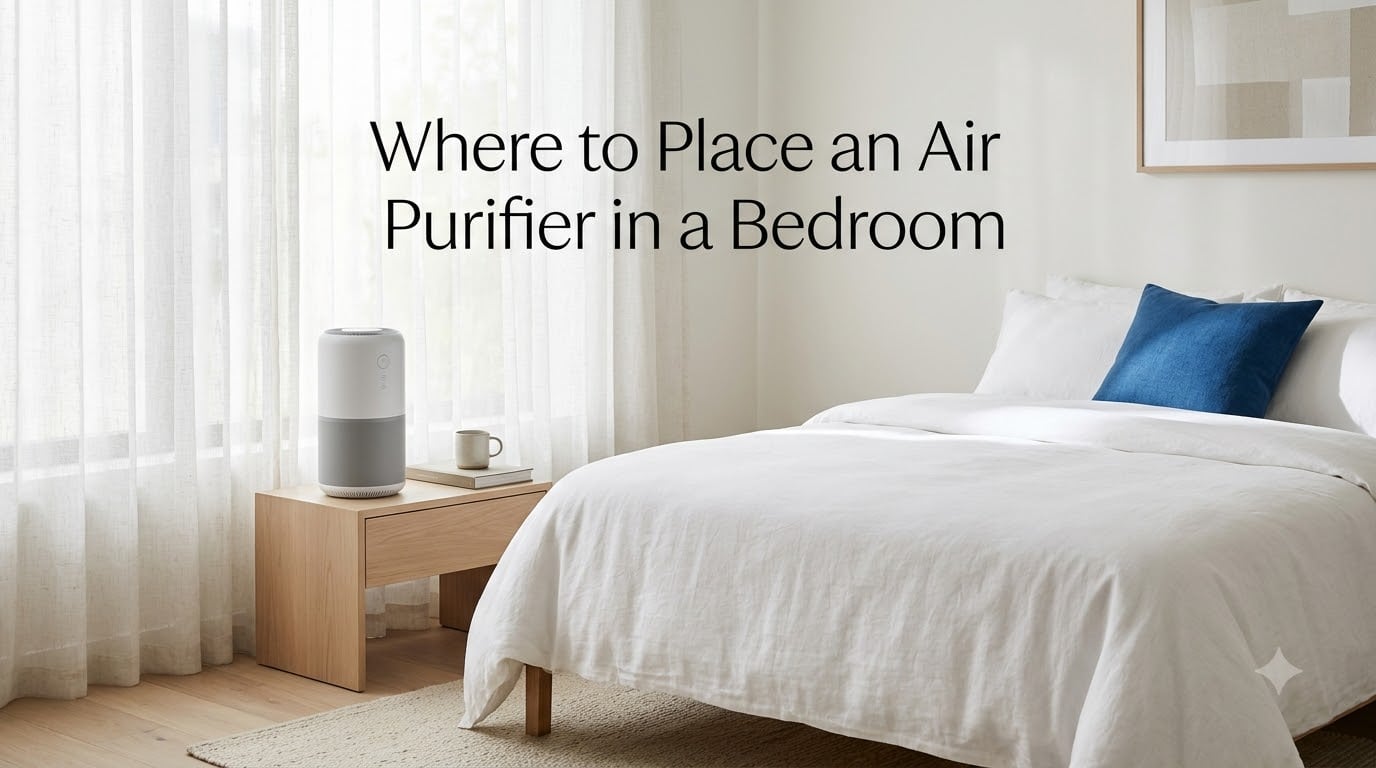
I learned the hard way that where you place an air purifier in a bedroom actually matters. When I first set one up in my bedroom, I tucked it behind the TV stand because I wanted it out of sight. After three weeks of running it constantly with no allergy relief, I moved it to an open spot six feet from the bed and noticed a real difference within two days.
Proper bedroom air purifier placement can boost cleaning efficiency by over 50%, according to multiple manufacturer guidelines and real-world user reports. Where you place an air purifier in a bedroom affects three things: how fast clean air reaches your breathing zone, how freely air can circulate through the filters, and how much noise reaches your pillow at night.
In this guide, I’ll walk you through the exact placement rules I now use in my own bedroom, including the specific measurements that separate effective placement from wasted electricity. You’ll learn the optimal distance from your bed, the best height for the unit, which mistakes to skip, and how to handle tricky room layouts.
Table of Contents
How Far Should an Air Purifier Be From Your Bed?
The sweet spot for distance from your bed is 3 to 6 feet from where your head rests while sleeping. That range keeps the unit close enough that clean air reaches your breathing zone quickly, but far enough that motor noise won’t keep you up.
The breathing zone is the roughly two-foot cube of air around your nose and mouth when you’re lying down. When an air purifier sits within this radius, you’re breathing filtered air almost immediately after the unit cycles room air. Place the unit outside this radius and clean air has to travel further, mixing with unfiltered air along the way.
Here’s what actually happens at different distances:
Under 2 feet: Clean air delivery is fast, but motor hum and fan whoosh are louder. Many people find this disrupts sleep, especially light sleepers.
3 to 6 feet: The best balance. Air reaches you in under 30 seconds at typical fan speeds, and most units are quiet enough at low settings not to disturb sleep.
Beyond 8 feet: Air has to mix with the rest of the room before reaching you. Effectiveness drops noticeably, especially in rooms over 200 square feet.
If noise is a concern in your household, place the unit at the far end of the 3-6 foot range (around 5-6 feet). This gives you the clean-air benefit without the motor sitting next to your pillow.
Best Height to Place Your Bedroom Air Purifier
Place your air purifier 1 to 3 feet off the floor for the best results. The two most common elevated surfaces are a nightstand or a low dresser, and both work well, but they serve slightly different purposes.
Why elevated beats floor placement: dust, pollen, and pet dander are heavier than air, so they tend to settle within the first few feet of the floor. A unit sitting on the floor has to pull all that settled debris back up into its intake, which takes longer and uses more fan power. A unit at nightstand height catches those particles before they fully settle and circulates clean air right where you breathe.
One Reddit user in the r/AirPurifiers community reported putting their purifier behind a TV, then moving it to a nightstand and seeing roughly 50% better performance on the air quality readings. That’s a huge jump from one placement change.
Nightstand vs dresser trade-offs:
Nightstand placement: Puts the unit within arm’s reach and roughly at breathing-zone height. Best for small bedrooms where the unit is close to the bed. Downside: vibration can transfer through the nightstand and amplify noise.
Dresser placement: Raises the unit higher (3-4 feet off the floor), which gives excellent room circulation. Better for medium to large bedrooms. Trade-off: takes up dresser space and requires a cord-friendly spot.
If your nightstand is small or wobbly, the dresser is usually the safer pick. A wobbly nightstand will rattle with every fan cycle, and that’s worse than any placement mistake.
Why Corners and Walls Reduce Air Purifier Performance?
Keep at least 1 to 2 feet of clearance between your air purifier and any wall or corner. This is the single most common placement mistake I see in bedroom photos online, and it’s also the easiest fix.
Air purifiers work by pulling air in through intake vents (usually on the sides or back), filtering it, and pushing clean air out through the top or front. When you push a unit flush against a wall, you block those intake vents. The fan motor still spins, but the unit can’t pull in enough room air to filter, so cleaning capacity drops.
Corners are even worse because they restrict airflow on two sides at once. A unit jammed into a corner can lose 30-40% of its rated clean air delivery rate (CADR) just from restricted intake.
Best practice for bedroom clearance:
1 to 2 feet from the nearest wall on all sides
3 feet from heavy curtains or drapes, which can block intake
Central location when possible, so filtered air can spread evenly in all directions
If your bedroom is small and the unit has to sit near a wall, position it so the intake vents face the open part of the room, not the wall. Most intake vents are on the back or sides, so flipping the unit to face outward can rescue a tight corner placement.
Should You Put an Air Purifier Near the Bedroom Door
Yes, if you deal with allergies, pet dander, or seasonal pollen, placing the unit within 2 to 3 feet of the bedroom door is one of the smartest moves you can make. This positioning catches allergens the moment they enter your bedroom from the rest of the house.
The bedroom door is the main gateway for outdoor pollen tracked in on clothes, pet dander carried in on fabrics, and dust stirred up in hallways. A purifier positioned near the door intercepts those particles before they spread across your bedding and pillows.
Door placement works especially well when you close the bedroom door at night. The unit creates a cleaner micro-environment inside the bedroom, isolated from the rest of the home’s air. Combined with the door closed, you can see measurable improvements in morning allergy symptoms within a week.
For pet owners specifically, door placement plus a closed door at night creates a real allergen barrier. Cats and dogs shed dander continuously, and that dander circulates through the whole house. A purifier at the bedroom door plus a closed door is the closest you can get to an allergen-free sleep zone without sealing off the room entirely.
Common Air Purifier Placement Mistakes to Avoid
Most bedroom air purifier mistakes come down to airflow obstruction or competing air currents. After testing multiple placements in my own bedroom and reading hundreds of user reports, here are the mistakes that hurt performance the most.
Behind furniture or curtains. Anything that blocks the intake vents will throttle the unit. The worst offenders are placing a purifier behind a TV (which I personally learned the hard way), behind a curtain, or under a shelf with low clearance.
Near electronics or HVAC vents. HVAC vents create competing airflow that pushes filtered air away from your breathing zone. Placing the purifier directly under a supply vent means the clean air gets blasted toward the ceiling before it reaches you. The same problem happens near a window with a strong draft or a space heater blowing across the room.
Direct sunlight. Direct sunlight on the unit can interfere with the air quality sensor in smart purifiers, causing them to misread the room and run at the wrong fan speed. It can also heat the unit slightly, which is bad for filter longevity.
Too close to your head. Sleeping with the unit at arm’s length feels intuitive, but motor noise at this distance is much louder than at 4-6 feet. If you find yourself waking up at night, move the unit further away rather than turning it off.
Floor placement under the bed. This is a tempting spot for hiding the unit, but it blocks intake on all sides. Air can’t circulate, and the filter works much harder for much less benefit.
On carpet without a hard surface. Some units vibrate slightly on carpet, which can rattle the fan and add noise. A small hard tray or wooden board underneath solves this in most cases.
What to Do in Large or Unusual Bedrooms
Bedrooms over 250 square feet usually need either a larger unit or two smaller units placed strategically. The CADR rating on the unit should match roughly two-thirds of your room’s square footage for one-pass-per-hour cleaning.
If you have a large bedroom (250-400 square feet), one option is to size up to a unit rated for the larger space. Another option is two smaller units placed on opposite ends of the room. Two units at the room’s far corners work well because they cover more ground without needing a single high-CADR unit that costs more.
For unusual layouts, here are quick fixes:
Attic bedrooms with sloped ceilings: Place the unit at the highest point of the standing area, not in the low-ceiling corner. Hot air rises and carries particles upward, so a high placement catches more.
Bedrooms with shared walls (apartments, condos): Keep the unit 2-3 feet from the shared wall if possible. Some older wall materials can off-gas VOCs that you don’t want pulled directly into the unit’s intake.
Loft bedrooms with open layout: Treat it like a larger room and use two units, one near the bed and one at the far end of the open space.
For memory foam mattresses specifically, give the unit at least 3 feet of clearance from the bed. Memory foam can off-gas trace VOCs when new, and you don’t want those concentrated in the unit’s filtered output right next to your face.
Pet owners with multiple animals should add a second smaller unit in the room where pets sleep, if that room is different from your bedroom. This cuts down on the dander load reaching your bedroom door in the first place.
Frequently Asked Questions
Where should you not place an air purifier?
Avoid placing your air purifier in corners, flush against walls, behind furniture or curtains, near HVAC vents or electronics that create competing airflow, in direct sunlight, or under the bed. All of these positions restrict airflow or interfere with the unit’s sensors, reducing cleaning efficiency by 30-50%.
Is it good to sleep next to an air purifier?
Sleeping with the unit 3-6 feet from your head is ideal, but right next to your pillow is usually too close. Motor and fan noise at arm’s length disrupts sleep for most people, even on the lowest setting. If you find the noise bothersome, move the unit further away rather than turning it off.
Should the bedroom door be closed when using an air purifier?
Yes, closing the bedroom door helps the air purifier work more effectively. A closed door isolates the bedroom air, so the unit cleans a smaller volume and you get faster, more measurable results. It also helps if the rest of your home has higher allergen levels, pets, or cooking odors.
What is the 2/3 rule for air purifiers?
The 2/3 rule means your air purifier’s CADR rating should equal at least two-thirds of your bedroom’s square footage to clean the full room air once per hour. For a 200 square foot bedroom, look for a unit with a CADR of at least 133. This ensures the unit can cycle the room’s air through the filter enough times to make a real difference.
Where is the best spot to put an air purifier in a bedroom?
The best spot is 3-6 feet from your head while sleeping, 1-3 feet off the floor (on a nightstand or low dresser), with 1-2 feet of clearance from walls and away from corners. If you have allergies or pets, position the unit 2-3 feet from the bedroom door to catch allergens entering the room. Keep the intake vents facing the open part of the room and never block them with furniture or curtains.
Final Thoughts on Bedroom Air Purifier Placement
Where you place an air purifier in a bedroom matters more than the model you buy. The right spot is 3-6 feet from your head, 1-3 feet off the floor on a nightstand or low dresser, with 1-2 feet of clearance from every wall and away from corners. Close the bedroom door at night, run the unit on a low or sleep-mode setting, and let it work through the night.
I made every placement mistake in this guide when I first set up my bedroom purifier. After fixing each one, I noticed real improvements in morning allergy symptoms and overall sleep quality. Start with the breathing-zone distance, get the height right, and keep the intake vents clear. Those three changes will give you 90% of the benefit without buying anything new.