
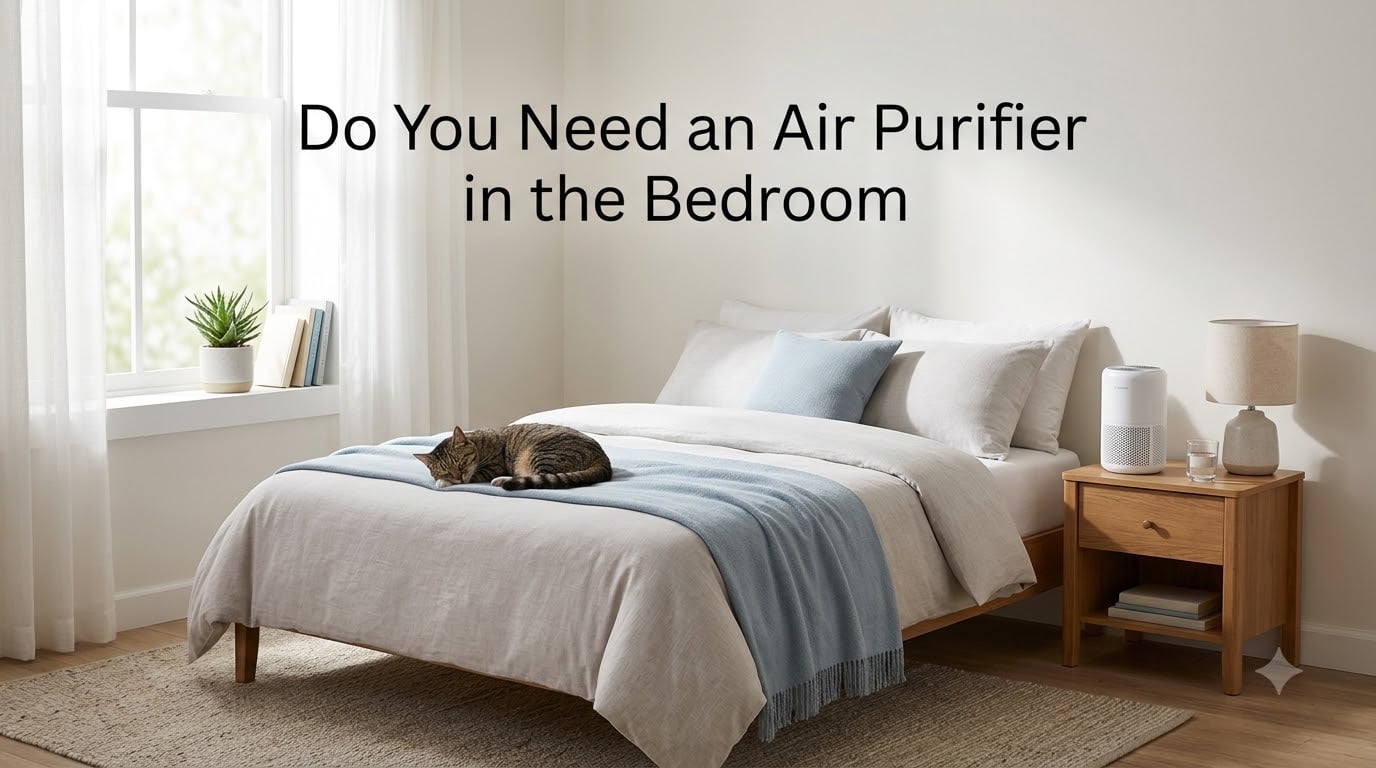
Yes, you need an air purifier in the bedroom if you want cleaner air while you sleep. You spend roughly one-third of your life in that room, breathing in whatever particles have settled into the space. A quality air purifier with a HEPA filter captures dust, pollen, pet dander, mold spores, and other airborne irritants that would otherwise end up in your lungs all night.
Our team has spent months researching indoor air quality, testing different purifier setups, and digging through hundreds of forum discussions to answer this question properly. The short answer is that most people benefit from having one. But the longer answer involves your specific situation, your health, your bedroom size, and whether you share the space with pets.
If you wake up congested, sneeze in the morning, or notice a fine layer of dust on your nightstand every few days, those are strong signals. A bedroom air purifier addresses those problems directly. In this guide, I will walk you through the benefits, who benefits most, placement strategies, noise considerations, and when you might not actually need one.
Table of Contents
Why Bedroom Air Quality Matters More Than You Think?
Your bedroom accumulates more airborne pollutants than you probably realize. Mattresses shed fibers, pillows release dust mites, and carpeting traps particles that get stirred up every time you walk across the room. Add in pet dander if your dog or cat sleeps nearby, and the air in your bedroom can be significantly more polluted than the air in your living room.
The Environmental Protection Agency notes that indoor air can be two to five times more polluted than outdoor air. Your bedroom is no exception. When you close the door at night, you are essentially sealing yourself in a small space with whatever contaminants are present. Without proper air filtration, those particles stay suspended in the air you breathe for eight hours straight.
Poor bedroom air quality has been linked to disrupted sleep patterns, morning headaches, and worsened allergy symptoms. Some people wake up feeling groggy and attribute it to bad sleep hygiene when the real culprit is the air they breathed all night. Clean air supports deeper, more restorative sleep because your respiratory system is not working overtime to filter out irritants.
Think about it this way. You would not drink dirty water every day and expect to feel great. Breathing polluted air for a third of your life has a similar cumulative effect on your body. A bedroom air purifier is one of the simplest ways to improve the air you breathe during those critical recovery hours.
Benefits of an Air Purifier in the Bedroom
A quality air purifier does more than just move air around. It actively removes harmful particles from your breathing zone, creating a cleaner environment that pays off in ways you can feel within days of use. Here are the specific benefits our team found most impactful.
Allergen and Dust Reduction
This is the number one reason people buy a bedroom air purifier. A true HEPA filter captures 99.97 percent of particles as small as 0.3 microns, which covers the vast majority of common allergens. Dust mites, pollen, mold spores, and fine dust particles all get trapped before they reach your respiratory system.
Forum users on Reddit consistently report noticeably less dust buildup on surfaces after adding a purifier to their bedroom. One user mentioned they went from dusting their nightstand every three days to once every two weeks. That visible difference tells you exactly how much particulate matter was previously circulating in the air.
If you suffer from seasonal allergies, a bedroom air purifier can significantly reduce nighttime symptoms. Instead of breathing in pollen all night while your body tries to heal, the filter captures those particles before they trigger sneezing, congestion, and itchy eyes. Many allergy sufferers report waking up clear-headed for the first time in years.
Better Sleep Quality
Cleaner air directly translates to better sleep. When your body is not fighting off airborne irritants, it can focus on the restorative processes that happen during deep sleep. Studies have shown that people sleeping in rooms with air purifiers experience fewer sleep disturbances and report feeling more rested in the morning.
There is also an unexpected sleep benefit that many users mention. The steady hum of an air purifier on its lowest setting creates white noise that masks sudden sounds. If traffic, neighbors, or a snoring partner regularly wake you up, that consistent background sound can help you stay asleep through the night.
Some users on the r/Biohackers subreddit specifically credit their air purifier with improved sleep tracking scores. Their deep sleep percentages increased after placing a purifier near the bed. While everyone responds differently, the connection between clean air and sleep quality is well documented.
Pet Dander and Odor Control
If your dog or cat sleeps in your bedroom, pet dander is a major air quality issue. Dander particles are extremely small and can remain airborne for hours. An air purifier running overnight captures those particles continuously, preventing them from settling on your bedding and entering your airway.
Pet owners on forums consistently report significant improvement in morning congestion after adding a bedroom purifier. One user with two cats said they stopped waking up with a stuffy nose within a week of running a purifier overnight. The difference was dramatic enough that they immediately bought a second unit for their home office.
Odors are another issue that improves with filtration. Many air purifiers include an activated carbon filter layer that absorbs smells rather than just masking them. If your bedroom tends to hold onto cooking odors from the kitchen or that lingering pet smell, the carbon filter handles it while the HEPA layer handles particles.
Who Benefits Most from a Bedroom Air Purifier
While almost anyone can benefit from cleaner bedroom air, certain groups see dramatic improvements. If you fall into any of these categories, a bedroom air purifier should be high on your priority list.
Allergy sufferers are the most obvious group. If you wake up with a runny nose, sneezing fits, or itchy eyes, airborne allergens are likely the cause. A HEPA air purifier removes pollen, dust mites, and mold spores from your breathing zone overnight, giving your body a break from constant allergen exposure. Many users report being able to reduce their allergy medication after consistent use.
People with asthma benefit significantly because airborne triggers like dust, pet dander, and mold can cause nighttime asthma attacks. Cleaner air reduces inflammation in the airways and decreases the frequency of nighttime symptoms. If you use an inhaler before bed, a bedroom air purifier adds another layer of protection for your respiratory system.
Pet owners who let animals sleep in the bedroom face constant dander exposure. Cats and dogs shed microscopic skin flakes that stay airborne for hours. An air purifier captures that dander continuously, which helps both allergic and non-allergic household members breathe easier.
City dwellers and people living near busy roads deal with vehicle exhaust, fine particulate matter, and industrial pollution that seeps indoors. Even with windows closed, fine particles enter through gaps and ventilation systems. A bedroom air purifier acts as a final line of defense against urban air pollution.
Light sleepers and people sensitive to odors also benefit. The white noise from a purifier on low speed can mask disruptive sounds, and the carbon filter removes lingering odors that might otherwise disturb sleep. If you are sensitive to smells or easily awakened by noise, a bedroom air purifier addresses both issues.
How Do Air Purifiers Work in a Bedroom Setting
Understanding the basics of air purifier technology helps you make a smarter decision. The core technology matters because not all purifiers deliver the same results in a bedroom environment.
A HEPA filter is the gold standard for particle removal. True HEPA filters capture 99.97 percent of particles down to 0.3 microns in size. That includes dust, pollen, pet dander, mold spores, and even some bacteria. When shopping for a bedroom unit, HEPA filtration should be your starting requirement. Anything less is not worth the investment.
The CADR rating, or Clean Air Delivery Rate, tells you how quickly a purifier cleans a specific room size. A higher CADR means faster cleaning. For a standard bedroom of 150 to 200 square feet, look for a smoke CADR of at least 100. For larger bedrooms, scale up accordingly. The CADR rating is one of the most reliable metrics for comparing purifier performance.
Air purifiers work by pulling contaminated air through their filter system and releasing clean air back into the room. This cycle repeats continuously, gradually reducing the concentration of airborne particles. Most quality units complete four to five air exchanges per hour in an appropriately sized room, meaning the entire volume of air passes through the filter every twelve to fifteen minutes.
Some models add an activated carbon layer for odor and gas removal. Carbon absorbs volatile organic compounds, cooking smells, and chemical vapors that HEPA filters cannot capture. If odors are a concern in your bedroom, look for a unit with both HEPA and carbon filtration for complete coverage.
Where to Place an Air Purifier in Your Bedroom?
Placement makes a bigger difference than most people realize. Even the best air purifier underperforms if it is sitting in the wrong spot. The goal is to position the unit so it cleans the air around your breathing zone as efficiently as possible.
Place it near the head of your bed. Your breathing zone is the area right around your face while you sleep. Positioning the purifier within six to ten feet of the bed ensures that the cleanest air reaches you directly. Many users place theirs on a nightstand or on the floor beside the bed.
Elevate it off the floor when possible. Floor-level placement means the purifier is pulling in heavier dust particles that have already settled rather than capturing lighter airborne allergens. A height of three to five feet off the ground is ideal. If floor placement is your only option, choose a model designed for low positioning with an upward airflow pattern.
Keep it away from walls and furniture. Air purifiers need clearance on all sides to pull in air effectively. Leave at least one to two feet of space around the intake and output vents. Pushing a purifier into a tight corner or against a wall restricts airflow and reduces its cleaning efficiency by up to 50 percent.
Avoid placing it near electronics. Televisions, computers, and other electronics generate heat and create their own air currents that can interfere with the purifier’s airflow pattern. Keep your purifier at least three feet away from other devices for best results.
Keep the door closed during use. The EPA recommends operating air purifiers in closed rooms for maximum effectiveness. An open door allows clean air to escape and untreated air to enter, which means the purifier is constantly fighting new pollution instead of maintaining clean air. If your bedroom connects to a hallway or bathroom, keep those doors closed too.
Noise Levels and Sleep Mode Considerations
Noise is the most common concern people have before buying a bedroom air purifier. Nobody wants a loud machine running all night. The good news is that modern bedroom purifiers are designed specifically for quiet operation, and most models include a dedicated sleep mode.
On their lowest setting, quality bedroom air purifiers produce between 25 and 35 decibels of sound. For context, a whisper is about 30 decibels. At that level, the sound is barely noticeable and many people describe it as a gentle hum rather than noise. If you currently use a fan or white noise machine for sleep, an air purifier on low speed serves the same purpose.
Sleep mode is a feature worth looking for. This setting automatically dims the display lights and reduces the fan speed to its quietest level. Some models also adjust fan speed based on air quality readings, ramping up when pollution is detected and settling back down once the air is clean. This means you get maximum cleaning power without any manual adjustments during the night.
For extremely light sleepers, even 25 decibels might be noticeable initially. Most users report that they adjust within a few nights and eventually find the sound soothing. Forum discussions on Reddit frequently mention that the white noise effect actually improves sleep quality rather than disrupting it.
If noise sensitivity is a major concern, consider running the purifier on a higher speed for an hour before bed to clean the air thoroughly, then switching to the lowest setting for overnight use. This approach gives you clean air and minimal noise simultaneously.
When You Might NOT Need an Air Purifier in the Bedroom?
Not everyone needs an air purifier in the bedroom. Despite the clear benefits for most people, there are situations where the investment may not be necessary or where other solutions solve the problem first.
If your home already has a whole-house air filtration system integrated with the HVAC, adding a standalone bedroom unit may be redundant. Whole-house systems with MERV 13 or higher filters can effectively clean air throughout the home, including bedrooms. Check your current setup before investing in a portable unit.
People who live in areas with excellent outdoor air quality, keep windows open regularly for cross-ventilation, and have no allergies, pets, or respiratory issues may not see a noticeable difference. Natural ventilation can be highly effective when outdoor air is clean and pollen counts are low.
If your bedroom is very small and you already run a high-quality HVAC system with good filtration, the additional benefit of a portable purifier is marginal. The key question is whether you currently experience any air quality issues, congestion, allergies, or excess dust. If the answer is no across the board, the purifier might be an unnecessary expense.
Cost is a legitimate factor. Beyond the initial purchase price, you need to account for filter replacements every six to twelve months and the ongoing electricity cost. If your budget is tight and you do not have specific air quality concerns, there are higher-priority improvements you could make to your sleep environment first, such as upgrading your mattress or pillows.
Cost and Energy Considerations
Understanding the true cost of running a bedroom air purifier helps you make an informed decision. The total cost of ownership includes the upfront purchase, filter replacements, and electricity usage over time.
On the electricity side, most bedroom air purifiers are surprisingly energy efficient. A typical unit draws between 30 and 60 watts on its highest setting and as little as 5 to 15 watts on sleep mode. Running one continuously at low speed adds roughly $15 to $30 per year to your electricity bill, depending on local rates. Energy Star certified models use even less.
Filter replacement is the ongoing cost to factor in. HEPA filters typically need replacing every six to twelve months, depending on usage and air quality. Carbon filters may need more frequent replacement if odor control is a primary concern. Replacement filter costs range from $20 to $80 depending on the model. Look for units with a filter replacement indicator light so you only change filters when actually needed rather than on a strict schedule.
Seasonal considerations also play a role in cost-effectiveness. During spring pollen season, a bedroom air purifier works overtime and delivers maximum value for allergy sufferers. In winter when windows stay closed and indoor air becomes stale and dry, the purifier maintains healthier air quality. Many users find that running their purifier year-round provides consistent benefits that justify the cost.
One cost-saving tip from forum users is to run your purifier on medium or high for the first hour after entering the bedroom to quickly clean the air, then drop to low speed for the rest of the night. This approach maximizes cleaning efficiency while minimizing filter wear and electricity use.
Frequently Asked Questions
What are signs you need an air purifier?
Common signs include waking up with a stuffy nose or congestion, frequent morning sneezing, visible dust accumulating quickly on surfaces, lingering odors that will not go away, worsening allergy symptoms at night, and unexplained headaches upon waking. If you notice any combination of these, a bedroom air purifier can help address the root cause.
Is there a downside to using an air purifier?
The main downsides are the upfront cost, ongoing filter replacement expenses, and minor electricity usage. Some models produce ozone as a byproduct, which can irritate lungs, so avoid ozone-generating purifiers. Noise on higher settings can also be a concern for sensitive sleepers, though most bedroom models are very quiet on low.
Should the bedroom door be closed when using an air purifier?
Yes, keep the door closed for maximum effectiveness. The EPA recommends operating air purifiers in enclosed spaces. An open door allows clean air to escape and untreated air to enter, forcing the purifier to work harder without achieving optimal results.
Where should you not place an air purifier?
Avoid placing an air purifier in tight corners, directly against walls or furniture, behind doors that swing open, near heat sources or electronics, or on thick carpet that can block intake vents. Always maintain at least one to two feet of clearance around the unit for proper airflow.
Is it healthy to sleep with an air purifier?
Yes, it is healthy and often beneficial. A HEPA air purifier removes airborne allergens, dust, and pollutants from your breathing zone overnight, which supports better respiratory function and deeper sleep. The white noise from low-speed operation can also improve sleep quality for many people.
Conclusion
So, do you need an air purifier in the bedroom? For most people, the answer is a clear yes. The combination of allergen reduction, better sleep quality, dust control, and pet dander management delivers measurable benefits that you can feel within days of use. When you spend a third of your life breathing the air in that room, investing in cleaner air is one of the simplest health upgrades you can make.
The decision ultimately comes down to your personal situation. If you have allergies, asthma, pets, or live in an area with poor air quality, a bedroom air purifier is close to essential. If you have no air quality concerns and a tight budget, it may be a lower priority. Either way, understanding the benefits helps you make the right call for your health and your home.
Start by identifying your specific needs, choose a unit with true HEPA filtration, and place it properly near your bed. Those three steps will give you cleaner air and better sleep starting tonight.