
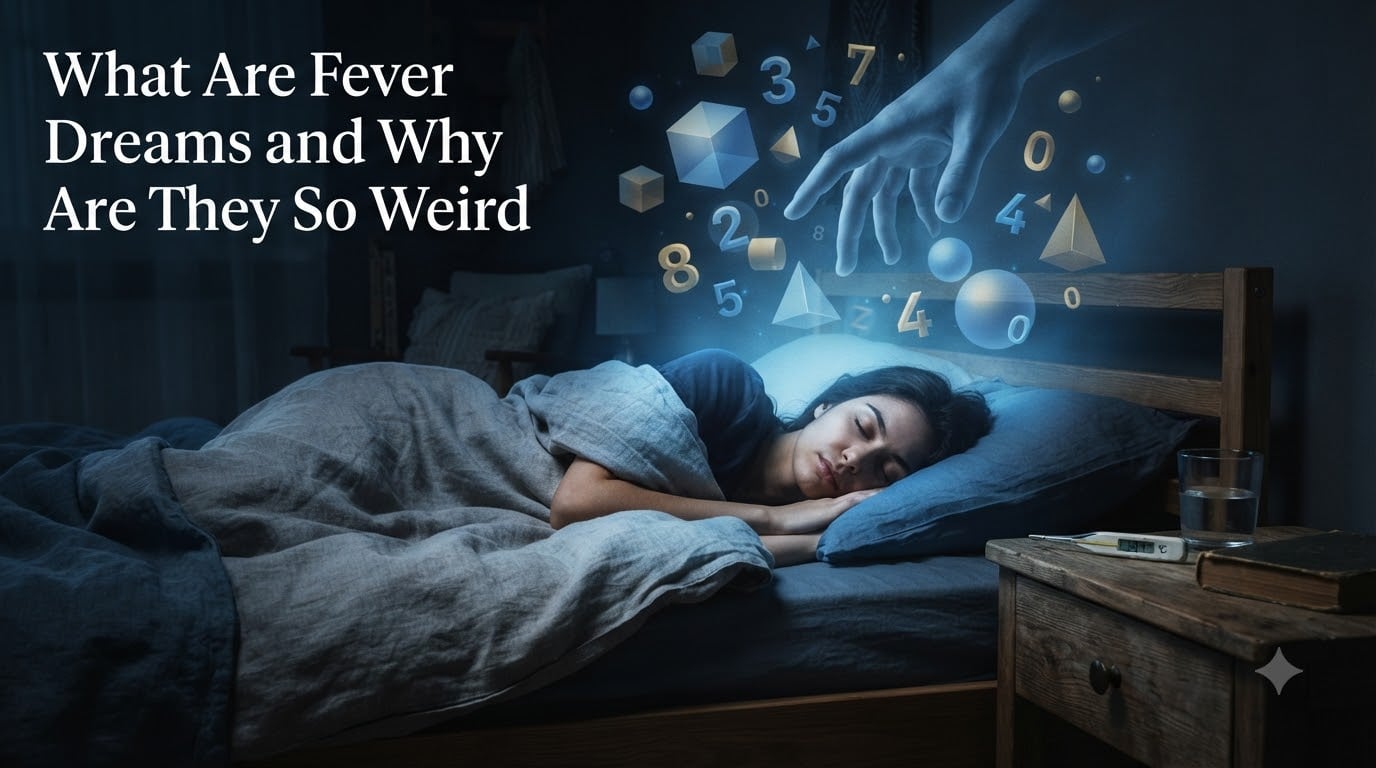
Fever dreams are vivid, often bizarre dreams that happen when your body temperature climbs above its normal range during illness. They tend to feel weirder, more emotionally charged, and harder to shake than ordinary dreams.
Most people remember their first fever dream because it felt nothing like normal sleep. Rooms stretch, walls breathe, familiar people say things that don’t quite make sense, and you wake up feeling like something important just happened, even though you cannot explain what.
In this guide, I’ll walk you through what fever dreams actually are, why they feel so strange, what the science says about them, and what you can do to make them less intense. I’ve pulled together research from sleep scientists, real descriptions from people who have lived through them, and practical tips you can use the next time illness strikes.
Table of Contents
What Exactly Are Fever Dreams?
A fever dream is an unusually vivid, often disturbing dream that occurs while you sleep with an elevated body temperature, usually above 100.4°F (38°C). Unlike ordinary dreams, fever dreams frequently involve bizarre imagery, intense negative emotions, and themes directly related to heat, illness, or bodily distress.
Researchers describe fever dreams as a specific category of dream distinguished by three traits: heightened vividness, stronger negative emotional tone, and unusual content tied to health and temperature. A 2016 study published in Frontiers in Psychology found that people sick with fever reported dreams that were significantly more bizarre, more emotionally intense, and more focused on health-related imagery than their usual dreams.
About 94% of people report having at least one fever dream at some point in their lives. Most happen during acute illnesses like the flu, COVID-19, strep throat, or stomach bugs. They tend to occur in the second half of the night, when REM sleep is longest and your body temperature is still elevated.
Why Are Fever Dreams So Weird?
Fever dreams feel weird because elevated brain temperatures disrupt the cognitive processing that normally keeps dreams organized and forgettable. When your brain overheats, the usual filters that shape dreams into something coherent get scrambled, producing imagery that feels surreal, spatially distorted, and emotionally overwhelming.
Several factors combine to create that “weird” feeling. First, your brain is partly awake and partly dreaming at the same time, so dream logic bleeds into waking thought. Second, your senses are distorted by heat, so things like pressure, touch, and temperature feel exaggerated in dreams. Third, fever activates the same threat-detection centers that fire during real danger, which is why so many fever dreams carry a sense of dread.
People often describe fever dreams as more abstract than normal dreams, almost like watching a film with no plot. You might see shapes, colors, or numbers without meaning, or watch familiar scenes play out with strange rules. The dream content can feel impossible to describe afterward, which is one of the most distinctive features of fever dreams compared to regular ones.
The Science Behind Fever Dreams
Scientists have proposed several overlapping explanations for why fever produces such strange dreams, and most agree that a mix of biological and psychological factors is responsible.
Elevated Brain Temperature Disrupts Cognition
When your body temperature rises, your brain temperature rises with it. Even a small increase, around 1 to 2 degrees Celsius, can change how neurons fire. Researchers like Dr. J. Allan Hobson have suggested that this “brain overheating” interferes with the prefrontal cortex, the region that handles logic, planning, and narrative coherence. Without that filter, dreams become more chaotic and bizarre.
REM Sleep Becomes More Intense
Fever pushes your body to spend more time in REM sleep, the stage where most vivid dreaming occurs. Sleep studies show that fever shortens the time it takes to enter REM and lengthens REM periods. More REM means more dreaming time, and when dreaming happens under physical stress, the dreams tend to be more emotionally intense and harder to process.
The Continuity Hypothesis
The continuity hypothesis suggests that dreams reflect whatever is happening in your waking life, including physical sensations. When you have a fever, you feel heat, chills, aches, and pressure. Those sensations often show up directly in dreams as fire, ice, oversized body parts, or crushing weight. This is why fever dreams so often contain themes of temperature, threat, or physical distortion.
What Research Shows
Dream researcher Michael Schredl, who has published extensively on fever dreams, found that people with fever reported dreams containing more references to health, temperature, and negative emotions than matched controls. His work supports the idea that fever dreams are not random but are tightly linked to what’s happening in the body during illness.
How Fever Dreams Differ From Normal Dreams
Fever dreams stand out from regular dreams in measurable ways. They tend to be more vivid, more negative, more bizarre, and harder to forget. They also feature unusual content that rarely appears in typical dreams.
Here’s how the two compare:
Emotional tone: Normal dreams run the full emotional range, including happy, peaceful, or even boring ones. Fever dreams skew heavily negative, with anxiety, fear, sadness, or dread dominating.
Vividness: Regular dreams can be vivid, but fever dreams often feel hyperreal. Colors are brighter, sounds are louder, and emotions hit harder.
Bizarre content: Both dream types can be strange, but fever dreams are more likely to include impossible physics, abstract shapes, distorted body parts, or scenes that shift without warning.
Memory: Most people forget 90 to 95 percent of their dreams within minutes. Fever dreams tend to stick. People often recall them in detail for days or even weeks afterward.
Theme: Normal dreams often revolve around daily life, relationships, and recurring personal symbols. Fever dreams lean heavily on illness, heat, threat, and bodily distortion.
Fever Dreams vs Nightmares vs Lucid Dreams
Fever dreams get confused with two other sleep phenomena: nightmares and lucid dreams. They share some surface traits but have very different causes and characteristics.
Fever dreams vs nightmares: Nightmares are distressing dreams that wake you up and usually carry a clear narrative, like being chased, falling, or losing a loved one. Fever dreams are often weirder and more abstract than nightmares, and they don’t always wake you. Nightmares can happen to anyone, even healthy people, while fever dreams specifically require elevated body temperature.
Fever dreams vs lucid dreams: Lucid dreams are dreams where you realize you are dreaming while still asleep. Some people train themselves to have them. Fever dreams, by contrast, are typically the opposite of lucid. You feel trapped inside them and rarely recognize that they’re not real. Lucid dreams often feel pleasant or empowering, while fever dreams feel disorienting and unpleasant.
The key difference is the trigger. Lucid and ordinary nightmares are tied to psychology and sleep cycles. Fever dreams are tied to a specific physical state, the body fighting infection.
What Fever Dreams Actually Feel Like: Real Descriptions
One thing that makes fever dreams hard to talk about is that they often feel impossible to describe. People use words like “indescribable,” “abstract,” and “felt more like a feeling than a story.” Here’s what real descriptions tend to share.
Oversized body parts: Many people report dreaming that their own hands, arms, or legs have grown enormous. Fingers stretch across rooms. Heads balloon to fill ceilings. The body feels both too big and too heavy.
Giant insects and creatures: Bugs, spiders, or unnamed creatures with too many limbs appear at disturbing sizes. They often crawl slowly or stare without moving, which adds to the dread.
Spreading blackness: A dark color or shadow slowly creeps across the dream world, swallowing walls, furniture, or people. It usually feels threatening but doesn’t attack directly.
Abstract numbers and shapes: Numbers, letters, or geometric patterns float around without meaning. They might rearrange themselves, repeat, or pulse with light. Many people say this is the most “fever dream” part of a fever dream.
Rooms that won’t stop changing: Doors appear where walls were. Stairs lead nowhere. Furniture rearranges itself when you look away.
Recurring dreams across fevers: Some people notice the same fever dream returning every time they get sick, with slight variations. This supports the continuity hypothesis, that your brain replays familiar illness themes during each bout of fever.
Fever Dreams in Children
Children get fever dreams more often than adults, partly because their immune systems trigger fevers more readily and partly because their brains are still developing the systems that regulate dream content. Kids may wake up crying, refuse to go back to sleep, or insist something “bad” is in the room.
For parents, the most important thing is reassurance. Tell your child the dream was caused by the fever and will go away as they get better. Keep the room dim, calm, and quiet. A favorite stuffed animal, a cool cloth on the forehead, or a glass of water can help them resettle.
Fever dreams in children are rarely a sign of anything serious. But if your child has frequent nightmares even without fever, or shows signs of daytime anxiety, it’s worth bringing up with your pediatrician.
How to Reduce Fever Dreams and Sleep Better
You can’t fully prevent fever dreams while your body is fighting illness, but you can reduce how often they happen and how intensely they hit. The goal is to lower the fever, stabilize your sleep, and create a calmer environment for dreaming.
Manage the Fever Itself
The single most effective step is lowering your body temperature. Stay hydrated with water, broth, or electrolyte drinks. Take age-appropriate fever reducers like acetaminophen or ibuprofen if your doctor has approved them. A lukewarm cloth on the forehead or a cool (not cold) shower can also help.
Keep Your Sleep Environment Cool
Aim for a room temperature between 60 and 67°F (15.6 to 19.4°C). Use lightweight bedding and breathable cotton pajamas. If you wake up sweating, change your clothes and sheets so your body can cool down without waking you fully.
Stick to a Gentle Sleep Routine
Even when sick, try to go to bed and wake up at roughly the same time. Avoid screens an hour before sleep, since the blue light can fragment REM cycles and make dreams more chaotic.
Don’t Try to Force Lucidity
Some dream guides suggest becoming lucid during bad dreams to take control. This rarely works during fever dreams, because they don’t follow normal dream logic. Trying to force awareness can make you feel more stuck, not less. Let them pass.
When to Seek Medical Attention
Fever dreams themselves aren’t dangerous. But if your fever climbs above 103°F (39.4°C), lasts more than three days, or comes with a stiff neck, severe headache, confusion, or rash, call a doctor. The fever needs treatment, and the dreams will fade along with it.
Frequently Asked Questions About Fever Dreams
Why are fever dreams so disturbing?
Fever dreams are disturbing because elevated brain temperatures disrupt the cognitive systems that normally organize dream content. This creates dreams with intense negative emotions, threatening imagery, and bizarre scenarios that feel hyperreal and hard to shake after waking.
What causes fever dreams?
Fever dreams are caused by a combination of elevated brain temperature, increased REM sleep intensity, and physical sensations from illness bleeding into dream content. Stress hormones and disrupted sleep cycles also play a role.
How do you snap out of a fever dream?
The fastest way to snap out of a fever dream is to focus on a physical sensation, like wiggling your toes, gripping the bedsheet, or feeling your own breathing. If that doesn’t work, try blinking rapidly or looking for text in the dream, which often signals your brain to wake up.
Do fever dreams feel good?
Most fever dreams feel unpleasant or unsettling, but a small number of people report neutral or even pleasant fever dreams. The overwhelming majority are negative in tone, often involving anxiety, dread, or threat.
Are fever dreams dangerous?
Fever dreams themselves are not dangerous and do not harm your brain. However, they can be a sign that your fever is high enough to disrupt normal sleep, so it’s worth treating the underlying illness.
Can you have fever dreams without a fever?
You can have vivid, bizarre dreams without a fever, but they aren’t classified as fever dreams. Dreams that feel fever-like without actual fever are usually tied to stress, illness without temperature elevation, or sleep deprivation.
Why are my dreams so vivid when I’m sick but don’t have a fever?
Illness without fever can still disrupt REM sleep through inflammation, congestion, and physical discomfort. These disruptions can produce vivid, strange dreams that feel similar to fever dreams but lack the temperature component.
Are fever dreams common in children?
Yes, fever dreams are very common in children because their bodies trigger fevers more easily and their dream regulation systems are still developing. Most children outgrow the most intense fever dreams by adolescence.
Final Thoughts on Fever Dreams
Fever dreams feel weird because your brain is doing something it rarely has to do, dream while under physical stress. The same fever that makes you sweat and shiver also heats up your brain, lengthens REM sleep, and lets your body’s sensations leak directly into dream imagery.
They’re unpleasant, but fever dreams are a normal sign that your immune system is hard at work. Lower your fever, rest in a cool room, hydrate, and the dreams will fade along with the illness. If a fever dream tonight leaves you unsettled, take comfort in knowing that what you experienced was simply your body fighting to get you well.