
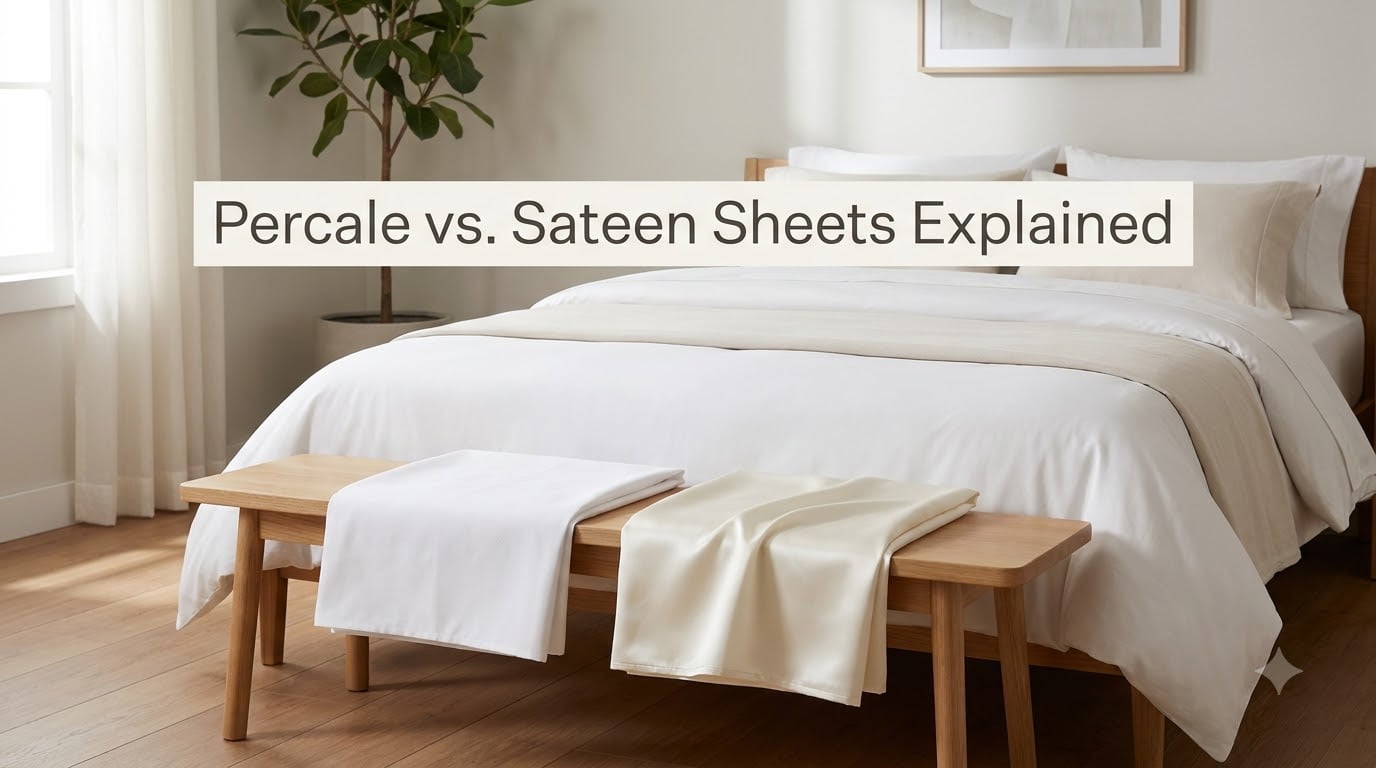
When I first started buying quality bed sheets, I kept seeing two words everywhere: percale and sateen. Both were 100% cotton. Both felt “nice” in the store. But once I got them home, the difference was obvious the very first night. Understanding percale vs sateen sheets comes down to one simple thing: how the cotton threads are woven together. That single difference changes everything about how your sheets feel, breathe, and last.
In this guide, I’ll walk you through exactly what each weave is, how it feels, who it suits best, and how to pick the right one for your sleep style. I’ll also clear up the common sateen vs satin confusion and answer the most popular questions people search for. By the end, you’ll know which sheets belong on your bed.
Table of Contents
What Is Percale? The Crisp, Matte Cotton Weave Explained
Percale is a plain-weave cotton fabric made by weaving one thread over, then one thread under, in a simple crisscross pattern. That structure is what gives percale its signature crisp hand, matte finish, and lightweight feel. Percale sheets are the kind you find in classic white hotel rooms where the bed looks freshly pressed and feels cool the moment you slide in.
How the One-Over-One-Under Weave Works
Imagine a tiny checkerboard of cotton threads. Each warp thread (running lengthwise) crosses over one weft thread (running crosswise), then under the next, repeating the pattern across the entire sheet. This balanced one-over-one-under weave creates a tight, even surface with no sheen and a slightly textured feel.
Simple text diagram of percale weave:
Warp -> Over Weft 1, Under Weft 2, Over Weft 3, Under Weft 4
Warp -> Under Weft 1, Over Weft 2, Under Weft 3, Over Weft 4
Because each thread is exposed equally on both sides, the fabric stays stable, breathes well, and resists pilling. The pattern also gives percale that satisfying “crack” sound when you snap the sheet.
What Percale Feels Like Against Your Skin
Percale feels crisp, cool, and almost starched right out of the package. I describe it to friends as “the world’s best button-down shirt.” It has a clean, dry touch rather than a slippery drape. After a few washes, percale softens without losing its structure, so it never feels limp or clingy.
The matte finish means no shine or luster. If you prefer a tailored, hotel-style look on your bed, percale is the clear choice. It also feels lighter than sateen and lays flatter on the mattress.
Why Percale Is a Favorite for Hot Sleepers
The one-over-one-under weave leaves more room between threads for air to circulate. Combined with cotton’s natural breathability, percale sheets pull heat away from your body and release it, so you stay cooler at night. In my own testing, I noticed I fell asleep faster on percale during summer because the sheets didn’t trap warmth under the covers.
This is also why many breathable sheet brands build their cooling collections around a percale base. If you run hot, live in a warm climate, or deal with night sweats, percale is the most reliable cotton option.
What Is Sateen? The Silky, Lustrous Cotton Weave Explained
Sateen is also made from cotton, but it uses a different weave pattern that exposes more thread on the surface. Instead of one-over-one-under, sateen uses a three-over-one-under (or sometimes four-over-one-under) structure. That extra float of thread on top is what gives sateen sheets their signature silky feel and luminous sheen.
How the Three-Over-One-Under Weave Works
In a sateen weave, each warp thread passes over three or four weft threads before going under one. The floats of thread are then staggered so the pattern doesn’t show as obvious lines. The result is a smooth, almost satin-like surface that catches the light.
Simple text diagram of sateen weave:
Warp -> Over Weft 1, Over Weft 2, Over Weft 3, Under Weft 4
Warp -> Under Weft 1, Over Weft 2, Over Weft 3, Over Weft 4
Warp -> Over Weft 1, Under Weft 2, Over Weft 3, Over Weft 4
Because so much thread is exposed, the fabric drapes softly and feels heavier in the hand. The trade-off is that those long thread floats can snag more easily and may pill over time.
What Sateen Feels Like Against Your Skin
Sateen feels silky, smooth, and slightly buttery. If percale is a freshly pressed button-down, sateen is a silk blouse. The sheets drape closer to your body, have a soft sheen, and feel warmer to the touch the moment you slide in.
Many people describe sateen as having a “honeyed” touch. Because the weave is denser, sateen sheets weigh more than percale and feel more substantial. They also come out of the wash looking smoother with fewer wrinkles, which is a big reason they’re popular for styled bedrooms and guest beds.
Why Sateen Feels Warmer and Heavier
Those long thread floats create a tighter surface that traps more air and body heat. Combined with the heavier weight of the fabric, sateen sheets work like a light insulating layer. In cooler months or air-conditioned rooms, that warmth feels cozy. In summer or for naturally hot sleepers, it can feel too much.
I always recommend sateen to people who run cold, sleep in drafty bedrooms, or want that “wrapped up” feeling at night.
Percale vs Sateen: Side-by-Side Comparison
Here is the most important comparison at a glance. Use this table the next time you’re shopping to make a quick decision based on what matters to you most.
Feature | Percale | Sateen
Weave pattern | One-over-one-under plain weave | Three-over-one-under (or four-over-one-under) float weave
Surface finish | Matte, no shine | Luminous sheen, subtle luster
Texture | Crisp, cool, light, slightly textured | Silky, smooth, drapey, buttery
Weight | Lightweight | Medium to heavy
Breathability | Excellent, very air-permeable | Moderate, retains more warmth
Best for climate | Warm weather, hot sleepers | Cool weather, cold sleepers
Wrinkle resistance | Wrinkles easily, looks lived-in | Naturally wrinkle-resistant, smooth look
Durability | Very durable, lasts years | Durable, but floats can snag or pill
Ideal thread count | 200 to 400 | 300 to 600
Typical feel | Fresh, hotel-crisp | Cozy, draped, polished
Both weaves can be made from the same cotton (long-staple or extra-long-staple), so fiber quality matters as much as weave. But even with identical cotton, side-by-side you will feel the difference immediately.
Thread Count: What Matters for Each Weave
Thread count gets overhyped in sheet marketing. The honest truth is that a higher number does not automatically mean better sheets. The right thread count depends on the weave you choose.
Ideal Thread Count for Percale Sheets
For percale, the sweet spot sits between 200 and 400. Anything in that range gives you a tight, durable weave that still breathes well. I often notice that 200 to 300 thread-count percale made with long-staple cotton feels better than a 600 thread-count percale made with short fibers.
Be cautious with multi-ply percale marketed at 800 or 1000 thread count. Multi-ply threads can make the fabric heavier and less breathable, which cancels out the main reason people choose percale. When shopping, look for single-ply, long-staple cotton percale in the 200 to 400 range.
Ideal Thread Count for Sateen Sheets
Sateen can handle higher thread counts because the floating threads create a denser surface. A good range is 300 to 600, with many of the best sateen sheets landing around 400 to 500. Because sateen sheets often use single-ply or two-ply threads, fiber quality matters more than chasing a 1000 thread count.
Here is a simple rule: if a sateen sheet claims 1000 thread count at a low price, inspect the fiber. It is likely multi-ply or short-staple cotton, which can feel cozy at first but will pill and lose softness over time.
Which Weave Should You Choose? Best Use Cases
The “right” weave comes down to your sleep style, climate, and personal preference. There is no objectively better option. Let me break it down by the most common scenarios.
Pick Percale If You Sleep Hot or Live in Warm Climates
If you live in the southern United States, the Mediterranean, Australia, or anywhere summers get warm, percale is the more comfortable choice. The breathable weave lets air move through the fabric and wicks moisture away from your skin. Hot sleepers, people going through menopause, and anyone who wakes up sweaty should start with percale.
Hotels in tropical and warm regions often pick percale because it stays cool and washes easily in high-volume laundry systems. If you have ever felt that crisp coolness in a resort bed, that was almost certainly percale.
Pick Sateen If You Want Cozy Warmth in Cooler Months
If you sleep in a colder bedroom, feel cold at night, or want that “wrapped in a hug” feeling, sateen is the better pick. The dense weave and heavier weight create a soft insulating layer that holds body heat. I switch to sateen in the fall and keep it on through early spring, then rotate to percale once the weather warms up.
Sateen is also a great choice for guest bedrooms where you want a polished, wrinkle-free look with minimal effort.
Choosing for Sensitive Skin and Allergies
Both percale and sateen work well for sensitive skin if you choose 100% cotton with OEKO-TEX certification. But there is a subtle difference. Percale’s tighter, cooler surface can feel more comfortable for people with eczema or heat-triggered skin conditions, because it doesn’t trap warmth against the body.
Sateen sheets that have been mercerized (a common finishing process) feel smoother, which can be gentler on highly reactive skin. If allergies are your main concern, focus on the fiber (long-staple organic cotton) and certifications (OEKO-TEX, GOTS) more than the weave.
Do Hotels Use Percale or Sateen Sheets?
Most luxury and mid-range hotels use percale sheets, especially in warmer climates. The classic crisp white hotel sheet is almost always a percale weave, often in a 200 to 300 thread-count long-staple cotton. Percale holds up to industrial washing, dries fast, and stays cool for guests, which is why hotels standardize on it.
That said, some boutique hotels and resorts do use sateen for a more luxurious, draped look. If you have ever felt sheets that were silky and slightly heavier in a high-end boutique hotel, those were likely sateen. The general rule: business and resort hotels lean percale, fashion-forward boutique hotels lean sateen.
Care and Maintenance: Washing, Drying, and Wrinkle Management
Both weaves are easy to care for, but they behave differently in the wash. Knowing what to expect helps you avoid the most common mistakes.
Caring for Percale Sheets
Wash percale in cool or warm water with a mild detergent. Tumble dry on low heat and remove the sheets promptly to reduce wrinkles. Percale will always wrinkle more than sateen, and that is part of its character. If you want a smoother look, iron on a low setting while the sheets are still slightly damp.
Over time, percale actually gets softer and more comfortable with each wash. After about 10 to 15 cycles, the sheets settle into that perfect lived-in, hotel-crisp feel.
Caring for Sateen Sheets
Sateen is even easier. Wash in cool water on a gentle cycle and tumble dry on low. The weave naturally resists wrinkles, so most sateen sheets come out of the dryer looking smooth. Avoid hot water and high heat, which can weaken the long thread floats and lead to pilling.
Skip fabric softener on sateen sheets. The coating can build up on the long thread floats and reduce breathability. A half cup of white vinegar in the rinse cycle every few washes will keep them soft without residue.
Sateen vs Satin: Clearing Up the Confusion
This is one of the most common mix-ups in bedding searches, so it is worth a quick clarification. Sateen and satin are not the same thing, even though they sound similar.
Sateen is always made from cotton fibers woven in a float pattern. It has a soft sheen but is still breathable and natural. Satin (and silk satin) is a weave pattern that can be made from silk, polyester, nylon, or other synthetic fibers. Satin feels slippery and shiny, but it does not breathe like cotton sateen.
If you want the silky feel with the breathability of cotton, choose sateen. If you want a true slippery, cool-to-the-touch surface, you are looking at silk or synthetic satin, which is a different category entirely.
Percale vs Sateen: Which One Is Right for You?
After months of swapping between the two on my own bed, I land on this simple rule. Pick percale if you want crisp, cool, breathable cotton that softens over time and feels fresh year-round. Pick sateen if you want silky, draped, wrinkle-resistant cotton that adds warmth and a polished look to your bedroom.
Many sheet lovers end up owning both. A percale set for summer and a sateen set for winter is a common (and lovely) approach. Whichever you choose, focus on long-staple cotton, a trusted thread count range for the weave, and OEKO-TEX certification for peace of mind. With those basics covered, you will sleep better starting tonight.
FAQs
Do luxury hotels use sateen or percale?
Most luxury hotels use percale sheets, especially in warmer climates. The classic crisp, matte feel of high-end hotel bedding is almost always a percale weave in a 200 to 300 thread-count long-staple cotton. Some boutique hotels lean toward sateen for a draped, silky look, but percale is the hotel industry standard for its breathability, durability, and easy washing.
What are the downsides of percale sheets?
The main downsides of percale sheets are that they wrinkle easily and may feel rough or stiff at first. They also tend to be cooler, which is not ideal for cold sleepers. Percale is not a great pick if you want a draped, polished look right out of the dryer, because the matte fabric shows every crease. After several washes, percale softens noticeably and the wrinkles become part of its lived-in charm.
Is 100% cotton the same as 100% cotton percale?
No. 100% cotton refers to the fiber used, while percale refers to the weave pattern. A sheet can be 100% cotton but still be sateen, twill, or jersey. To be percale, the cotton must be woven in a one-over-one-under crisscross pattern. Always check for both the fiber (100% cotton) and the weave (percale) on the label so you know exactly what you are getting.
What thread count is best for percale?
The best thread count for percale sheets is 200 to 400, with single-ply long-staple cotton. A 250 to 300 thread-count percale made with Egyptian or Pima cotton will generally feel crisper and last longer than a 600 thread-count percale made with multi-ply short fibers. Higher thread counts in percale can actually reduce breathability, which defeats the weave’s main advantage.
Now you have the full picture on percale vs sateen sheets. The weave is the difference, and your sleep style is the tiebreaker. Pick the one that matches your climate and comfort, and you’ll be set for years of better sleep.