
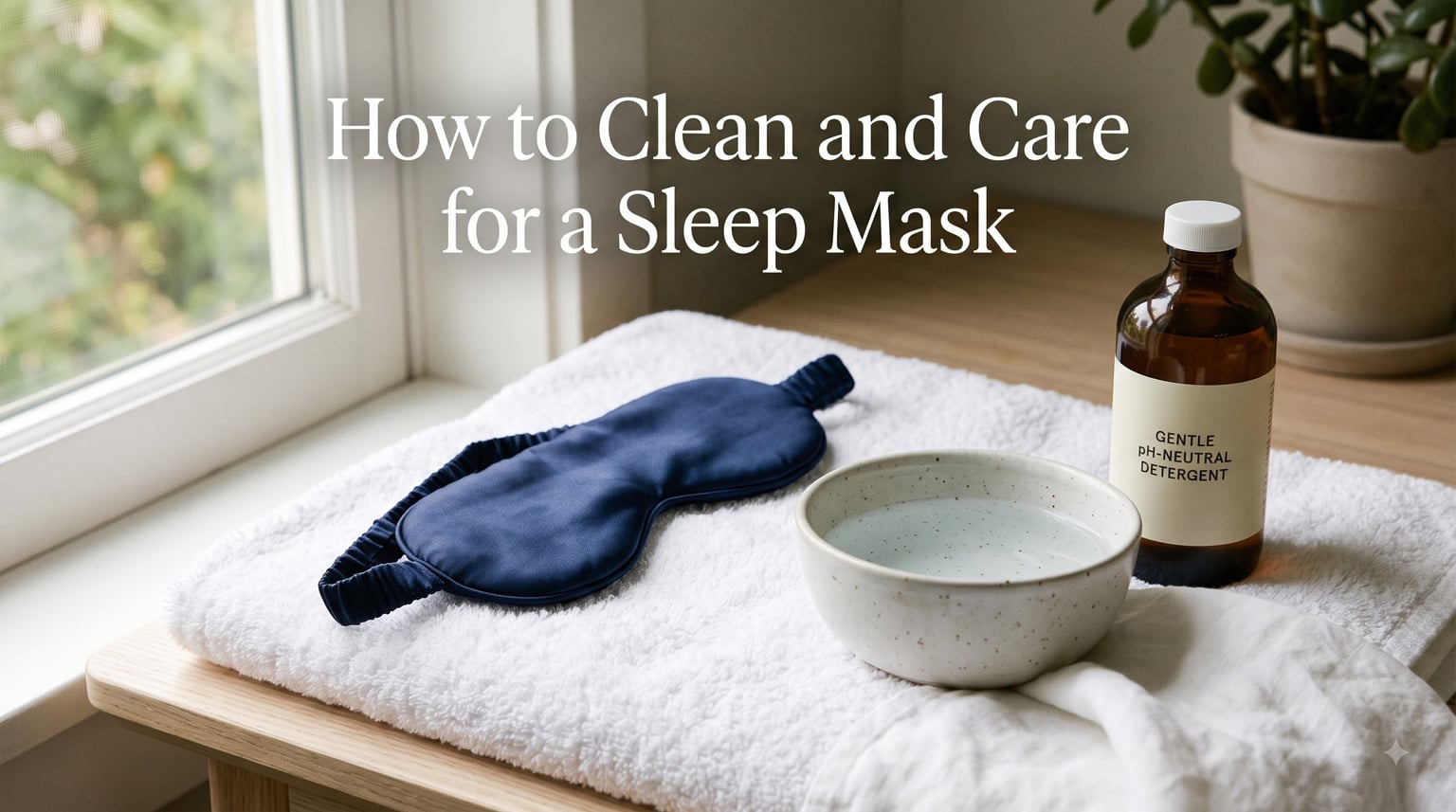
Your sleep mask touches your face for 7 to 9 hours every night, absorbing oil, sweat, dead skin cells, and leftover skincare products. I spent years treating mine like a low-maintenance accessory until I noticed small breakouts along my cheekbones. That sent me down a rabbit hole of research, and now I want to share what I learned about how to clean and care for a sleep mask the right way.
In this guide, I’ll walk you through the exact methods I use on my silk, satin, and cotton masks, plus how to handle the tricky electronic masks with built-in headphones. Whether you wear yours for shift work, travel, or just better sleep, the steps below will keep your mask hygienic and your skin clear.
Table of Contents
Why You Need to Clean Your Sleep Mask Regularly
A sleep mask sits directly on the delicate skin around your eyes, one of the thinnest and most sensitive areas on your body. Every night it collects natural oils, sweat, dead skin, eyelash debris, and any residual makeup or moisturizer you forgot to rinse off. That warm, moist surface becomes a breeding ground for bacteria and yeast within just a few wears.
Here’s what happens if you skip washing for too long:
- Bacteria and fungi multiply in the fabric, increasing infection risk
- Clogged pores around the eye area trigger breakouts and milia
- Elastic bands weaken faster from accumulated oils
- Fabric loses its softness and breathability
- Makeup and skincare residue stains the material permanently
People with acne-prone or sensitive skin feel these effects first. I noticed my morning routine included two extra blemishes around my orbital bone, and a freshly washed mask solved the problem within a week. Sleeping in a clean mask is just as important as washing your pillowcase.
How Often Should You Wash Your Sleep Mask
Wash your sleep mask at least once a week, or every 3 to 4 uses if you wear it nightly. If you sweat heavily, sleep in a warm room, or apply heavy night creams, bump that up to twice per week. After a cold or eye infection, wash it immediately before wearing it again.
A quick sniff test or visual check works too. If the elastic feels sticky, the fabric looks dull, or you spot any discoloration, it’s time. Travelling or sharing a bed with a partner who wears a mask? Wash more frequently, since humidity and shared pillows transfer more oils.
How to Hand Wash a Sleep Mask (Step-by-Step)
Hand washing is the safest method for nearly every sleep mask, especially silk and other delicate fabrics. I hand wash mine every Sunday and it takes about 5 minutes of active time. Follow these steps for a clean mask without damage:
- Fill a clean basin with cool water (around 85°F or 30°C). Hot water can warp elastic and shrink natural fibers.
- Add a small amount of pH-neutral, enzyme-free detergent. Specialty silk washes work best, but a mild baby shampoo is a fine backup.
- Submerge the mask and gently swish it around for 2 to 3 minutes. Avoid scrubbing or wringing, which damages fibers.
- Spot-treat any stained areas by pressing (not rubbing) the soapy water into the fabric with your fingertips.
- Rinse thoroughly under cool running water until all soap is gone. Leftover detergent attracts dirt.
- Press out excess water between two clean towels. Never twist or wring the mask.
- Reshape the mask and lay flat or hang to air dry away from direct sunlight.
Pro tip: Add a teaspoon of white vinegar to the rinse water if you live in a hard water area. It dissolves mineral deposits that dull fabric over time.
Can You Machine Wash a Sleep Mask?
You can machine wash some sleep masks, but only if the care label says so. Cotton, polyester, and some blended fabrics tolerate machine washing on a delicate cycle. Silk and most high-end satin masks do not. When in doubt, hand wash.
If the label allows machine washing, follow these guidelines:
- Place the mask inside a mesh laundry bag to protect the elastic and shape
- Use cold water only and the delicate or hand-wash cycle
- Skip the fabric softener, which coats fibers and reduces breathability
- Wash with similar lightweight items like lingerie or activewear
- Remove promptly and reshape before drying
Never put a sleep mask in the dryer. The heat breaks down elastic, warps the shape, and can melt synthetic components. Air drying is non-negotiable.
Material-Specific Care: Silk, Satin, and Cotton
Different fabrics need different care routines. Here’s a quick comparison to help you choose the right method:
Silk (mulberry silk, 19-22 momme): Hand wash only in cool water with a pH-neutral, enzyme-free detergent. Silk is a protein fiber, and regular detergent breaks it down over time. Skip the washing machine entirely, and never wring or twist. Air dry flat away from sunlight to prevent yellowing.
Satin (polyester or silk blend): Most satin masks today are polyester satin, which is more durable than silk. Hand wash in cool water or machine wash on delicate inside a mesh bag. Avoid high heat, which can scorch the smooth finish.
Cotton: Cotton is the easiest to clean. Hand wash or machine wash on gentle with mild detergent. Cotton tolerates slightly warmer water (up to 105°F or 40°C) and can handle more friction during spot treatment.
Memory foam or contoured masks: Spot clean only with a damp cloth and mild soap. Never submerge foam, since it absorbs water and won’t dry properly inside.
How to Remove Stains and Makeup From a Sleep Mask
Mascara, foundation, and night cream residue are the most common stains on sleep masks. I learned this the hard way after a single night with a slightly damp face left a faint outline on my favorite silk mask.
For fresh stains, blot (don’t rub) with cool water and a drop of mild detergent. For set-in stains, try one of these approaches:
- Baking soda paste: Mix two parts baking soda with one part water, apply to the stain, let sit for 15 minutes, then rinse
- Dish soap: A tiny drop of clear dish soap cuts through oil-based makeup stains. Rinse thoroughly afterward
- White vinegar soak: For yellowing on white or cream masks, soak for 30 minutes in a solution of one part vinegar to four parts cool water
- Micellar water: For silk only, gently dab micellar water onto the stain with a cotton pad
Always test any cleaning method on a hidden corner first, especially on silk. If the stain doesn’t lift after two attempts, leave it alone. Aggressive scrubbing does more harm than a small discoloration.
How to Dry Your Sleep Mask the Right Way
Air drying is the only safe option for sleep masks. Skip the dryer, radiator, or hair dryer. Heat breaks down elastic, shrinks natural fibers, and warps the mask’s shape so it no longer blocks light properly.
Lay the mask flat on a clean, dry towel and reshape it gently. Alternatively, hang it from a clothesline or shower rod using a clothespin on the strap. Keep it out of direct sunlight, which fades dyes and degrades silk fibers over time. Indoor drying typically takes 2 to 4 hours depending on humidity.
Make sure the mask is completely dry before storing. Even slight dampness can trigger mildew and odor in a closed drawer or pouch.
How to Clean a Sleep Mask With Headphones or Electronics
Electronic sleep masks with built-in Bluetooth headphones, heated elements, or weighted components need a different approach. Submerging them ruins the electronics, so traditional washing methods are out.
Here’s how I clean mine without damage:
- Remove any detachable electronic modules or batteries if your mask allows it
- Wipe the fabric surface with a cloth dampened with water and a drop of mild soap
- For the headphone areas, use a barely damp cotton swab to clean around the speaker grills
- Disinfect by lightly spraying a 70% isopropyl alcohol solution on a cloth (not directly on the mask) and wiping the inner surface
- Wipe again with a dry cloth and let air dry completely before charging or using
Never soak, machine wash, or submerge an electronic sleep mask. If the electronics get wet, disconnect the power source and let the mask dry for at least 24 hours before use. For deeper cleans, check the manufacturer’s instructions, since some masks have specific removable covers you can wash separately.
Storage and Travel Tips to Extend Mask Lifespan
How you store your sleep mask matters almost as much as how you wash it. Tossing it on a nightstand or stuffing it in a suitcase shortens its life fast.
Keep your mask in a breathable pouch or small cotton bag between uses. Avoid sealed plastic bags, which trap moisture and encourage mildew. If you have more than one mask, rotate them so each one airs out fully between wears. I keep three masks in rotation and they all last longer than my old single-mask setup.
For travel, pack your mask in a dedicated pouch rather than loose in your toiletry bag. A small microfiber pouch works well and doubles as a cleaning cloth. After long flights or hotel stays, wash your mask before wearing it again at home. Hotel drawers and luggage compartments harbor bacteria you don’t want on your face.
Signs It’s Time to Replace Your Sleep Mask
Even with perfect care, sleep masks wear out. Replace yours when you notice stretched elastic that won’t keep the mask snug, thinning fabric that lets light through, persistent odor that won’t wash out, or warping that no longer blocks light properly. Most quality masks last 6 to 12 months with regular use.
If you wake up with eye irritation or breakouts even after washing, that’s a sign your mask has reached the end of its useful life. Bacteria can colonize foam padding and fabric fibers in ways that washing can’t fully reverse.
Frequently Asked Questions
How do you disinfect a sleep mask?
To disinfect a sleep mask, hand wash it in cool water with a pH-neutral, enzyme-free detergent, then either add a teaspoon of white vinegar to the rinse or wipe the inner surface with a cloth dampened with 70% isopropyl alcohol. Air dry completely before use. For electronic masks, spot clean only and never submerge.
Should I wash my sleep mask before first use?
Yes, always wash your sleep mask before wearing it for the first time. New masks often carry residual dyes, sizing chemicals, and factory dust that can irritate sensitive skin. A quick hand wash in cool water with mild detergent removes these and softens the fabric for better comfort.
Is it okay to wear a sleep mask every night?
Wearing a sleep mask every night is fine and can actually improve sleep quality by blocking light completely. The key is washing the mask weekly to prevent bacteria and oil buildup, which can cause breakouts and skin irritation around the eye area over time.
What happens if you don’t wash your sleep mask?
Skipping regular washing allows bacteria, fungi, oil, dead skin cells, and makeup residue to accumulate in the fabric. This can cause acne breakouts around the eyes, skin irritation, eye infections, persistent odor, and faster breakdown of the elastic and fabric. A dirty mask also loses its breathability and softness.
Final Thoughts on Sleep Mask Care
Learning how to clean and care for a sleep mask takes about 5 minutes per week and pays off in clearer skin and longer-lasting gear. Stick to cool water, pH-neutral detergent, gentle handling, and air drying away from sunlight. Rotate between two or three masks if you can, and replace yours every 6 to 12 months.
Pick a day to make it part of your routine. I wash mine every Sunday morning while my coffee brews, and it’s been one of the easiest upgrades I’ve made for both sleep quality and skin health. If you have any questions about a specific mask material or cleaning method, drop them in the comments below and I’ll do my best to help.