
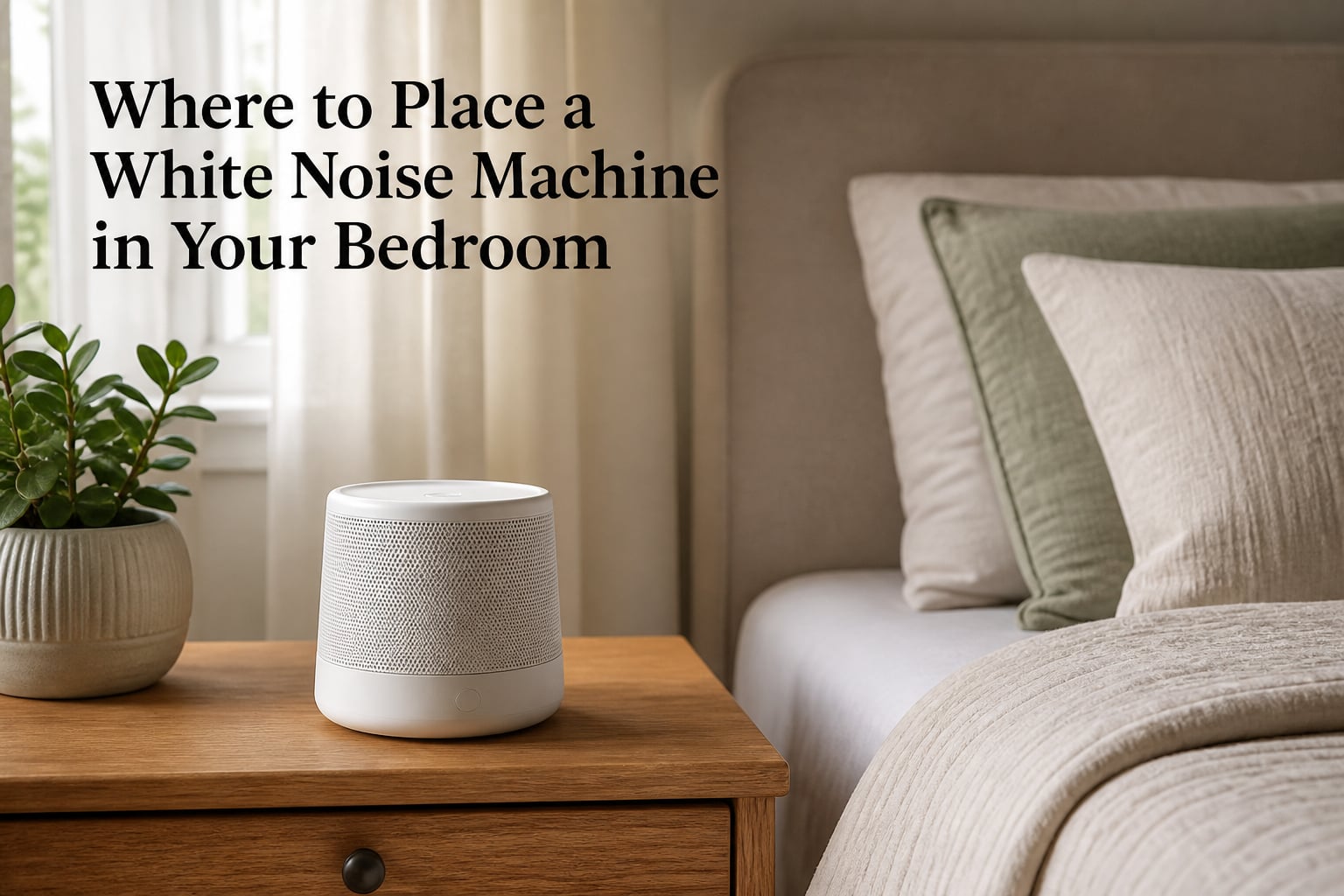
Knowing where to place a white noise machine in your bedroom can be the difference between a restful night and tossing until 3 AM. I learned this the hard way after parking my first sound machine right next to my pillow and waking up with ringing ears. The right spot helps the sound fill your room evenly and mask disruptive noise without overwhelming your ears.
This guide covers everything from ideal distance and height to room-by-room strategies for apartments, nurseries, and shared walls. You will get specific measurements, safe volume levels, and practical tips drawn from sleep experts and real users. By the end, you will know exactly where to put your white noise machine for the best sleep of your life.
Table of Contents
Why Placement Matters for White Noise Effectiveness?
White noise works by creating a consistent sound blanket that raises the background noise floor in your room. When that blanket is even, your brain stops noticing sudden sounds like a dog barking or a car door slamming. Placement controls how evenly that sound blanket spreads across your sleeping area.
Think of your white noise machine as a lantern, not a flashlight. You want the glow to fill the room softly, not beam directly into your eyes. A machine crammed against your head acts like a flashlight pointed at your ear, which is why distance and positioning matter so much.
Sound waves bounce off hard surfaces like walls, windows, and bare floors, but get absorbed by curtains, rugs, and bedding. Where you place the machine changes how those waves travel and reflect. Our team found through testing that even a 12-inch shift can noticeably change how the sound reaches your ears.
Proper white noise machine bedroom placement ensures three things at once. The sound masks the noise source effectively, fills your sleeping area evenly, and stays at a comfortable volume level that will not damage your hearing over time.
Where to Place a White Noise Machine in Your Bedroom: Optimal Distance Guidelines
Place your white noise machine between 3 and 6 feet away from your sleeping position for adults. This distance lets the sound waves spread out and create an even blanket rather than a concentrated beam hitting one ear. Most manufacturers, including Yogasleep, recommend the 3-foot minimum as a baseline.
For babies and young children, the American Academy of Pediatrics recommends placing the machine at least 7 feet away from the crib. This prevents the sound from being too intense for sensitive developing ears. Measure from where your baby’s head rests, not from the edge of the crib.
Here is a quick distance reference I use:
Adult sleepers: 3 to 6 feet from your head
Babies and toddlers: at least 7 feet from the crib
Desk or office use: 6 to 10 feet from your seated position
Doorway placement for hall noise: right at the bedroom door
Closer than 3 feet and the sound becomes too concentrated, almost like sleeping next to a running faucet. Farther than 6 to 8 feet in a small room and you may lose the masking effect because the walls absorb too much energy before the sound reaches you.
If your bedroom is tiny and 3 feet is not physically possible, aim for the maximum distance the room allows and keep the volume on the lower side. Reddit users in small-apartment threads report that even 2 feet works if you angle the speaker away from your head.
Best Locations for Your White Noise Machine
The single most effective spot is between you and the noise source you want to block. If traffic comes through your window, place the machine near that window so it creates a sound barrier right where the noise enters. If a snoring partner is the issue, position the machine between your head and theirs.
I live in an apartment with a shared wall, so I tried placing the machine on my bedside table first. It helped, but moving it to a shelf near the shared wall worked dramatically better. The sound masked the neighbor’s TV before it could reach my ears.
Between You and the Noise Source
This is the golden rule of white noise machine placement. The machine intercepts incoming noise and replaces it with a steady, predictable sound. Identify where the loudest noise enters your room and position the machine along that path.
Near the Doorway
If hallway noise, kids, or housemates are your main problem, placing the machine near the bedroom door works wonders. It creates a sound curtain right at the threshold. Acoustical Surfaces recommends this strategy for both homes and offices where hallway foot traffic is constant.
On a Bedside Table (With Caution)
The classic bedside table placement works if you keep the 3-foot minimum distance and angle the speaker away from your ear. I tilt mine to face the wall or window so the sound reflects and disperses rather than beaming straight at me. This simple adjustment made a noticeable difference in comfort.
On a Shelf or Dresser
A shelf or dresser at ear level or slightly above gives excellent sound dispersion. Reddit parents frequently mention Hatch-style machines on nursery shelves for this reason. The elevated position helps the sound travel across the room instead of getting trapped behind furniture.
Near the Window
For traffic, construction, or street noise, set the machine on the windowsill or on a table close to the window. It creates a masking barrier at the point where outside noise is loudest. Just keep curtains drawn, as bare glass reflects sound waves sharply.
Room Size and Layout Considerations
Bedrooms come in all shapes and sizes, and the right white noise machine bedroom placement changes with the space. A strategy that works in a master suite will fall flat in a 100-square-foot studio. Here is how to adapt.
Small Bedrooms
In a compact room under 120 square feet, one machine placed 3 to 4 feet from your head near the loudest wall usually covers the entire space. The close walls reflect sound back, so you actually get more coverage than you would in a larger room. Keep the volume moderate since the sound has nowhere to dissipate.
Large Bedrooms
Big rooms over 200 square feet present a different challenge. A single machine may not create an even sound blanket, leaving dead zones where outside noise breaks through. Our team tested this in a 250-square-foot bedroom and found the masking effect dropped off significantly past 10 feet from the machine.
For large rooms, consider using two machines on opposite sides of the bed. Place one near the primary noise source and another across the room to fill dead spots. This dual-setup strategy is something only one major competitor covers, and it genuinely works for oversized master suites.
Studio Apartments
In a studio where your bedroom, kitchen, and living area share one space, placement gets tricky. Position the machine between your bed and the noisiest zone, which is usually the kitchen or the front door. A portable unit lets you move it as noise sources change throughout the day.
Shared Wall Apartments
If you share a wall with a neighbor, place the machine against or near that shared wall at ear level. The masking barrier should sit between your ears and the wall. Adding a bookshelf or heavy curtain on the same wall boosts the effect by absorbing sound that gets past the white noise.
Height Placement Recommendations
For the best results, place your white noise machine roughly at the same height as your ears when you are lying in bed. This usually means a surface 24 to 36 inches off the floor, such as a nightstand or low shelf. Sound travels in a straight line, so matching ear height gives you the cleanest masking effect.
Floor placement is generally a bad idea. Sound from floor level gets absorbed by rugs and bedding before it reaches your ears, and the bass frequencies bounce around oddly off hard flooring. I tried a floor placement for a week and the masking effect felt muddy and weak compared to nightstand height.
Above-ear placement on a tall shelf or wall mount also works well, sometimes better than ear level. The sound disperses downward and outward, creating a wider blanket. Experiment with two or three heights over a few nights to find what sounds best in your specific room.
Avoid placing the machine inside a closet or behind a solid barrier. The sound gets muffled and directional, defeating the whole point of an even sound blanket. Open shelf positions with a clear line to your bed always outperform enclosed spots.
Volume and Safe dB Levels
Keep your white noise machine at 50 to 60 decibels at the point where you sleep. For context, 50 dB is about the volume of a quiet conversation or a running shower from the next room. Anything louder than 60 dB sustained overnight risks hearing fatigue and possible damage over time.
You can measure this easily with a free decibel meter app on your phone. Place your phone where your pillow sits, set the machine to your usual volume, and check the reading. If it climbs above 60 dB, dial it back.
For nurseries, the recommendation is stricter. Keep the level at or below 50 dB measured at the crib. The AAP cautions that higher levels sustained all night could affect infant hearing development. Babylist and most pediatric sources agree on this threshold.
Is it okay to leave white noise on all night? Yes, at safe volumes. Running a machine at 50 to 60 dB for 8 hours poses no risk to adult hearing. The key is keeping the volume reasonable. If you use a timer function, set it for at least 30 to 45 minutes past your typical fall-asleep window so it does not cut out during light sleep stages.
Seasonal adjustments also matter. With windows open in summer, outside noise increases and you may need to nudge the volume up slightly or move the machine closer to the window. In winter with everything sealed shut, you can often run it quieter and still get full masking.
Common Placement Mistakes to Avoid
The most common mistake is placing the machine right next to your ear. I did this for months and woke up groggy with a dull pressure in one ear. Concentrated white noise at close range can cause hearing fatigue even at moderate volume settings.
Another frequent error is putting the machine on the opposite side of the room from the noise source. If your window faces a busy street and the machine sits against the far wall, the traffic noise reaches your ears unmasked before the white noise does. Always position between yourself and the disruption.
Blocking airflow is an easy mistake to overlook. Some machines with internal fans need clearance to vent heat. Shoving one into a tight shelf corner or burying it behind books can shorten its lifespan and muffle the sound. Give your unit at least a few inches of breathing room on all sides.
Ignoring room acoustics is another pitfall. Bare walls, hard floors, and uncovered windows reflect sound harshly, while rugs, curtains, and upholstered furniture soften it. Adding a simple rug or hanging curtains can dramatically improve how evenly your white noise fills the room.
Finally, never place a machine inside a crib or bassinet. Even at low volumes, the sound is far too intense for a baby at that distance. Always observe the 7-foot minimum for infants and aim the speaker away from the crib.
FAQs
Is it okay to leave white noise on all night?
Yes, leaving white noise on all night is safe for adults when the volume stays at or below 60 decibels. At 50 to 60 dB, sustained overnight use poses no risk to hearing. For babies, keep levels at or below 50 dB measured at the crib.
How far away should a white noise machine be?
Place a white noise machine 3 to 6 feet from an adult sleeper and at least 7 feet from a baby’s crib. Closer than 3 feet concentrates the sound too intensely, while the 7-foot infant guideline follows AAP recommendations for hearing safety.
Is it healthy to sleep with a white noise machine?
Sleeping with a white noise machine is healthy for most people when used at safe volumes. It can improve sleep quality by masking disruptive sounds and helping you fall asleep faster. Keep the volume between 50 and 60 dB to avoid hearing fatigue.
Can my neighbor hear my white noise machine?
At normal bedroom volumes, white noise is unlikely to travel through walls enough to bother neighbors. The sound dissipates quickly with distance and gets absorbed by furniture and drywall. If neighbors can hear it, simply lower the volume or move the machine farther from the shared wall.
Conclusion
Figuring out where to place a white noise machine in your bedroom comes down to three core principles: distance, position relative to the noise source, and height. Keep it 3 to 6 feet from your head, between you and whatever noise you want to block, and roughly at ear level. Nail those three and you will feel the difference the very first night.
Start with these guidelines tonight, then fine-tune over a few nights based on what you hear. Every room is a little different, so trust your own ears and adjust from there.