
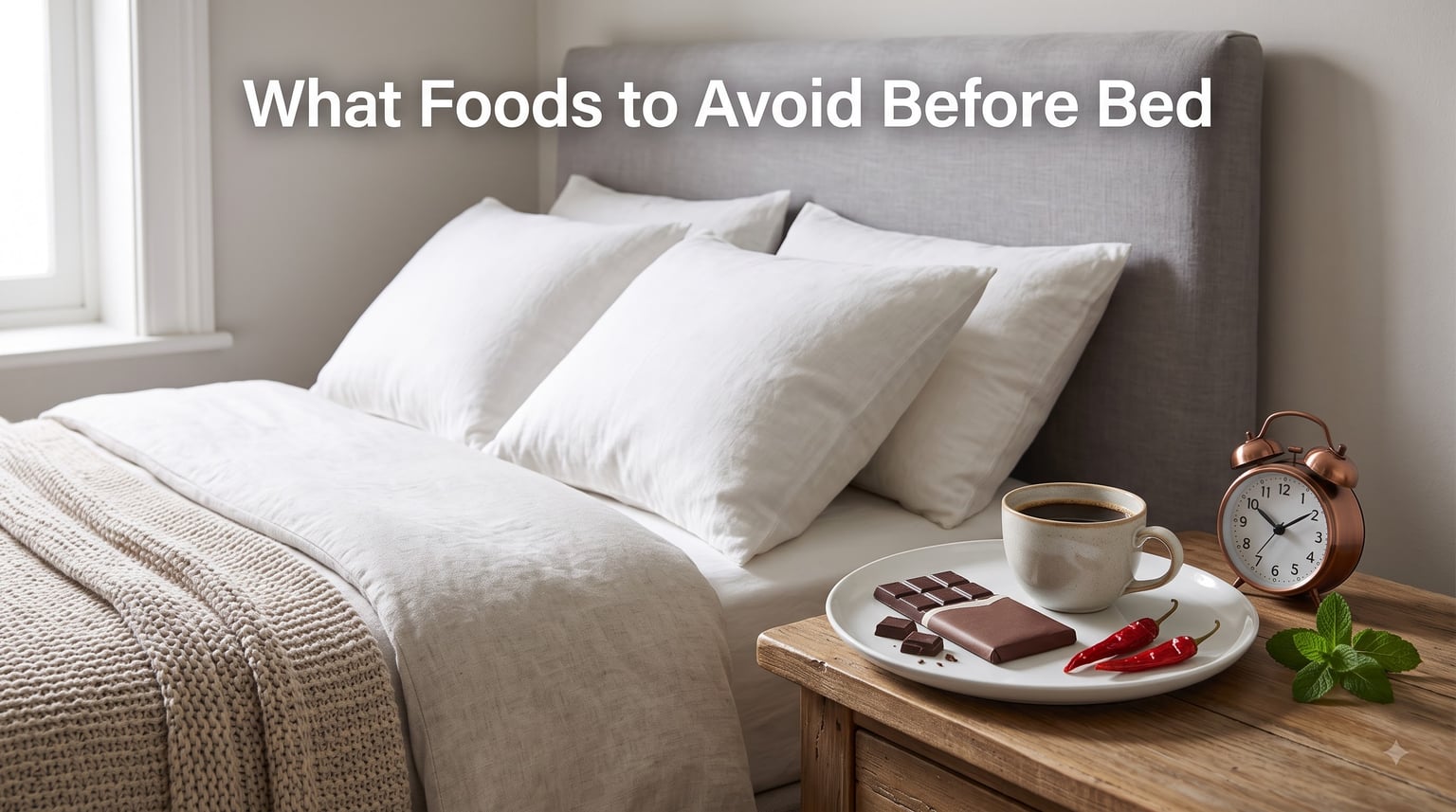
What you eat in the hours before sleep can quietly make or break your night. The foods to avoid before bed fall into five main categories: caffeinated items that stimulate the brain, alcohol that fragments your sleep cycles, heavy or greasy meals that overwork digestion, spicy and acidic foods that trigger acid reflux, and sugary snacks that destabilize blood sugar.
Avoiding these categories is one of the simplest ways to fall asleep faster, stay asleep longer, and wake up feeling rested instead of groggy. In this guide I walk through which foods cause the most disruption, why they do it, and when to stop eating to give your body time to wind down.
You will also learn the 3:2:1 bedtime eating rule, how to tell real hunger from late-night cravings, and which sleep-friendly foods make good swaps. Everything here is grounded in how sleep chemistry, digestion, and blood sugar actually interact so you can make choices that work for your body.
Table of Contents
Why Foods to Avoid Before Bed Disrupt Your Sleep?
Food and sleep are tied together through three systems: your nervous system, your digestion, and your blood sugar. When any of those three is thrown off, the result is restless sleep, nighttime waking, or that frustrating feeling of lying awake for hours.
Caffeine and other stimulants block adenosine, the brain chemical that builds up during the day and tells your body it is time to rest. When that signal is blocked, your brain stays alert even when your body is exhausted. That is why a late afternoon coffee or an evening chocolate bar can leave you staring at the ceiling.
Heavy meals keep your digestive system working overtime. Instead of slowing down for sleep, your body is still breaking down fats and proteins, which raises your core temperature and makes it harder to drift off. Lying down with a full stomach also lets stomach acid creep up into your esophagus, causing heartburn and acid reflux that jolt you awake.
Sugary and refined-carb foods create a blood sugar roller coaster. A spike followed by a crash triggers cortisol and adrenaline, the same stress hormones that tell your body to stay alert. The crash can wake you at 2 or 3 a.m. feeling anxious and unable to get back to sleep.
Alcohol is the sneakiest offender. A nightcap might help you fall asleep quickly, but it suppresses REM sleep and causes you to wake up in the second half of the night. You end up with fragmented, low-quality rest even if you were in bed for eight hours.
Understanding these mechanisms gives you a simple rule of thumb: anything that stimulates your nervous system, overworks your digestion, or destabilizes your blood sugar is working against your sleep.
Stimulants: Caffeine, Energy Drinks, and Dark Chocolate
Caffeine is the number one culprit behind poor sleep. Coffee, energy drinks, black and green tea, many sodas, pre-workout powders, and certain pain relievers all contain caffeine that can linger in your system for six to eight hours.
Caffeine has a half-life of roughly five hours. That means if you drink a 200 mg coffee at 5 p.m., about 100 mg is still circulating in your bloodstream at 10 p.m. For most adults, the cutoff for caffeine should be no later than early afternoon.
People often forget that tea, cola, and chocolate also pack caffeine. A bar of dark chocolate can contain up to 70 mg of caffeine, which is close to a shot of espresso. Combined with theobromine, another stimulant found in cocoa, dark chocolate is a sneaky nighttime food that can keep you alert.
Energy drinks are the worst offender because they pair large caffeine doses with sugar and sometimes guarana, which extends the stimulating effect. Even sugar-free versions can disrupt sleep because the caffeine load remains.
Our team’s suggestion: track when you stop caffeine for a week and note your sleep quality. If you currently drink coffee at 4 p.m. and struggle to fall asleep, try moving that last cup to noon.
Alcohol and Nightcaps: Why They Backfire
A glass of wine before bed might feel relaxing, but alcohol is one of the worst substances for sleep quality. It sedates you initially, which is why it feels like it helps you fall asleep, but the second half of the night is where it does the real damage.
Alcohol suppresses REM sleep, the dreaming phase where your brain processes memories and emotions. Without enough REM sleep, you wake up feeling foggy, irritable, and less mentally sharp the next day.
Alcohol also relaxes the muscles in your airway, which makes snoring and sleep apnea worse. If your partner has ever complained about your snoring after a few drinks, this is why.
As alcohol is metabolized, it causes a rebound in your stress hormones. Around 2 or 3 a.m., your body experiences a surge of cortisol and adrenaline that jolts you awake. Many people mistake this for having a weak bladder or a random wake-up, when the real trigger was the drink hours earlier.
If you want a better night of sleep, skip the nightcap and replace it with caffeine-free chamomile tea or warm water with a little tart cherry juice, which naturally supports melatonin production.
Heavy and Greasy Foods That Keep Your Body Working
Pizza, burgers, fried chicken, loaded nachos, and other heavy, high-fat meals are some of the worst foods to eat close to bedtime. They take significantly longer to digest than lighter meals, which means your digestive system is still working hard when it should be powering down.
High-fat meals also raise your core body temperature. Sleep onset requires a slight drop in temperature, so a hot, greasy dinner works directly against the natural cooling process that signals your body it is time to rest.
Lying flat with a full stomach creates a second problem. Gravity can no longer help keep stomach contents where they belong, and stomach acid can flow back up into the esophagus. This is the classic recipe for nighttime heartburn and GERD flare-ups that wake you with a burning sensation in your chest or throat.
Processed and fast foods are double trouble because they combine high fat with refined carbs and sodium, which also increases water retention and overnight trips to the bathroom.
Red meat and large portions of cheese are similarly slow to digest. If you want a more comfortable night, save these foods for lunch or an early dinner, and aim for lighter evening plates built around lean protein and vegetables.
Spicy and Acidic Foods: The Heartburn and GERD Connection
Spicy foods are notorious for causing sleep problems, especially heartburn. Capsaicin, the compound that makes chili peppers hot, irritates the lining of your stomach and esophagus and can trigger acid reflux when you lie down.
Spicy meals also raise body temperature, which interferes with the cooling process your body needs to fall asleep. Studies have shown that people who eat spicy foods before bed take longer to fall asleep and spend less time in deep sleep.
Acidic foods create similar problems. Citrus fruits and juices, tomatoes, tomato-based pasta sauces, salsa, and raw onions are all common acid reflux triggers. For people with GERD, these foods can cause hours of nighttime discomfort.
The positioning matters as much as the food itself. When you stand or sit upright, gravity keeps acid in your stomach. The moment you lie down, that barrier is gone, and any acidic food you ate recently can creep upward.
If you love spicy food, try eating it at lunch instead of dinner. Your body has all afternoon to process it before you ever get into bed.
Sugary Snacks and Refined Carbs That Spike Blood Sugar
Sugary cereal, ice cream, candy, cookies, cake, and soda are all popular late-night cravings. They are also among the worst foods for sleep because they send your blood sugar on a sharp spike followed by a steep crash.
That crash happens in the middle of the night. When blood sugar drops, your body releases cortisol and adrenaline to bring it back up. Those stress hormones pull you out of deep sleep and leave you wide awake at odd hours.
Refined carbohydrates like white bread, white rice, and pastries act the same way. They are quickly broken down into sugar, which means they cause the same spike-and-crash pattern even though they do not taste sweet.
Sugary drinks are particularly disruptive because they deliver a fast hit of sugar with no fiber to slow the absorption. That includes sodas, sweet teas, sports drinks, and fruit juices with added sweeteners.
If you genuinely need something sweet before bed, a small piece of whole fruit like a kiwi or a handful of berries is a much gentler choice that will not wreck your blood sugar or your sleep.
The 3:2:1 Rule: Timing Your Evening Meals and Snacks
Timing matters just as much as food choice. Even a healthy meal can disrupt sleep if you eat it too close to bedtime. The 3:2:1 rule is a simple framework that gives your body enough time to digest before you lie down.
The rule breaks down like this: stop eating large meals 3 hours before bed, stop eating all food 2 hours before bed, and stop drinking liquids 1 hour before bed.
The three-hour window gives your stomach time to process a full dinner so you are not lying flat with a full stomach. This reduces acid reflux, heartburn, and the elevated body temperature that comes from active digestion.
The two-hour window covers any final light snack. If you are genuinely hungry, something small and sleep-friendly under 200 calories in this window is usually fine, but nothing substantial.
The one-hour window for liquids helps prevent nighttime bathroom trips. Waking up to use the restroom fragments your sleep and makes it harder to get back into deep sleep.
This rule is flexible. If you had a very early dinner, you might be genuinely hungry at the two-hour mark. The goal is to avoid large, heavy, or stimulating foods in the final hours before bed, not to starve yourself.
Is It True Hunger? Telling Cravings Apart at Night
One of the most common questions in sleep and nutrition forums is whether late-night hunger is actually hunger. Often it is not. Boredom, stress, anxiety, and even sleepiness itself can masquerade as hunger and send you to the pantry when your body really needs something else.
The simplest test is the apple test. If you feel hungry, ask yourself whether an apple sounds appealing. If the answer is yes, you are probably genuinely hungry. If the answer is no and you are only interested in chips, cookies, or ice cream, you are likely craving comfort, not calories.
Stress eating is another major factor. When cortisol is elevated from a long day, your brain seeks dopamine, and sugary or fatty foods deliver a quick hit. This is emotional hunger, and giving in to it with a late-night snack creates a cycle of poor sleep and more stress the next day.
Dehydration can also mimic hunger. Many people reach for food when what their body actually wants is water. Try drinking a glass of water and waiting ten minutes before deciding whether you still need to eat.
If you determine that you are truly hungry, choose something small, light, and sleep-friendly rather than raiding the snack cabinet. A handful of almonds, a small banana, or a few crackers with peanut butter are far better choices than chips or cookies.
Sleep-Friendly Foods to Eat Instead
Not all evening eating is bad. The right foods can actually support sleep by providing the nutrients your body uses to produce melatonin and serotonin. Knowing what to reach for makes it much easier to avoid the foods that hurt your sleep.
Tart cherries are one of the few natural food sources of melatonin. A small glass of tart cherry juice or a handful of fresh cherries in the evening can help your body prepare for sleep naturally.
Kiwifruit has been studied for its sleep benefits. Research suggests that eating two kiwis about an hour before bed can help people fall asleep faster and sleep more soundly, likely due to their serotonin and antioxidant content.
Foods rich in tryptophan, an amino acid your body uses to make serotonin and melatonin, are solid choices. Turkey, chicken, eggs, dairy, pumpkin seeds, and almonds all contain meaningful amounts of tryptophan.
Complex carbohydrates like oatmeal, whole-grain crackers, or a small serving of brown rice help tryptophan reach your brain more effectively. Pairing a complex carb with a tryptophan source is a classic sleep-friendly combination.
Magnesium-rich foods like spinach, pumpkin seeds, almonds, and dark leafy greens support muscle relaxation and calm the nervous system. A small snack combining magnesium and tryptophan is an excellent way to wind down.
The key is keeping portions small. A bedtime snack should be under 200 calories, easy to digest, and free of caffeine, sugar, and heavy fats. Think half a banana with almond butter, a few crackers with turkey, or a small bowl of oatmeal.
Sleep Hygiene Habits That Pair With Smart Food Choices
Food is just one piece of the sleep puzzle. Pairing smart evening eating with good sleep hygiene multiplies the benefits and makes it much easier to fall asleep and stay asleep.
Dim the lights in your home an hour or two before bed. Bright artificial light suppresses melatonin production, and your body needs that melatonin to signal that it is time to sleep. Warm, low lighting in the evening helps your natural sleep-wake cycle stay on track.
Put screens away at least 30 minutes before bed. The blue light from phones, tablets, and televisions mimics daylight and tells your brain to stay alert. If you must use screens, enable night mode or wear blue-light-blocking glasses.
Keep your bedroom cool, dark, and quiet. The ideal sleep temperature is between 60 and 67 degrees Fahrenheit. Use blackout curtains if outside light is an issue, and consider a white noise machine or fan if your environment is noisy.
Stick to a consistent sleep schedule. Going to bed and waking up at the same time every day, even on weekends, reinforces your circadian rhythm and makes it easier to fall asleep naturally.
Frequently Asked Questions
What are the 10 foods you should not eat before bed?
The top 10 foods to avoid before bed are coffee and other caffeinated drinks, energy drinks, dark chocolate, alcohol, pizza, burgers and fried foods, spicy dishes with hot peppers, citrus fruits and juices, tomato-based sauces, and sugary snacks like ice cream, candy, and cookies. These foods stimulate the nervous system, slow digestion, trigger acid reflux, or destabilize blood sugar.
What food is best to eat before bed?
Sleep-friendly foods include tart cherries, kiwifruit, turkey, almonds, pumpkin seeds, oatmeal, and warm milk. These foods contain melatonin, tryptophan, magnesium, or complex carbohydrates that support natural sleep chemistry without overloading your digestion.
What is the 3:2:1 rule before bed?
The 3:2:1 rule means stopping large meals 3 hours before bed, stopping all food 2 hours before bed, and stopping liquids 1 hour before bed. This gives your body time to digest fully and reduces acid reflux, nighttime waking, and bathroom trips.
How long before bed should I stop eating?
Most experts recommend stopping food 2 to 3 hours before bedtime. Light snacks under 200 calories can be eaten about 1 to 2 hours before bed if you are genuinely hungry, but heavy meals should be finished at least 3 hours before you lie down.
Why can’t I sleep after eating?
Eating too close to bedtime keeps your digestive system active, raises your body temperature, and can cause acid reflux when you lie down. Sugary and caffeinated foods also disrupt sleep by spiking blood sugar or stimulating your brain when it should be winding down.
Final Thoughts on Foods to Avoid Before Bed
The foods to avoid before bed all share one thing in common: they keep your body working when it should be resting. Caffeine stimulates your brain, alcohol fragments your sleep, heavy meals overload your digestion, spicy and acidic foods trigger heartburn, and sugar sends your blood sugar on a roller coaster.
Start with simple changes. Move your caffeine cutoff to early afternoon, finish dinner at least three hours before bed, and replace sugary or greasy snacks with something light and sleep-friendly. Small adjustments like these can noticeably improve how quickly you fall asleep and how rested you feel the next morning.
Pair these food choices with the 3:2:1 timing rule and solid sleep hygiene, and you give your body the best possible chance at deep, restorative rest. Better sleep often starts in the kitchen, not the medicine cabinet.