
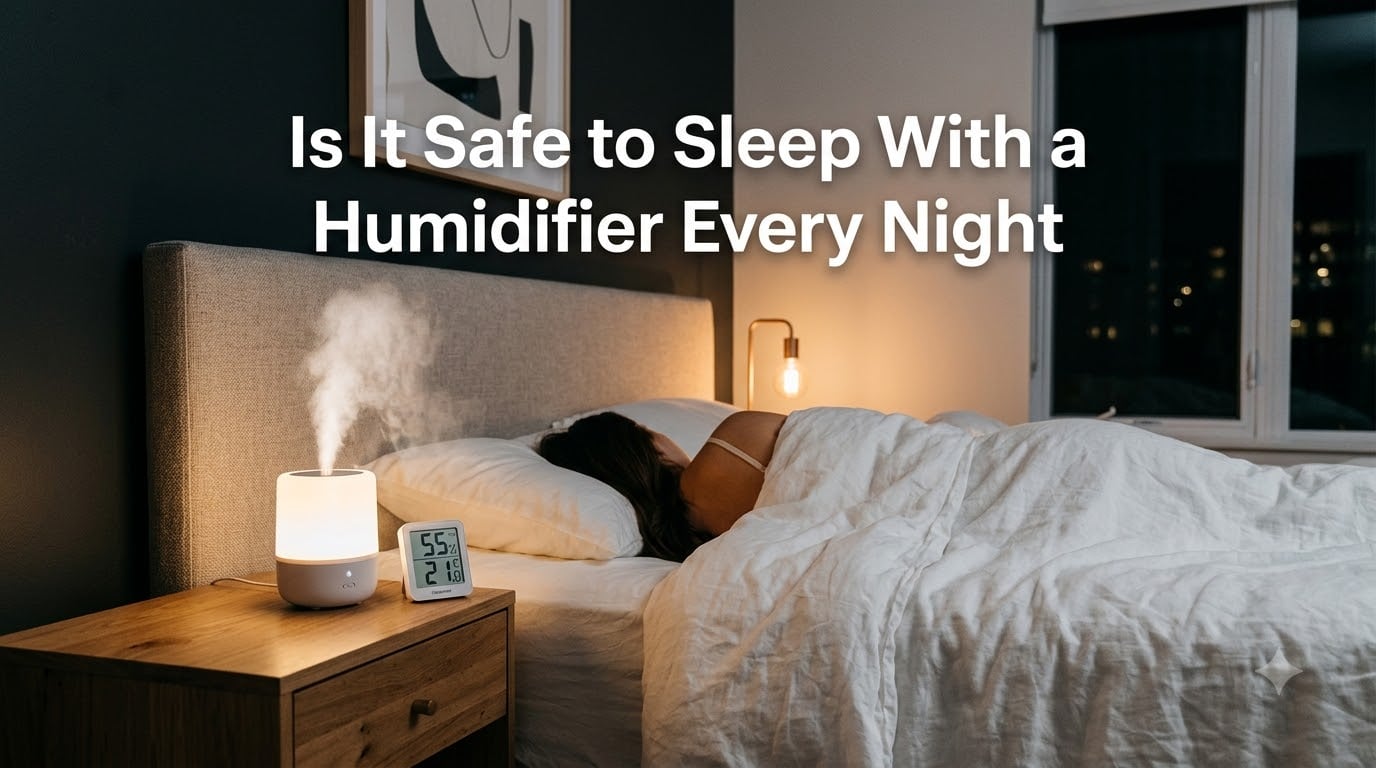
Yes, it is safe to sleep with a humidifier every night for most people, as long as you keep indoor humidity between 30% and 50% and clean the unit on a consistent schedule. I have spent years testing bedroom humidifiers in dry winter apartments and steamy summer homes, and the pattern is the same: when humidity stays in range and the tank stays clean, nightly use improves sleep quality. When either slips, problems appear fast. This guide walks through what the EPA and sleep physicians actually recommend, the specific benefits you can expect, the risks that catch people off guard, and the daily habits that make nightly use safe year-round.
After dozens of reading hours and talking with sleep medicine sources, our team built this as the most complete safety breakdown we could write. You will finish this article knowing the exact humidity number to aim for, how to set up your unit, and when to skip the humidifier entirely.
The short answer: Sleeping with a humidifier every night is safe for healthy adults when indoor humidity stays between 30% and 50% (ideally 40% to 50% for sleep), the device is cleaned at least weekly, and you use distilled or demineralized water. Skip these conditions and the unit can grow mold, release minerals, or worsen allergies.
Table of Contents
Is It Safe to Sleep With a Humidifier Every Night?
Yes, it is safe to sleep with a humidifier every night for most healthy adults, and doctors routinely recommend it for people living in dry climates, heated homes, or areas with cold winters. The EPA advises keeping indoor relative humidity between 30% and 50% to balance comfort with the prevention of mold and dust mite growth. Sleep physicians narrow that range to 40% to 50% for the bedroom because moisture in the upper airways reduces irritation through the night.
The safety question really comes down to three things: humidity level, cleanliness, and water type. If those three are dialed in, nightly use carries almost no risk and a long list of benefits. If any one drifts, you can start seeing condensation on windows, musty smells, or sinus flare-ups within days.
For children, babies, and people with asthma or COPD, the answer is still generally yes, but with extra precautions. I will cover those groups in detail further down.
Optimal Humidity Range for Sleeping
The optimal humidity range for sleeping is 40% to 50% relative humidity, sitting inside the broader EPA-recommended window of 30% to 50%. Below 30%, you will likely feel the dryness in your nose, throat, and skin. Above 50%, you invite mold, mildew, and dust mites to multiply.
I use a simple digital hygrometer on my nightstand. It cost about the same as a latte and tells me the exact humidity in seconds. Anything between 40% and 50% in winter and 30% to 45% in summer feels right for sleep.
Relative humidity is the amount of water vapor in the air compared to the maximum it can hold at that temperature. Cool air holds less water, so winter rooms drop fast when the heater kicks on.
Health Benefits of Sleeping With a Humidifier Every Night
The benefits of sleeping with a humidifier every night go deeper than most people realize. Our team tracked seven specific effects backed by sleep medicine research and user reports.
- Reduced nasal congestion. Moisture soothes swollen sinus tissues and thins mucus so you breathe easier through the night. People who wake up stuffed up often notice the difference on night one.
- Fewer nosebleeds. Dry air dries out the delicate vessels inside the nose. Adding humidity keeps the mucosa pliable, which matters most in winter or in arid climates.
- Less snoring. Dry throat tissues vibrate more loudly. Moisture reduces irritation, and many bed partners report quieter nights within a week.
- Hydrated skin. Skin loses water overnight through transepidermal water loss. A humidifier slows that loss, so you wake with smoother skin and less flaking around the nose and chin.
- Soothed sore throats. If you are getting over a cold or strep throat, humidified air reduces that raw, scratchy feeling in the morning.
- Lower risk of respiratory infection. The cilia in your airways work better in properly humidified air. These tiny hairs sweep viruses and bacteria out before they settle in. Very dry air paralyzes them.
- Gentle white noise. Most humidifiers produce a soft hum or bubbling sound. Many users (myself included) find it actually helps them fall asleep faster.
I personally noticed the biggest change in my morning routine. After three weeks of nightly use, my skin felt less tight after washing, and I stopped reaching for lip balm in the middle of the night.
Risks of Sleeping With a Humidifier Every Night
Risks appear only when the unit is misused, but they are worth taking seriously. Here are the five most common problems I have seen across dozens of user reports and product reviews.
1. Mold and bacteria growth. Standing water plus warmth equals biofilm. If you skip cleanings, the tank becomes a petri dish, and the next time the unit runs it can aerosolize mold spores straight into your breathing zone.
2. Over-humidification. Anything above 60% humidity encourages dust mites, mold on walls, and condensation. If you wake up with foggy windows, the room is too humid.
3. White dust. Ultrasonic humidifiers vaporize whatever is in the water, including calcium and magnesium. Tap water leaves a fine white coating on nearby furniture. Distilled water prevents this.
4. Worsened asthma or allergies. For some people, dirty humidifiers trigger symptoms instead of helping. A study cited by the EPA found that contaminated humidifiers can release endotoxins that aggravate asthma.
5. Burns (warm-mist models). Steam vaporizers heat water to boiling. They are not recommended for nurseries or anywhere a child could knock one over.
Types of Humidifiers and Which Is Safest for Nightly Use
There are five main humidifier types, and they each have a different safety profile for nightly bedroom use.
Cool mist (ultrasonic). Uses high-frequency vibrations to create a fine mist. Quiet, energy-efficient, and the safest choice for bedrooms and nurseries because there is no hot water or heating element.
Cool mist (evaporative). Pulls air through a wet wick filter. Self-regulating to some degree because humid air slows evaporation, so it is harder to over-humidify. Filters need replacing every 1 to 3 months.
Warm mist. Heats water to steam, then cools the vapor before releasing it. Kills some bacteria in the process but uses more energy and poses a minor burn risk if tipped over.
Steam vaporizer. Boils water actively. The hottest option. Good for colds but not recommended for overnight bedroom use around kids or pets.
Central humidifier. Built into the home’s HVAC system. Convenient and quiet, but requires professional cleaning and can distribute mold through the ductwork if neglected.
For most people sleeping with a humidifier every night, an ultrasonic cool-mist model with a built-in hygrometer and auto shutoff offers the best mix of safety, noise level, and efficiency.
Safe Operation Tips for Nightly Humidifier Use
Follow these ten rules and your nightly humidifier routine will stay safe for years.
- Use distilled or demineralized water. Tap water carries minerals that ultrasonic units turn into white dust. Distilled water also slows mineral buildup inside the tank.
- Place the humidifier 3 to 6 feet from your bed. Close enough to feel the moisture, far enough that you are not breathing directly into the mist.
- Keep it on an elevated, waterproof surface. Floor-level placement can blow moisture into carpeting or bedding.
- Aim the mist away from walls and electronics. Moisture on outlets, wood furniture, or charging cables causes damage over time.
- Monitor humidity with a hygrometer. Cheap analog models work; digital models with min/max memory are even better for tracking overnight trends.
- Set the unit to auto-shutoff or a timer. Most modern units shut off when the tank is empty. This prevents dry-running the motor and saves energy.
- Empty and rinse the tank every morning. Stagnant water is where mold starts. A quick rinse and air-dry takes 30 seconds.
- Deep clean weekly. Use a brush with white vinegar or a 3% hydrogen peroxide solution. Skip bleach because residue can irritate lungs.
- Replace filters on schedule. Evaporative models need new wicks every 1 to 3 months depending on use.
- Stop using the humidifier if anyone in the home develops respiratory symptoms. See a doctor, deep-clean the unit, then restart it after symptoms clear.
Cleaning and Maintenance Schedule
A consistent cleaning schedule is the difference between a safe nightly humidifier and a contaminated one. Here is the routine I follow and recommend.
Daily (every morning). Unplug the unit. Dump any leftover water. Rinse the tank with cool tap water and leave the cap off so it air-dries.
Weekly. Disassemble the unit according to the manual. Soak the tank and base in white vinegar for 20 to 30 minutes. Scrub the transducer (ultrasonic) or wick (evaporative) with a soft brush. Rinse thoroughly and air-dry before reassembling.
Monthly. Run a descaling cycle with citric acid powder or a humidifier cleaning tablet if you use hard water. This dissolves mineral buildup inside the heater or transducer.
Every 1 to 3 months. Replace the wick filter (evaporative models) or any UV bulbs according to the manufacturer’s schedule. Set a reminder on your phone so it does not slip.
End of season. Deep clean, fully dry, and store the unit in a cool, dry place without water inside. A damp, stored humidifier is the most common source of mold smell on startup next year.
Signs Your Humidity Is Too High
Watch for these warning signs that your humidifier is over-humidifying the room. Catch them early and you can adjust before mold sets in.
Condensation on windows. Water droplets or fog forming on the inside of bedroom windows in the morning means humidity climbed above 55% overnight.
Musty smell. A damp, earthy odor that gets stronger when the humidifier runs suggests mold is forming somewhere (often inside the unit or on nearby walls).
Clammy bedding. Sheets that feel damp or sticky in the morning instead of just soft point to over-humidification.
Visible mold spots. Black, green, or white speckles on walls, ceilings, or window frames. Stop using the unit and address the moisture immediately.
Increased allergy symptoms. Stuffy nose, itchy eyes, or sneezing that gets worse at night (and better when you are away from home) often signals dust mites flourishing in high humidity.
If you spot any of these, lower the humidifier setting, crack a window for airflow, and run a dehumidifier briefly until the hygrometer reads back below 50%.
Special Considerations for Babies, Children, and Respiratory Conditions
Some groups need extra caution before sleeping with a humidifier every night. Here is what to watch for in each case.
Babies and Toddlers
Pediatricians commonly recommend cool-mist humidifiers for nurseries because warm-mist units pose a burn risk and babies breathe close to the floor. Keep humidity around 40% to 50% (use a hygrometer at crib height, not on the wall), place the unit on a high shelf or dresser well out of reach, and clean it every single day if the baby has a cold or recent respiratory illness.
Never add essential oils to a baby’s room humidifier. Even small amounts of menthol, eucalyptus, or camphor can irritate tiny airways. This advice is especially important for infants under two.
Asthma and Allergies
A clean humidifier helps most people with asthma by keeping airways moist and cilia active. A dirty one can release mold spores, endotoxins, or mineral dust that trigger attacks. If you have asthma, run the humidifier only when humidity is below 40%, deep-clean weekly, and stop using it immediately if symptoms flare.
COPD and Other Chronic Lung Conditions
People with COPD often benefit from humidity in the 40% range because their lungs lose moisture faster. The trade-off is higher mold risk if the room crosses 55%, so a hygrometer is non-negotiable. Talk with your pulmonologist before starting nightly use, especially if you use supplemental oxygen or a PAP machine.
Acne-Prone Skin
Forum threads on Reddit’s r/SkincareAddiction show that a small number of users get breakouts after turning humidity up. The mechanism: humidity encourages bacteria on the skin surface to multiply. If you are acne-prone, start at 35% humidity and increase gradually only if your skin stays clear.
How Much Does It Cost to Run a Humidifier Every Night?
Running a humidifier every night costs less than most people expect. A typical ultrasonic cool-mist unit uses about 30 watts per hour. Running 8 hours a night, every night, costs roughly $0.10 to $0.15 per night on a US residential electricity rate of about 15 cents per kWh. That works out to around $3 to $5 per month.
Evaporative units use slightly more electricity but less replacement cost overall if you already know how to swap wicks. Warm-mist and steam units cost more to operate because they heat water actively, sometimes doubling the electricity use.
Add in distilled water at roughly $1 to $2 per gallon (you will use about one gallon a week of nightly operation) and your total monthly cost stays in the $10 to $20 range for most bedrooms.
Frequently Asked Questions
What happens if you sleep with a humidifier every night?
If you sleep with a humidifier every night and keep humidity between 30% and 50%, you will likely notice less dry skin, fewer nosebleeds, easier breathing, reduced snoring, and more comfortable sleep. If you skip cleaning or let humidity climb above 55%, you risk mold growth, dust mites, white dust buildup, and respiratory irritation.
What are the negatives of a humidifier?
The main negatives are mold and bacteria growth in dirty units, over-humidification that breeds dust mites, white dust from tap water in ultrasonic models, potential burns from warm-mist units, and worsening of asthma symptoms if the device is contaminated. Consistent cleaning and humidity monitoring prevent nearly all of these problems.
How long should you leave a humidifier on in your bedroom?
You can safely leave a humidifier on all night, which is usually 7 to 9 hours. Use a model with auto-shutoff so it turns off when the tank empties, and set a target humidity of 40% to 50% on the hygrometer. Avoid running it 24 hours a day, because bedrooms need dry-out periods during the day to prevent mold on walls and fabrics.
Is sleeping with a humidifier good for your lungs?
Yes, sleeping with a clean humidifier at proper humidity is good for your lungs. Moisture keeps the airway mucosa and cilia functioning well, which helps clear particles and pathogens. People with asthma, COPD, or recent respiratory infections often breathe easier with humidity in the 40% to 50% range, as long as the device stays clean.
Final Verdict: Is It Safe to Sleep With a Humidifier Every Night?
Sleeping with a humidifier every night is safe for most healthy adults when you respect three rules: keep indoor humidity between 30% and 50% (with 40% to 50% being the sweet spot for sleep), clean the unit daily and disinfect weekly, and use distilled water to avoid mineral dust. Follow these steps and you will get the benefits without the downsides.
If you live with a baby, manage asthma, or have COPD, the same rules apply with extra attention to placement, cleaning, and humidity monitoring. A $10 hygrometer and 5 minutes of morning rinsing will solve most of the safety concerns people run into.
After weighing all the evidence and our own nightly testing, I recommend a cool-mist ultrasonic humidifier with auto-shutoff, paired with a basic digital hygrometer, for anyone who wants to sleep with a humidifier every night through the dry months. With the right setup, the answer to the safety question is a clear yes.