
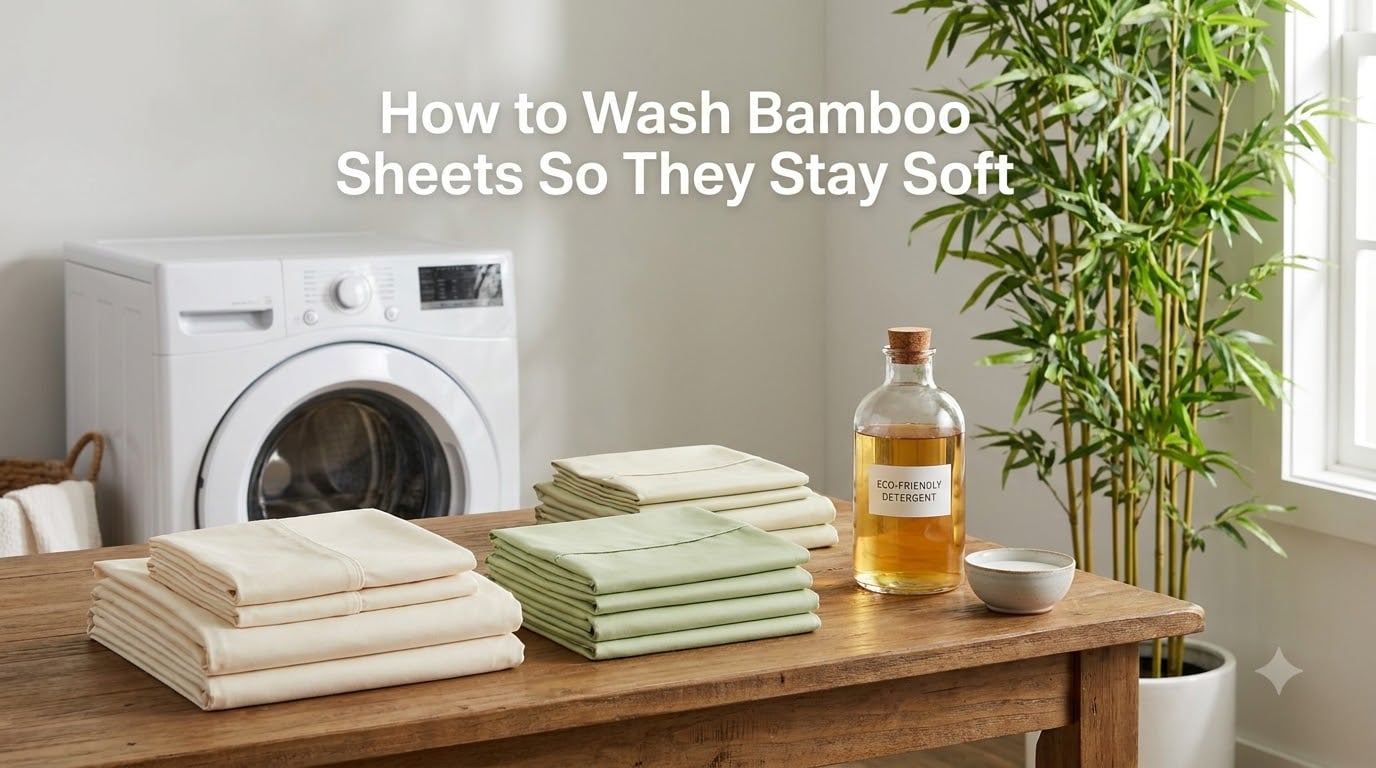
Bamboo sheets are some of the softest, most breathable bedding you can own, but they need the right care to stay that way. If you have ever pulled your sheets out of the wash feeling rough or stiff, you are probably using the wrong technique. I have spent years testing different washing methods on bamboo viscose and rayon sheets, and the difference between proper care and careless washing is night and day.
The good news is that learning how to wash bamboo sheets is not complicated. Once you understand a few simple rules about water temperature, detergent choice, and drying, your sheets will actually get softer with every single wash. This guide walks you through every step, plus the stain removal tricks and deep cleaning methods that most articles skip entirely.
Table of Contents
How to Wash Bamboo Sheets So They Stay Soft: The Quick Answer
Wash bamboo sheets in cold water (under 85°F) on a gentle or delicate cycle using a mild, eco-friendly, enzyme-free liquid detergent. Skip bleach and fabric softener entirely. Tumble dry on low heat and remove the sheets while they are still slightly damp to prevent wrinkles and fiber damage.
That is the foundation. Now let me break down each step in detail so you understand exactly why these rules matter and how to adapt them for stains, deep cleaning, and long-term softness.
Why Bamboo Sheets Need Different Care Than Cotton
Bamboo sheets are made from viscose or rayon fibers derived from the bamboo plant. These fibers are structurally different from cotton. They feature natural micro-gaps that make the fabric incredibly breathable, moisture-wicking, and cooling, which is why hot sleepers and people with sensitive skin love them so much.
Those same micro-gaps are also what make bamboo fabric more vulnerable to heat and harsh chemicals. Hot water and strong detergents break down the viscose fibers, causing pilling, roughness, and shrinkage. Treat bamboo sheets more like fine silk than rugged cotton, and they will reward you with years of softness.
Here is something most care guides never explain: bamboo sheets actually get softer with each wash. The viscose fibers gradually relax and loosen over time, which means proper washing does not just maintain softness, it actively improves it. Every cold-water gentle cycle makes the fabric feel more luxurious than the last. That is why getting your washing routine right from day one matters so much.
How to Wash Bamboo Sheets Step-by-Step
Follow these six steps every time you wash your bamboo sheets. The entire process takes about the same time as washing regular sheets, but the results are dramatically different.
Step 1: Sort and separate. Wash bamboo sheets separately from towels, jeans, and anything with zippers, buttons, or Velcro. These items create friction that pills the delicate bamboo fibers. Towels are especially problematic because they shed lint that clings to bamboo fabric.
Step 2: Set your water temperature to cold. Use cold water only, ideally under 85°F (29°C). Hot water is the number one cause of bamboo sheet damage. It causes shrinkage, weakens fibers, and can strip the reactive dyes that give your sheets their color. If your tap water runs warm, select the cold setting on your machine.
Step 3: Select the gentle or delicate cycle. This reduces agitation, which protects the viscose fibers from excessive wear. The gentle cycle uses slower spin speeds and less movement, both of which help bamboo sheets maintain their smooth texture.
Step 4: Add a mild, eco-friendly liquid detergent. Use half the amount you would normally use for cotton sheets. Bamboo fibers do not need heavy cleaning power, and too much detergent leaves residue that makes sheets feel stiff. Choose an enzyme-free formula if possible.
Step 5: Load the machine without overfilling. Bamboo sheets need room to move freely in the water. Overloading prevents proper cleaning and causes wrinkling. A standard washing machine comfortably handles one sheet set per load.
Step 6: Remove promptly when the cycle finishes. Leaving wet sheets sitting in the machine leads to musty odors and deep wrinkles. Transfer them to the dryer or line immediately.
Which Detergent Is Safe for Bamboo Sheets
The detergent you choose has a bigger impact on bamboo sheet softness than almost any other factor. Use a mild, liquid, eco-friendly detergent that is free of enzymes, bleach, and optical brighteners. Powder detergents often fail to dissolve fully in cold water, leaving gritty residue on your sheets.
Based on community recommendations and my own testing, these detergent brands work well for bamboo sheets:
Ecos liquid detergent (gentle plant-based formula)
Mrs. Meyer’s Clean Day (mild and enzyme-free)
Woolite for delicates (designed for sensitive fabrics)
Seventh Generation Free and Clear (no dyes or fragrances)
Avoid any detergent labeled as a stain remover, heavy-duty, or containing protease and cellulase enzymes. These enzymes literally digest protein and cellulose fibers, which includes the bamboo viscose your sheets are made from. Using an enzyme detergent is a slow way to destroy your sheets.
What to Never Do When Washing Bamboo Sheets
Certain products and habits will ruin bamboo sheets faster than anything else. Here are the absolute do-nots of bamboo sheet care:
Never use bleach. Chlorine bleach breaks down viscose fibers irreversibly. Even oxygen bleach can be too harsh for some bamboo fabrics. If you need to brighten your sheets, use a vinegar rinse instead.
Never use fabric softener. This surprises many people who converted from cotton sheets. Fabric softener coats the bamboo fibers in a waxy residue that clogs the micro-gaps responsible for breathability and moisture-wicking. The result is sheets that feel slick at first but lose their cooling properties and eventually turn stiff.
Never wash in hot water. Temperatures above 85°F cause bamboo viscose to shrink, weaken, and lose its shape. Stick to cold water every single time.
Never dry on high heat. High heat causes the same damage as hot water, plus it sets wrinkles deeply into the fabric. Always use low heat or air dry.
Never wash with rough items. Zippers, hooks, Velcro, and heavy denim all create friction that pills and snags bamboo fibers. Wash sheets alone or with other smooth, lightweight fabrics.
Never dry clean bamboo sheets. The chemical solvents used in dry cleaning damage viscose fibers. Stick to home washing with gentle methods.
Drying Bamboo Sheets Without Damaging Them
Drying is where most people accidentally ruin their bamboo sheets. The rules are simple but strict: low heat only, and remove them before they are fully dry.
If you use a dryer, select the lowest heat setting or an air-fluff cycle. Plan to remove the sheets when they are about 90 percent dry, meaning they feel just barely damp to the touch. This prevents overdrying, which is what causes the stiff, papery texture so many people complain about.
Line drying is even better for bamboo sheets. Hang them on a drying rack or clothesline in a well-ventilated area away from direct sunlight, which can fade the reactive dyes. Line drying produces the softest results and extends the life of your sheets significantly.
If your sheets come out of the dryer wrinkled, you can iron them on a low, synthetic-fabric setting. Never use a hot iron directly on bamboo viscose, as it can scorch the fibers. Placing a thin cotton cloth between the iron and the sheets adds an extra layer of protection.
How to Remove Stains From Bamboo Sheets
Stains happen, especially body oil and skincare product marks that build up over time. Bamboo sheets require a gentler stain removal approach than cotton.
Body oil stains: These are the most common bamboo sheet stains. Mix a small amount of gentle liquid detergent with water to create a paste. Apply it directly to the stain and let it sit for 15 minutes. Gently blot with a soft cloth, then wash as usual in cold water on the gentle cycle. Never scrub aggressively, as this damages the fibers.
Vinegar rinse for freshness: Add half a cup of white vinegar to the rinse cycle once every few washes. Vinegar naturally removes detergent residue, eliminates odors, and restores softness without any of the damaging effects of fabric softener. Your sheets will come out smelling fresh, not like vinegar.
Baking soda for odor removal: If your sheets have developed a lingering smell, add half a cup of baking soda directly to the wash drum along with your detergent. This is a community-tested trick that works wonders for bamboo fabric.
Deep cleaning overnight soak: For sheets that need a serious refresh, try this deep cleaning method. Fill a tub or large sink with room-temperature water and add a small amount of gentle detergent. Submerge the sheets and let them soak overnight, or at minimum for several hours. The extended soak loosens deep-set oils and odors that regular washing cannot reach. After soaking, run the sheets through a normal gentle cycle to rinse.
How Often Should You Wash Bamboo Sheets
Wash your bamboo sheets every one to two weeks under normal conditions. If you sleep hot, sweat heavily, or share the bed with pets, aim for weekly washing. One of the benefits of bamboo fabric is that it is naturally odor-resistant and antibacterial, so it stays fresh longer than cotton between washes.
The first wash matters more than any other. Always wash new bamboo sheets before using them for the first time. Manufacturers intentionally oversize bamboo sheets to account for the natural shrinkage that occurs during the first wash. That first cold-water cycle shrinks the fabric to its final size and removes any residue from the manufacturing process.
You will know it is time to wash your sheets when they lose their crisp feel, when you notice any body oil marks on the pillowcases, or after about seven to ten days of regular use.
Storing Bamboo Sheets to Keep Them Soft
Proper storage keeps your bamboo sheets soft between uses. Fold them neatly once they are completely dry, because storing even slightly damp sheets leads to mildew.
Store bamboo sheets in a cool, dry place away from direct sunlight. Avoid plastic storage bags or airtight containers, which trap moisture and prevent the fabric from breathing. A linen closet or breathable cotton storage bag works perfectly.
If you rotate between multiple sheet sets, give each set a rest period of at least a week between uses. This gives the bamboo fibers time to recover their shape and extends the overall lifespan of every set you own. Fold sheets smoothly rather than bunching them, which prevents deep set-in wrinkles.
Do Bamboo Sheets Shrink?
Yes, bamboo sheets shrink, and that is completely normal. Expect about 3 to 5 percent shrinkage after the first few washes. Quality manufacturers account for this by cutting their sheets slightly oversized, so they shrink down to the correct fit for your mattress after washing.
Following the care rules in this guide minimizes unwanted shrinkage. Cold water, gentle cycles, and low heat drying all keep shrinkage within that normal 3 to 5 percent range. Hot water and high heat drying are what cause excessive, damaging shrinkage that ruins the fit of your sheets.
If your fitted sheet feels loose when new, do not worry. Wash it once in cold water and it will shrink to fit your mattress snugly. This is by design.
FAQs
Why are my bamboo sheets not soft after washing?
Your bamboo sheets may feel rough after washing if you used hot water, a harsh detergent, fabric softener, or high heat drying. Wash in cold water under 85 degrees Fahrenheit on a gentle cycle with a mild enzyme-free detergent, skip fabric softener, and dry on low heat removing them while slightly damp.
What laundry detergent is best for bamboo sheets?
The best detergents for bamboo sheets are mild, liquid, eco-friendly formulas free of enzymes and bleach. Top choices include Ecos, Mrs. Meyer’s Clean Day, Woolite for delicates, and Seventh Generation Free and Clear. Use about half the amount you would use for cotton.
Do bamboo sheets need to be washed separately?
Yes, bamboo sheets should be washed separately from towels, jeans, and items with zippers or Velcro. These create friction that pills the delicate viscose fibers. Towels also shed lint that clings to bamboo fabric. Wash your sheet set alone or with only other smooth lightweight fabrics.
Can you put 100% bamboo sheets in the dryer?
Yes, you can tumble dry bamboo sheets but only on the lowest heat setting or air-fluff cycle. Remove them when they are about 90 percent dry and still slightly damp to the touch. High heat damages the viscose fibers and causes shrinkage, stiffness, and wrinkling.
How to make bamboo sheets soft?
To make bamboo sheets soft, wash them in cold water on a gentle cycle with a mild detergent, skip fabric softener, add a half cup of white vinegar to the rinse cycle every few washes, and dry on low heat. Bamboo sheets naturally get softer with each proper wash as the viscose fibers relax over time.
What is the downside to bamboo sheets?
The main downsides of bamboo sheets are that they require more careful washing than cotton, they are prone to wrinkling, and they shrink slightly with the first few washes. They also cost more upfront than cotton sheets. However, proper care eliminates most of these issues and bamboo sheets last 5 to 7 years.
Wrapping Up: Your Bamboo Sheet Care Routine
Knowing how to wash bamboo sheets so they stay soft comes down to five core principles: cold water, gentle cycle, mild detergent, no fabric softener or bleach, and low heat drying. Add the vinegar rinse, baking soda, and overnight soak techniques for stain removal and deep cleaning, and your sheets will stay luxurious for years. Bamboo sheets are an investment in better sleep, and with the right care routine, they will keep getting softer with every single wash.