
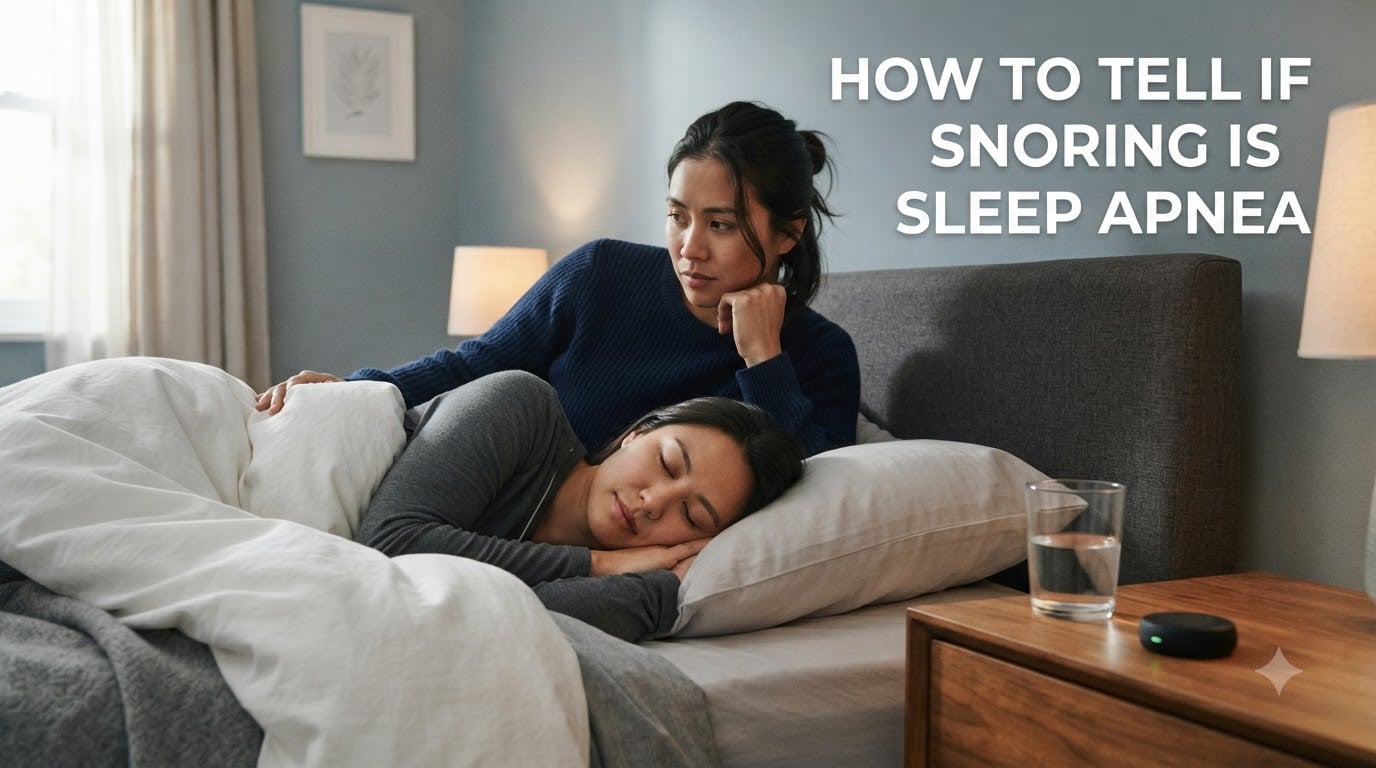
Your partner elbows you at 3 a.m. because you stopped breathing — again. Or maybe you wake up gasping, throat dry, heart pounding, with no idea why. Snoring is easy to laugh off, but sometimes it is the loudest alarm your body can sound.
Here is the part that surprises most people: the American Academy of Sleep Medicine estimates that about 23.5 million Americans have sleep apnea and do not know it. Nearly half of Americans cannot name a single symptom. That means millions are brushing off warning signs every single night.
This guide walks you through exactly how to tell if snoring is sleep apnea — the nighttime signs, the daytime red flags, the risk factors, and a self-assessment checklist you can use right now. I have pulled insights from medical sources like Johns Hopkins, Mayo Clinic, and the AASM, plus real stories from people who lived through undiagnosed sleep apnea for years.
Table of Contents
How to Tell If Snoring Is Sleep Apnea: The Quick Answer
The fastest way to tell if snoring is sleep apnea is to look for two categories of signs. Snoring alone, even loud snoring, does not mean you have sleep apnea. But snoring combined with any of the following warrants a conversation with your doctor.
Nighttime signs of sleep apnea:
Loud, persistent snoring that happens most nights
Witnessed pauses in breathing — silence followed by a gasp, choke, or snort
Gasping for air, choking, or snorting that wakes you up
Restless sleep with frequent tossing and turning
Waking up with a dry mouth or sore throat
Night sweats or needing to urinate multiple times at night
Daytime signs of sleep apnea:
Excessive daytime sleepiness, even after a full night in bed
Morning headaches, especially around the forehead
Brain fog, trouble concentrating, or memory issues
Mood changes — irritability, anxiety, or low mood
Feeling unrefreshed no matter how long you slept
If you checked three or more boxes across both lists, the odds are high that your snoring is more than just noise. Keep reading for the details behind each sign.
Understanding Snoring vs Sleep Apnea
Not all snoring is created equal. Normal snoring happens when air cannot move freely through your nose and throat during sleep. The soft tissues in your airway vibrate as you breathe, producing that familiar sound. Occasional snoring after a drink, during allergy season, or when sleeping on your back is usually harmless.
Sleep apnea is different. Obstructive sleep apnea (OSA) is a disorder where your airway becomes completely or partially blocked, causing breathing to stop for 10 to 30 seconds at a time. These pauses can repeat dozens or even hundreds of times per night. Each pause drops your oxygen levels, forcing your brain to briefly wake you up just enough to restart breathing.
The key difference is the breathing pauses. Normal snorers keep breathing steadily through the night. People with sleep apnea stop breathing repeatedly — and most of the time, they have no memory of it happening.
Think of it this way: snoring is the sound of a partially narrowed airway. Sleep apnea is what happens when that airway slams shut over and over again, with the snoring sound bookended by eerie silences and sudden gasps.
Nighttime Warning Signs You Should Not Ignore
The most reliable sleep apnea clues happen while you are asleep — which is why a bed partner is often the one who spots them first. In fact, many people only discover they might have sleep apnea because someone else witnessed the breathing stops.
Loud Snoring That Shakes the Walls
Sleep apnea snoring tends to be exceptionally loud, and it usually happens every night rather than occasionally. The pattern is distinctive: loud rattling snores broken by sudden silences, then a violent snort or gasp as breathing restarts. If your snoring can be heard through closed doors or wakes others in the house, that intensity is worth paying attention to.
Witnessed Pauses in Breathing
This is the single most specific sign of sleep apnea. A partner, roommate, or family member notices that your breathing stops entirely for several seconds. The silence is often followed by a choking or gasping sound as your body fights to reopen the airway. One Reddit user described it perfectly: “My wife recorded me sleeping — I’d snore, go completely silent for what felt like forever, then make this awful gasping noise.”
If nobody sleeps near you, this sign is easy to miss. That is why using a sleep tracking app with audio recording, or even a phone voice memo overnight, can reveal patterns you would never know about otherwise.
Gasping, Choking, or Snorting Awake
You might wake up suddenly with a sensation of choking, gasping, or desperate air hunger. Some people describe feeling like they were drowning. Your heart may be racing. This is your body’s emergency response to low oxygen — a survival mechanism that drags you out of deep sleep just enough to breathe.
You might not remember these episodes in the morning. But if it happens often enough, it fragments your sleep into hundreds of tiny pieces without you realizing it.
Restless Sleep and Frequent Position Changes
People with sleep apnea often toss and turn all night. Your body may instinctively shift positions to try to open the airway — rolling onto the side, jerking limbs, or sitting up briefly. If you wake up with sheets tangled every morning or your partner says you never stop moving, sleep apnea could be the reason.
Dry Mouth, Sore Throat, and Night Sweats
Waking up with a parched mouth or raw throat night after night is common with sleep apnea. When your airway is partially blocked, you tend to breathe through your mouth, drying out the throat. Night sweats happen because the repeated oxygen drops trigger stress responses that raise your heart rate and body temperature.
Daytime Symptoms That Point to Sleep Apnea
The nighttime signs are the most direct evidence, but daytime symptoms are often what finally push people to seek help. These are the consequences of fragmented, oxygen-starved sleep piling up night after night.
Excessive Daytime Sleepiness
This is not the normal tiredness from a late night. It is a heavy, persistent drowsiness that makes it hard to stay awake during meetings, while driving, or in front of the TV. You might feel like you could fall asleep anywhere at any time. One forum contributor wrote: “I was sleeping 9 hours and still needed a nap at my desk. Turns out I was having 40 apneas an hour.”
If you ever feel drowsy while driving, take it seriously — this is one of the most dangerous consequences of untreated sleep apnea.
Morning Headaches
Waking up with a dull headache, especially across the front of your head, is a classic sleep apnea symptom. The repeated oxygen drops and carbon dioxide buildup during the night cause blood vessels in the brain to dilate. The headache usually fades within an hour of waking, but it comes back the next morning.
Brain Fog and Memory Problems
When your sleep is broken into fragments all night, your brain never gets the deep, restorative stages it needs. The result is difficulty concentrating, forgetfulness, and a fuzzy feeling that coffee cannot fix. You might struggle to follow conversations, lose your train of thought, or make careless mistakes at work.
Mood Changes and Irritability
Chronic sleep deprivation does a number on your emotional regulation. Irritability, short temper, anxiety, and even low mood or depression are common. Partners and coworkers may notice the change before you do.
Unrefreshing Sleep No Matter How Long You Rest
This is the signature frustration of sleep apnea. You spend 8 or 9 hours in bed, but it feels like you got 3. The apnea episodes keep pulling you out of deep sleep, so your body never completes the restorative cycles it needs. If you consistently wake up feeling worse than when you went to bed, sleep apnea deserves a look.
Risk Factors That Increase Your Chances
Sleep apnea does not discriminate, but certain factors stack the odds. Knowing your risk profile helps you and your doctor decide whether symptoms warrant a sleep study.
Physical factors:
Excess weight, especially around the neck — a neck size over 17 inches in men or 16 inches in women raises risk significantly
Narrowed airway, large tonsils or adenoids, or a deviated septum
Large tongue or recessed jaw that falls back during sleep
Being over age 40, though sleep apnea affects all ages
Demographic and lifestyle factors:
Men are roughly 2 to 3 times more likely to have sleep apnea than women, though the gap narrows after menopause
Family history of sleep apnea increases your risk
Smoking inflames and fluid-loads the upper airway, raising risk
Alcohol and sedatives relax throat muscles, worsening airway collapse
Nasal congestion from allergies or anatomy forces mouth breathing
Having risk factors does not mean you definitely have sleep apnea — but it means your snoring deserves closer attention, especially if symptoms are present.
Sleep Apnea Self-Assessment Checklist
No competitor offers a practical checklist like this, so I built one from the symptom patterns reported across medical sources and real patient stories. Go through these questions honestly. Each “yes” adds to your risk picture.
Ask yourself (or your partner):
Do I snore loudly enough to be heard through a closed door?
Has anyone witnessed me stop breathing during sleep?
Do I wake up gasping, choking, or snorting?
Do I feel tired or sleepy during the day 3 or more days a week?
Do I wake up with morning headaches?
Has my partner moved to another room because of my snoring?
Is my neck size over 17 inches (men) or 16 inches (women)?
Do I have high blood pressure?
Has my weight increased in the last few years?
Do I wake up with a dry mouth most mornings?
How to score yourself:
0 to 2 “yes” answers: Low risk, but keep an eye on symptoms if they change
3 to 5 “yes” answers: Moderate risk — bring this up with your doctor
6 or more “yes” answers: High risk — ask about a sleep study right away
This checklist is not a diagnosis. But it gives you and your doctor a concrete starting point. Many people print it out and bring it to their appointment.
Sleep Apnea Symptoms in Children
Sleep apnea in children looks different than in adults, and it is frequently missed. The most common cause in kids is enlarged tonsils and adenoids, not excess weight. If your child shows any of these signs, talk to a pediatrician or an ENT specialist.
Signs of sleep apnea in children:
Loud snoring most nights, often starting before age 5
Pauses in breathing witnessed by a parent
Mouth breathing during sleep
Restless sleep, sweating, or unusual sleeping positions like neck hyperextended
Bedwetting in a child who was previously dry at night
Behavioral problems, hyperactivity, or trouble focusing in school — often misdiagnosed as ADHD
Slowed growth or poor weight gain
Children with sleep apnea may not seem sleepy during the day. Instead, they often become hyperactive or irritable, which is why the condition is mistaken for behavioral issues. If your child snores regularly and struggles in school, ask whether a sleep evaluation makes sense.
How Sleep Apnea Is Diagnosed
You cannot definitively diagnose sleep apnea at home, but the process is more accessible than most people think. The gold standard is a sleep study, and there are two main ways to do one.
In-Lab Polysomnography
An overnight stay at a sleep center gives the most complete picture. Sensors track your brain waves, heart rate, breathing, oxygen levels, and muscle activity throughout the night. A technician monitors everything in real time. This is the most thorough option and is usually recommended for complex cases.
Home Sleep Apnea Test
A home sleep test is a small device you wear overnight in your own bed. It typically measures breathing patterns, oxygen levels, and heart rate. It is less detailed than an in-lab study but perfectly adequate for many people, and insurance often covers it. You simply pick up or receive the device, wear it overnight, and return it for analysis.
Understanding Your AHI Score
After a sleep study, you receive an Apnea-Hypopnea Index (AHI) score. This number tells you how many times per hour your breathing partially or fully stopped during the study.
Under 5: Normal range
5 to 15: Mild sleep apnea
15 to 30: Moderate sleep apnea
Over 30: Severe sleep apnea
Your AHI, combined with your symptoms, guides treatment decisions. Some people with mild AHI but severe daytime symptoms still benefit from treatment.
What Happens If Sleep Apnea Goes Untreated
Untreated sleep apnea is not just about poor sleep. The repeated oxygen drops and sleep fragmentation take a real toll on the body over time.
People with untreated sleep apnea face higher risks of high blood pressure, heart disease, stroke, type 2 diabetes, and irregular heartbeats. The chronic sleep deprivation also raises the risk of motor vehicle and workplace accidents. One forum member shared: “My doctor said my high blood pressure was almost certainly from undiagnosed sleep apnea for years. Within months of starting treatment, my numbers dropped.”
The good news is that treatment works. CPAP therapy, oral appliances, lifestyle changes, and in some cases surgery can dramatically improve symptoms and lower health risks. The first step is finding out whether your snoring crosses the line into sleep apnea.
When to See a Doctor About Your Snoring
Make an appointment with your primary care doctor if you snore loudly on most nights, if anyone has witnessed you stop breathing during sleep, or if you feel exhausted during the day despite getting 7 or more hours in bed. These three signals alone justify a conversation about a sleep study.
You do not need to wait until things get severe. Early diagnosis means earlier relief and lower long-term health risks.
FAQs
What is the 3% rule for sleep apnea?
The 3% rule refers to the clinical definition of a hypopnea, which is a partial reduction in breathing. For a breathing event to count as a hypopnea on a sleep study, airflow must drop by at least 30% for 10 seconds or longer, and blood oxygen levels must fall by at least 3%. These events are counted alongside full apneas to calculate your AHI score.
How do I check myself for sleep apnea?
You cannot officially diagnose sleep apnea at home, but you can screen yourself. Record yourself sleeping with a phone app to listen for pauses and gasps. Use a self-assessment checklist to count your risk factors and symptoms. If you score in the moderate or high range, ask your doctor about a home sleep apnea test, which you can do in your own bed.
Can I snore loudly and not have sleep apnea?
Yes. Loud snoring alone does not mean you have sleep apnea. Some people snore heavily due to nasal congestion, alcohol, sleeping position, or anatomy without ever stopping breathing. The distinguishing feature of sleep apnea is repeated pauses in breathing followed by gasping or choking, combined with daytime symptoms like excessive sleepiness and morning headaches.
What are the first signs of sleep apnea?
The earliest and most common signs are loud nightly snoring, witnessed pauses in breathing, gasping or choking during sleep, waking up with a dry mouth or morning headache, and excessive daytime sleepiness. A bed partner is often the first to notice the breathing pauses, since the person sleeping usually has no memory of them.
Can you have sleep apnea without snoring?
Yes, though it is less common. Some people with sleep apnea, particularly women and those with central sleep apnea, may not snore at all. They still experience breathing pauses, fragmented sleep, and daytime exhaustion. This is why daytime symptoms like unrefreshing sleep, morning headaches, and brain fog matter even if no snoring is present.
The Bottom Line
Learning how to tell if snoring is sleep apnea comes down to looking for the pattern: loud snoring broken by breathing pauses, gasping, and daytime exhaustion. If those pieces fit together, do not wait. Talk to your doctor about a sleep study — relief could be one conversation away, and the health benefits of treatment are life-changing.