
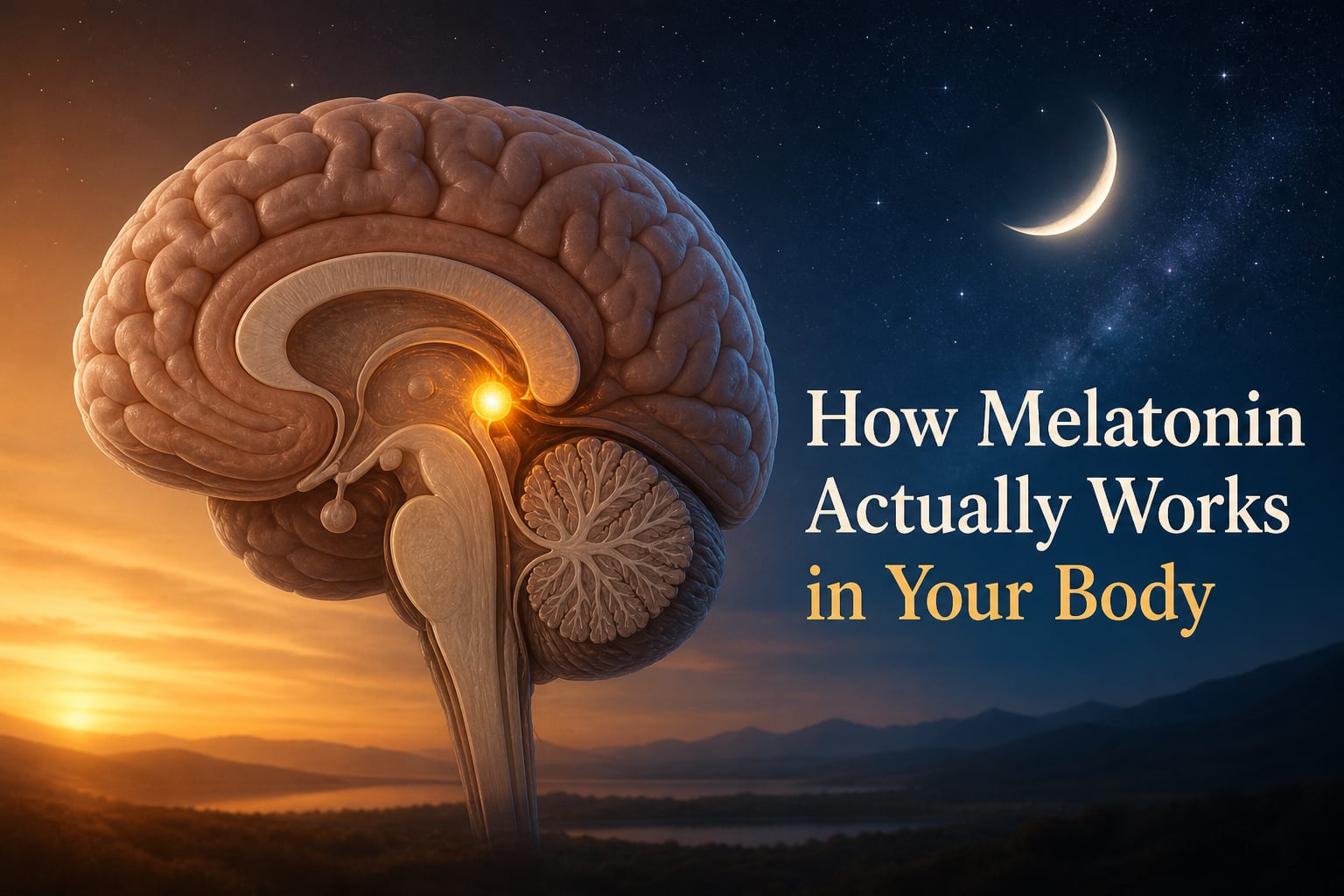
Melatonin is a hormone your pineal gland releases into the bloodstream when darkness arrives, and it tells your brain and body that it is time to sleep. Understanding how melatonin works in your body changes how you think about sleep, light, and the supplements sitting on your nightstand.
I spent weeks digging into the research, talking with sleep researchers, and reading what real users report on forums. This guide is what I wish someone had handed me years ago: a clear, honest explanation of the hormone actually running your nights.
Table of Contents
What Is Melatonin and How It Works in Your Body
Melatonin is a hormone produced naturally by a tiny structure deep in your brain called the pineal gland. It is the chemical messenger your body uses to coordinate sleep, and it is part of a much larger system called the circadian rhythm.
Your body does not store melatonin the way it stores glucose or fat. Instead, it makes it on demand from an amino acid called tryptophan, the same building block you use to make serotonin. When the enzyme finishes the conversion, melatonin is released directly into your bloodstream and cerebrospinal fluid.
Your pineal gland releases melatonin in a clear daily pattern. Production climbs each evening as light fades, peaks in the middle of the night, and drops sharply in the morning. This rise and fall is what researchers call your melatonin curve, and it is the foundation of your sleep-wake cycle.
Here is the short version that wins the featured snippet: melatonin is a hormone your brain releases in darkness to signal your body that it is time to sleep, and it regulates your circadian rhythm by preparing your brain for rest rather than forcing you unconscious.
Why Melatonin Is Not a Sleeping Pill
A common misconception is that melatonin knocks you out the way a sedative does. It does not. Melatonin gently shifts your body into what Johns Hopkins sleep researcher Dr. Luis Buenaver calls a state of “quiet wakefulness.”
Your muscles relax, your core body temperature drops, and your alertness softens. Sleep still has to happen on its own. Melatonin opens the door. It does not push you through it.
The Pineal Gland: Your Body’s Melatonin Factory
The pineal gland is a pinecone-shaped organ roughly the size of a grain of rice, sitting near the center of your brain. René Descartes called it “the seat of the soul,” but modern neuroscience gives it a more concrete job: it is the command center for your nightly melatonin release.
What makes the pineal gland special is its location. It sits outside the blood-brain barrier, which means it can sample what is happening in your bloodstream and respond to signals from other parts of the brain without delay.
It works as part of a chain. Your eyes detect light and send signals to a region called the suprachiasmatic nucleus, which sits in the hypothalamus. That nucleus is your body’s master clock, and it tells the pineal gland when to make melatonin. When the master clock senses darkness, the pineal gland gets the green light to start production.
Why the Pineal Gland Calcifies Over Time
As you age, the pineal gland gradually accumulates calcium deposits. This is normal, and researchers have studied it for decades using brain imaging. The calcium does not stop melatonin production, but it does tend to slow it down, which is one reason older adults often produce less of the hormone at night.
The Sleep-Wake Cycle and Circadian Rhythm Connection
Your circadian rhythm is a 24-hour internal clock that controls sleep, hunger, hormone release, body temperature, and dozens of other processes. Melatonin is the chemical your body uses to express that rhythm in real time.
Think of it this way. Your suprachiasmatic nucleus is the clock. Light is the signal that sets the clock. Melatonin is the readout that tells every cell in your body what time it is.
When your melatonin curve rises in the evening, that rise is not just about sleep. It also signals your pancreas to reduce insulin sensitivity, your gut to slow digestion, and your kidneys to adjust how they handle fluid. Sleep is the headline, but the rhythm runs the whole show.
What Happens When Your Circadian Rhythm Drifts
When your rhythm drifts, your melatonin release drifts too. That is why jet lag feels awful. You land in a new time zone, but your pineal gland is still running on the old schedule. It takes days for the light-dark signal to drag your rhythm back into alignment.
Shift workers know this problem even more deeply. Their pineal gland receives conflicting signals from artificial light and from the sun, so the melatonin curve smears across the 24-hour day. Sleep becomes a negotiation, not a reflex.
How Light Exposure Controls Melatonin Production
Light is the most powerful regulator of melatonin production. Even small amounts of the right kind of light can delay the release of the hormone by hours.
Here is how the pathway works in your body. Photoreceptors in your retinas, especially a class of cells called intrinsically photosensitive retinal ganglion cells, detect light. These cells send signals directly to the suprachiasmatic nucleus, which then tells the pineal gland to hold off on melatonin production.
When the light fades, those signals stop. The pineal gland receives the all-clear, and melatonin begins to climb. This is why even a few minutes of bright light in the middle of the night can wake you up and why dim lighting in the evening helps your body prepare for sleep.
Blue Light and Your Melatonin Curve
Blue wavelengths, the kind emitted by screens, LED bulbs, and the afternoon sky, are the most disruptive to melatonin release. Studies measuring salivary melatonin have shown that exposure to bright blue light in the evening can delay the melatonin rise by 90 minutes or more.
That delay is a big deal. If your melatonin rise is pushed from 9:00 pm to 10:30 pm, your body is still in “awake” mode well past your intended bedtime. Sleep becomes harder to initiate, and the quality of the sleep you do get is often lighter.
This is why sleep experts recommend dimming lights and avoiding screens 1 to 2 hours before bed. You are not just relaxing. You are actively giving your pineal gland permission to do its job.
The Mechanism: How Melatonin Signals Your Brain
Once melatonin reaches your bloodstream, it travels throughout your body and binds to specific melatonin receptors. The two main receptor types, called MT1 and MT2, are found in many tissues, but they are heavily concentrated in the suprachiasmatic nucleus and other parts of the brain involved in sleep.
When melatonin binds to MT1 receptors, it sends a signal that reduces neuronal firing in the part of your brain responsible for keeping you alert. When it binds to MT2 receptors, it helps your master clock shift its phase, which is why melatonin can be useful for resetting your rhythm.
The combined effect is a measurable drop in core body temperature, a fall in alertness, and a shift in the activity of other neurotransmitters. Your digestive system slows down. Your cortisol levels begin their nightly decline. Your pupils relax. All of this happens because melatonin has bound to its receptors and sent the signal.
Melatonin and the HPA Axis
Your hypothalamus-pituitary-adrenal, or HPA, axis is the system that controls your stress hormones. Melatonin and cortisol, your main stress hormone, are in a kind of push-pull relationship. When melatonin rises, cortisol falls. When cortisol rises in the morning, melatonin drops.
This is one reason why a healthy melatonin curve matters more than just falling asleep faster. It is part of the rhythm that allows your body to recover from stress, repair tissues, and consolidate memories overnight.
Melatonin Receptors: Where the Hormone Actually Acts
Most articles stop at “melatonin tells your brain it is time to sleep.” That is like describing a phone as a thing that makes noise. The interesting part is the network.
Melatonin receptors are not just in your brain. They are in your heart, your gut, your immune cells, your blood vessels, your ovaries, and your retinas. When melatonin binds to these receptors, it produces effects that go far beyond sleep.
MT1 and MT2 receptors belong to a family of G-protein-coupled receptors, which means they trigger signaling cascades inside cells when melatonin locks onto them. There is also a third binding site called MT3, which is actually an enzyme called quinone reductase 2. Its role in humans is still being studied.
Receptor Desensitization
One reason some researchers worry about nightly melatonin use is that receptors can downregulate when they are exposed to a constant signal. If you take high-dose melatonin every night for months, your body may respond by reducing the number of available receptors. That can actually make sleep worse over time.
This is part of the biological reason that timing and dose matter more than most people think. A small, well-timed pulse of melatonin matches what your body expects. A large, late-night flood does not.
Normal Melatonin Levels by Age
Melatonin production changes dramatically across a lifetime. Here is what the research generally shows.
Newborns produce very little melatonin at first. They get their early melatonin from the placenta and from breast milk, which contains the hormone particularly at night. Around 3 months of age, their own pineal glands start producing it, and the typical evening rise begins to develop.
Children and teenagers produce the highest night-time melatonin levels of any age group. This is one reason younger kids tend to fall asleep easily and sleep deeply. Production stays high until puberty, when it begins a gradual decline.
Adults see a steady drop in melatonin output each decade. By age 60, many people produce roughly half the melatonin they did at age 20. By age 70, that drop can be even steeper. This is one biological contributor to the sleep problems that become more common with age.
Seasonal changes also matter. Pineal activity tends to peak in winter and drop in summer, which is the opposite of what most people expect. The longer nights of winter allow more sustained melatonin production, which is one reason some people feel sleepier in the colder months.
Benefits of Melatonin Beyond Sleep
Sleep is the headline, but the receptor network tells a bigger story. Research has uncovered several effects of melatonin that go beyond putting you to bed.
Antioxidant and Cellular Protection
Melatonin is a powerful antioxidant. Unlike vitamin C or vitamin E, which act in specific cellular compartments, melatonin moves freely through cells and even crosses the blood-brain barrier easily. It neutralizes free radicals and helps your body produce its own protective enzymes.
Immune System Modulation
Melatonin interacts with immune cells through MT1 and MT2 receptors on lymphocytes and other white blood cells. It tends to enhance certain immune functions at night, which researchers think is one reason sleep is so important for fighting off infections.
Reproductive Hormone Regulation
Melatonin receptors in the ovaries and testes influence the release of reproductive hormones. Some fertility researchers use melatonin as an adjunct treatment because of its effects on egg quality and ovulation timing, though this is still an active area of study.
Mood and Seasonal Patterns
The seasonal shift in melatonin production may play a role in seasonal affective disorder. Changes in the melatonin curve can affect mood-related neurotransmitters, which is why light therapy, which resets the circadian rhythm, often helps people with winter depression.
Factors That Deplete Your Natural Melatonin
Several common lifestyle and environmental factors can reduce melatonin production or shift its timing. Here are the most well-documented ones.
- Evening blue light exposure. Phones, tablets, TVs, and bright LED bulbs directly suppress pineal output.
- Insufficient daytime light. Bright daytime light helps your master clock calibrate, so a dim indoor lifestyle weakens the signal.
- Caffeine in the afternoon or evening. Caffeine does not just block adenosine. It also interferes with melatonin receptors and shifts the curve later.
- Alcohol use. Alcohol fragments sleep and disrupts the normal melatonin curve, even if it helps you fall asleep faster.
- Shift work and irregular schedules. Constant changes in light exposure confuse the master clock and reduce pineal output.
- Aging. Pineal calcification and reduced receptors naturally lower production over time.
- Certain medications. Beta-blockers, NSAIDs, and some antidepressants can lower melatonin levels.
- Stress and high cortisol. Chronic stress keeps cortisol elevated, which directly opposes melatonin release.
Melatonin Supplements: What the Science Actually Shows
Melatonin supplements are sold as a natural sleep aid, and many people reach for them. The research is mixed, but it tells a clearer story than the marketing does.
For circadian rhythm disorders like jet lag, delayed sleep phase disorder, and shift work disorder, melatonin has good evidence. It works by shifting the master clock, which is exactly what those conditions need. Doses between 0.5 and 5 mg, taken at the right time, can move the melatonin curve earlier or later depending on when you take them.
For general insomnia, the evidence is weaker. Melatonin does not increase total sleep time in most people. It can shorten the time it takes to fall asleep by about 7 to 12 minutes on average, which is meaningful for some people but smaller than most users expect.
Many users report that lower doses work better than higher ones. This matches the receptor biology. A small dose mimics the natural pulse your body expects. A 10 mg supplement can flood your receptors and cause next-day grogginess, vivid dreams, or a rebound effect the following night.
Why Timing Matters More Than Dose
I noticed this pattern in forum discussions too. People who took 0.5 to 3 mg about 2 hours before bed reported the most consistent results. People who took 10 mg right before trying to sleep often reported grogginess, weird dreams, or no effect at all.
The biological reason is straightforward. Melatonin does not work by sedating you. It works by signaling your body that the time for sleep is approaching. If you take it at the right phase, your body responds. If you take it at the wrong phase, your body is already in a different state and the signal does not land.
Safety, Side Effects, and When to Avoid Melatonin
Melatonin is generally well tolerated for short-term use, but it is not risk-free for everyone. Side effects can include morning grogginess, vivid dreams, headaches, and short-term feelings of depression. Some people also report a temporary increase in anxiety.
Long-term safety data is limited. Because melatonin can affect reproductive hormones, immune function, and blood pressure, people with certain conditions should be cautious. This includes people with autoimmune diseases, those on blood thinners, pregnant or breastfeeding women, and people with epilepsy.
Melatonin can also interact with common medications. Blood pressure drugs, immunosuppressants, and medications metabolized by the liver through the cytochrome P450 system can all be affected. If you take any regular medication, talk to your doctor before adding melatonin to your routine.
Who Should Think Twice About Melatonin
Beyond medical conditions, there are practical reasons to skip melatonin. People with mild sleep issues often do better by improving sleep hygiene first. Children and teenagers should generally not use melatonin without a doctor’s guidance, since their natural melatonin production is high and easily disrupted.
People who take melatonin every night for months can develop a psychological dependence on it, even if the biology does not require it. The supplement becomes a sleep crutch, and the underlying habits that drive good sleep get neglected.
Quality control is another concern. Studies have tested commercial melatonin supplements and found that actual content can vary from 83% less to 478% more than what the label says. Some products also contain serotonin, which is not safe to take without medical supervision.
The Science of Timing: Why 2 Hours Before Bed Matters
Most people take melatonin right before they get into bed, but the science points to a different strategy. Taking melatonin 2 to 3 hours before your intended bedtime often works better because it allows the hormone to align with the rising phase of your natural curve.
Your pineal gland does not flip a switch. It gradually ramps up melatonin production over the course of the evening. If you take a supplement at the start of that ramp, you are reinforcing what your body is already trying to do. If you take it at the end of the ramp, you are flooding the system after the rise has already happened.
This is also why timing melatonin for jet lag requires careful planning. Your goal is to take the dose at the time that corresponds to early evening in your new time zone, not your old one. That early evening is where the curve begins, and that is where a small dose has the most effect.
Building Your Own Melatonin Curve
Supplements are an option, but your body already has the machinery to make melatonin. Here are the habits that support the natural production you already have.
- Get bright light in your morning. A walk outside or sitting by a bright window shortly after waking helps your master clock calibrate.
- Dim your lights in the evening. Aim for low, warm lighting in the 2 hours before bed.
- Avoid screens, or use blue-light filters. Even with a filter, brightness still matters. Lower the overall brightness of your devices.
- Keep a consistent sleep schedule. Going to bed and waking at the same time each day stabilizes your rhythm.
- Limit caffeine after early afternoon. Caffeine has a half-life of 5 to 6 hours, so afternoon coffee can still affect your melatonin at night.
- Keep your bedroom cool and dark. Cool temperatures support the natural drop in body temperature that melatonin initiates.
Frequently Asked Questions
Why is melatonin not recommended for everyone anymore?
Melatonin is generally safe for short-term use, but long-term safety data is limited. Concerns include supplement quality issues, where actual content can vary significantly from the label, possible receptor desensitization with nightly use, and interactions with medications like blood thinners, immunosuppressants, and blood pressure drugs. People with autoimmune conditions, pregnant or breastfeeding women, and children should consult a doctor before using it.
Does melatonin make you sleep longer or just fall asleep?
Melatonin primarily helps you fall asleep faster by signaling your body that it is time to rest. It does not significantly increase total sleep time in most people. Research shows it shortens the time it takes to fall asleep by about 7 to 12 minutes on average for those with general insomnia. It works best for shifting the timing of sleep, not extending its duration.
What depletes melatonin in your body?
Several factors reduce melatonin production or shift its timing: evening exposure to blue light from screens and LEDs, insufficient bright light during the day, caffeine intake in the afternoon or evening, alcohol use, shift work, irregular sleep schedules, aging, certain medications (beta-blockers, NSAIDs, some antidepressants), and chronic stress with elevated cortisol levels.
Why shouldn’t you take melatonin every night?
Daily melatonin use can lead to receptor desensitization, where your body reduces the number of available receptors in response to constant exposure. It can also create psychological dependence and mask underlying sleep issues that better sleep habits could resolve. Long-term safety data is limited, and supplement quality varies widely. Using melatonin occasionally for jet lag or circadian shifts is different from nightly, long-term use.
Final Thoughts on How Melatonin Actually Works in Your Body
Melatonin is one of the most important hormones in your body, and it is one of the most misunderstood. It does not knock you out. It signals. It coordinates. It tells your brain, your heart, your gut, and your immune system what time it is.
If there is one thing I want you to take away from this guide on how melatonin works in your body, it is this: timing matters more than dosage. Bright light in the morning and dim light at night are more powerful than any supplement you can buy. A consistent sleep schedule, low caffeine in the afternoon, and a dark, cool bedroom will do more for your melatonin curve than a 10 mg tablet taken at the wrong time.
Melatonin supplements have a real place for jet lag, shift work, and certain circadian disorders. For most people, though, the goal is to support what your pineal gland already knows how to do. Treat darkness like medicine, and your body will handle the rest.