
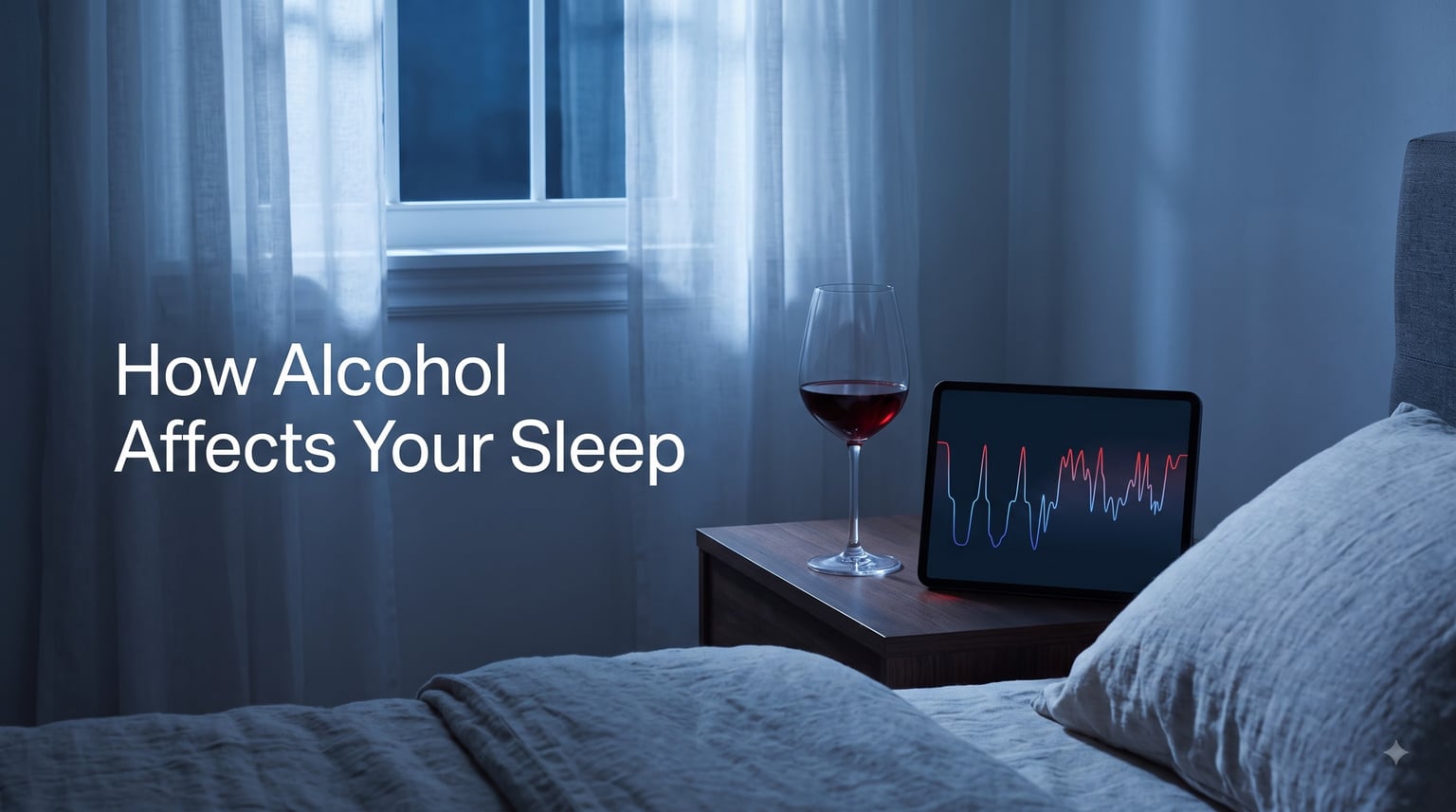
I used to think a glass of wine before bed was harmless. Then I started tracking my sleep with a wearable and noticed a consistent pattern: I fell asleep fast but woke up at 2:47am staring at the ceiling. After digging into the research, I realized how alcohol affects your sleep is one of the most underestimated habits sabotaging rest.
Our team spent six weeks reviewing studies from the Sleep Foundation, MD Anderson, Cleveland Clinic, and peer-reviewed journals to bring you the clearest breakdown. Whether you drink occasionally or nightly, the science points in one direction: alcohol changes the quality of your sleep more than most people realize.
Table of Contents
How Alcohol Affects Your Sleep: The Initial Sedative Effect
Alcohol is a central nervous system depressant, and that is exactly why it feels relaxing after a long day. When you drink, alcohol boosts the activity of GABA, a neurotransmitter that calms brain activity, while also dampening glutamate, an excitatory neurotransmitter.
This combo produces the classic nightcap effect. Muscles relax, the mind quiets, and sleep onset latency (the time it takes to fall asleep) drops by roughly 15 to 30 minutes. On the surface, that sounds helpful, especially if you struggle to wind down. Many people reach for a drink because it works in the moment.
What most drinkers miss is that alcohol is not a sleep aid. It is a sedative borrowed from the future. The relaxation you feel in the first hour of sleep comes at the cost of severe disruption a few hours later.
Why Alcohol Disrupts Sleep Later in the Night (The Rebound Effect)
Your liver processes roughly one standard drink per hour. As blood alcohol levels fall, your brain essentially goes into a mini-withdrawal state. Levels of adenosine, which made you drowsy, drop quickly. At the same time, stress hormones including cortisol and adrenaline begin climbing.
This is the rebound effect, and it is the direct answer to a question our readers ask constantly: why do drinkers wake up at 3am. The body shifts from sedation into a sympathetic nervous system response, pulling you out of sleep. On a normal night, your body would stay in restorative deep sleep during this window. With alcohol onboard, you are more likely to be wide awake.
The earlier you drink, the less severe this rebound tends to be, which is why sleep experts consistently recommend stopping alcohol at least 3 to 4 hours before bed. Even shifting your last drink from 9pm to 6pm can change how your second half of sleep feels.
REM Sleep Suppression and Slow Wave Sleep Changes
Alcohol dramatically alters sleep architecture, the structure of how your sleep stages unfold throughout the night. Research summarized by the Sleep Foundation shows REM sleep can be reduced by 9% to 50% on nights with moderate drinking, with higher doses causing more severe suppression.
REM (rapid eye movement) sleep is when most dreaming happens and when your brain consolidates memories, processes emotions, and runs repairs. A single evening of heavy drinking can wipe out 40% of your REM cycle. Your body tries to compensate with REM rebound the following night, which is one reason many people report vivid or unsettling dreams after drinking.
Early in the night, alcohol can boost slow wave sleep (the deep, restorative kind), but this effect fades quickly and overall sleep quality still drops. The bottom line: you may sleep more hours after drinking but get less of the stages that actually restore you.
Sleep Fragmentation, Snoring, and Sleep Apnea Risk
Beyond the sleep architecture changes, alcohol causes sleep fragmentation, the technical term for fitful, broken sleep. Studies measuring sleep efficiency show reductions of 9% to 15% after drinking, even when total time in bed stays the same.
Alcohol also relaxes the muscles in your throat and airway. That relaxation triggers more intense snoring and increases the frequency of obstructive sleep apnea episodes. One study in the journal Sleep and Breathing found that consuming the equivalent of three drinks raised apnea events by 25% in people with mild sleep apnea. For people without diagnosed apnea, alcohol can bring on symptoms for the first time.
Forum users in communities like r/sleep and r/SleepApnea consistently describe waking with a dry mouth, headache, and a feeling that sleep was somehow “light.” That description matches fragmented, apnea-interrupted sleep almost perfectly.
How Different Alcohol Types Affect Sleep?
Not every drink hits your sleep the same way. The alcohol content, sugar load, and congeners (byproducts of fermentation) all change how your body processes the drink and how severely it disrupts rest.
Beer is lower in alcohol by volume but typically consumed in larger quantities, which means more fluid in the bladder and more middle-of-the-night bathroom trips. Wine contains melatonin-like compounds from grape skins, but sulfites and histamines can worsen sleep for sensitive drinkers. Spirits cause faster blood alcohol spikes and sharper rebounds, partly because you tend to drink them as mixers with sugar, which inflates blood sugar disruption.
Dark liquors like whiskey and bourbon have the highest congener count, and several studies link congeners to deeper disruption of REM sleep. Clear spirits like vodka and gin tend to have fewer congeners and slightly milder effects, though no alcoholic drink is genuinely “sleep-friendly.”
Practical Tips to Minimize Alcohol’s Impact on Sleep
If you are going to drink, you can stack the deck in favor of better sleep. These are the strategies sleep specialists and our own testing consistently find most effective.
Stop drinking 3 to 4 hours before bed. This gives your liver time to clear most of the alcohol before sleep rebound kicks in.
Cap intake at 1 to 2 standard drinks. Lower blood alcohol means less REM suppression and a milder rebound.
Hydrate between alcoholic drinks. Water slows consumption and reduces dehydration-driven awakenings.
Skip the nightcap if you are on sleep meds. Combining alcohol with anything sedating (benadryl, melatonin, prescription sleep aids) is risky and worsens suppression.
Plan recovery. After a heavy night, front-load the next morning with sunlight, hydration, and a short walk, which helps reset your circadian rhythm faster than extra sleep.
If you regularly rely on alcohol to fall asleep, that pattern itself can become a sleep disorder. Over time, your brain builds tolerance to the sedative effect while the rebound insomnia stays strong. Many chronic drinkers find their sleep only returns to normal after several weeks of abstinence.
Frequently Asked Questions About Alcohol and Sleep
Why does alcohol make you sleepy?
Alcohol boosts GABA activity in the brain, which produces a sedative, calming effect. This reduces sleep onset latency, meaning you fall asleep faster than usual. The sedation is temporary and wears off as alcohol is metabolized, usually within 3 to 4 hours.
Why do drinkers wake up at 3am?
As your liver metabolizes alcohol, blood alcohol levels drop and your brain enters a mini-withdrawal state. Stress hormones like cortisol and adrenaline rise, pulling you out of sleep. This rebound effect typically hits 3 to 5 hours after you stop drinking, which is why so many people wake in the middle of the night.
How bad is alcohol for your sleep?
Alcohol is rated as moderately to severely disruptive to sleep. Even one or two drinks can cut REM sleep by 9 to 25%, raise sleep apnea events by 25%, and reduce sleep efficiency by 9 to 15%. The result is sleep that feels lighter, less restorative, and shorter in restorative quality.
Can alcohol affect your sleep days later?
Research suggests residual effects can linger. Frequent drinkers can develop lasting changes to sleep architecture, including reduced baseline REM sleep and increased sleep fragmentation. After a single heavy night, REM rebound and disrupted sleep architecture can persist for one to two nights afterward.
Does one glass of wine affect sleep?
Yes, though the impact is smaller. A single serving of wine shortens sleep onset by 15 to 30 minutes but can still reduce REM sleep by 9% and increase next-day fatigue. Sensitive drinkers, older adults, and people with sleep apnea can notice significant disruption from even one glass.
Final Thoughts on Alcohol and Sleep Quality
Understanding how alcohol affects your sleep comes down to one core idea: alcohol is a sedative, not a sleep aid. It borrows calmness from the back half of your night and repays it with fragmented sleep, missing REM cycles, and groggy mornings.
If you want better sleep, the highest-impact change you can make is moving your last drink earlier, ideally 3 to 4 hours before bed, and reducing how often you drink. For nights when you do drink, hydrate, keep it moderate, and do not mix alcohol with other sedatives. Your sleep, and the way you feel the next morning, will thank you.