
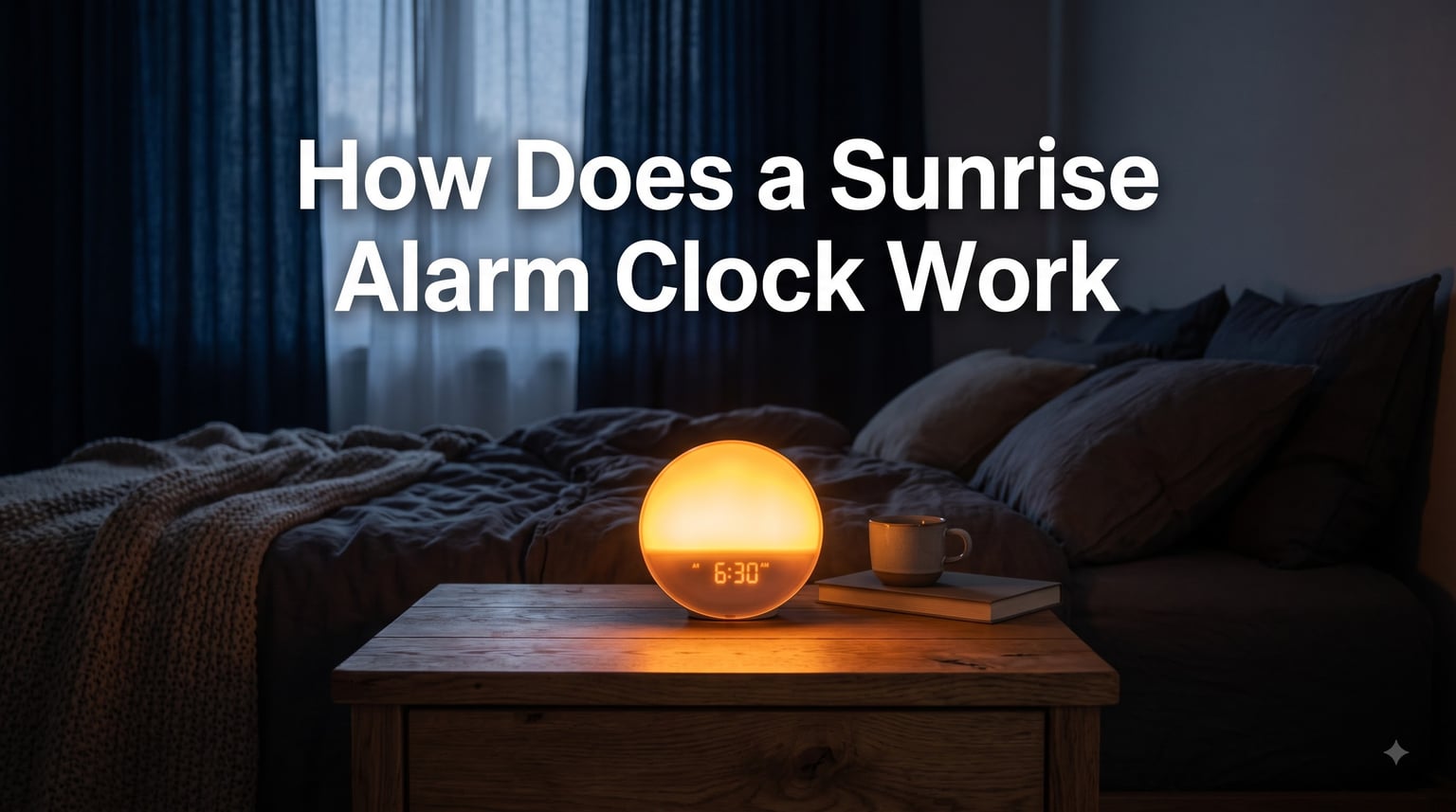
If you have ever dragged yourself out of bed feeling like a truck hit you, you have probably wondered how does a sunrise alarm clock work to make mornings less miserable. I had the same question after years of jolting awake to buzzing alarms. After testing one for six weeks and digging into the sleep science, the answer turned out to be far more interesting than I expected.
Sunrise alarm clocks do not just shine a bright light in your face. They tap directly into the biology of how your brain decides when to wake up. In this guide, I will walk you through the exact mechanics, the science behind the light, and how to get the most out of one in 2026.
Table of Contents
What Is a Sunrise Alarm Clock?
A sunrise alarm clock is a bedside device that mimics a natural dawn by slowly increasing light intensity in your bedroom before your scheduled wake time. Instead of shocking you awake with sound, it convinces your brain that the sun is rising.
Most models begin dimly around 20 to 30 minutes before your alarm, then gradually climb to a peak brightness of around 200 to 500 lux at wake time. The color often shifts from warm reds and oranges in the early phase to bright white light in the final minutes, exactly like a real sunrise.
Many devices also include a backup audio alarm. This can be a gentle nature sound, FM radio, or a traditional beep that plays at your set wake time in case the light alone does not pull you out of sleep.
How Does a Sunrise Alarm Clock Work?
The short answer is that sunrise alarm clocks work by sending a gradual light signal to specialized cells in your eyes, which then tell your brain to wind down melatonin production and prepare your body to wake up. The wake-up feels gentle because your body is transitioning through its natural stages rather than getting ambushed by noise.
Here is the basic sequence inside the clock:
Pre-wake phase: LEDs turn on at a warm, dim red-orange glow roughly 20 to 40 minutes before your alarm time.
Ramp-up phase: Brightness increases steadily, often paired with a slow shift from warm to cooler white light.
Peak phase: The light reaches full brightness right when you want to wake up, signaling your brain that it is daytime.
Audio backup: A soft sound plays at the scheduled time if you are still asleep.
I watched this happen on my own clock during testing. Around 5:10 a.m. the room started glowing a deep orange. By 5:40 a.m. it looked like a sunny mid-morning inside my bedroom. I woke up at 5:38 a.m. without an alarm, and that was the moment I understood why people swear by these devices.
The Science Behind Sunrise Alarms
The reason sunrise alarms work comes down to three biological players: your circadian rhythm, melatonin, and cortisol. Once you understand these, the whole concept clicks.
Circadian Rhythm and Zeitgebers
Your circadian rhythm is the internal 24-hour clock that tells your body when to feel sleepy and when to feel awake. Light is the strongest external signal that resets this clock, called a zeitgeber, which is German for “time giver.”
When light enters your eyes in the morning, it sends a powerful zeitgeber signal to a region of your brain called the suprachiasmatic nucleus. This region, often called the master clock, then coordinates your hormone levels, body temperature, and alertness for the rest of the day.
Melatonin Suppression
Melatonin is the hormone that makes you feel sleepy. Your body ramps up melatonin production after sunset and starts shutting it down when it detects morning light.
A sunrise alarm clock speeds up this process. The gradually brightening light tells your pineal gland to stop producing melatonin earlier and more gently than a sudden loud alarm ever could. This is one of the main reasons people report waking up feeling more refreshed.
Cortisol Release and the Cortisol Awakening Response
Cortisol often gets a bad rap as a “stress hormone,” but it is also the hormone that helps you feel alert in the morning. Your body naturally produces a spike of cortisol around 30 to 45 minutes after waking, called the cortisol awakening response.
Gradual light exposure before wake time encourages this cortisol rise to begin smoothly. A traditional alarm clock triggers cortisol release through stress instead, which is why you feel groggy and anxious after being jarred awake by a buzzer.
Reducing Sleep Inertia
Sleep inertia is that foggy, clumsy feeling you get right after waking up. It can last anywhere from a few minutes to several hours in extreme cases.
Research suggests that waking up with light reduces the intensity and duration of sleep inertia compared to waking up to sound. Your brain shifts out of deep sleep more gradually, which means less of that “I cannot function yet” feeling.
Why Your Eyes Detect Light Even When Closed
One detail that surprised me when I researched this topic: your eyes still detect light even with your eyelids closed. In fact, your eyelids only block about 90 to 95 percent of light, which is plenty of signal for your brain to notice the sunrise simulation.
The reason is a special type of cell in your retina called intrinsically photosensitive retinal ganglion cells, or ipRGCs. These cells are not used for vision at all. Their only job is to detect brightness and send that information directly to your brain’s master clock.
This is also why turning on a bright bathroom light at 3 a.m. can instantly wake you up. Your ipRGCs do not care whether you are “looking” at the light. They just care that bright photons are arriving.
Light Color Temperature: Red vs White
Not all light wakes you up equally. The color, measured in Kelvin (K), plays a big role in how your brain reacts.
Warm light around 2,000 to 3,000K (deep red and orange tones) is gentle and minimally disruptive to melatonin. Cool white light around 5,000 to 6,500K, similar to midday sun, has the strongest effect on suppressing melatonin and boosting alertness.
Most sunrise alarm clocks take advantage of this by starting with warm tones and shifting toward cool white as your wake time approaches. It is the same color progression you see during an actual outdoor sunrise, where the horizon glows orange before the sun climbs into a bright blue sky.
This is also why staring at your phone screen at night can wreck your sleep. The blue-rich light tells your brain it is still daytime, which delays melatonin release. Sunrise alarms use the opposite approach: warm to cool, dim to bright, in sync with your biology.
Benefits of Using a Sunrise Alarm Clock
After six weeks of daily use, here are the benefits I noticed personally and what the research supports:
Less morning grogginess: I stopped feeling like I needed 20 minutes to become a functional human.
Easier wake-ups in winter: Dark 6 a.m. mornings in January felt almost normal instead of brutal.
Better mood in the first hour: I felt less irritable with my family before coffee.
Seasonal Affective Disorder support: Light therapy is a proven treatment for SAD, and a sunrise alarm delivers it right when you need it.
More consistent sleep schedule: My bedtime drifted earlier because I was not dreading mornings anymore.
Reddit users with ADHD and autism report similar wins. Many describe sunrise alarms as life-changing for building reliable morning routines, especially when sudden loud sounds feel overwhelming.
Sunrise vs Traditional Alarms: What’s the Difference?
The difference comes down to how your body wakes up. A traditional alarm forces your brain out of sleep with stress. A sunrise alarm coaxes your brain out of sleep with light.
Here is how they compare:
Trigger: Traditional alarms use sudden sound. Sunrise alarms use gradual light.
Hormone response: Sound triggers a stress spike. Light triggers a natural cortisol rise.
Sleep inertia: Higher with sound alarms. Lower with light-based wake-ups.
Effect on partner: Loud alarms can wake both of you. Light alarms usually only wake the person facing the clock.
Best for heavy sleepers: Sound may still be needed as a backup.
Many people, including me, use both. The light handles the gentle wake-up, and the audio acts as insurance if I happen to be in deep sleep.
How to Use a Sunrise Alarm Clock
If you just bought one or are thinking about it, here is the setup process I recommend after testing several models:
Place the clock where you can see it from your pillow. Within arm’s reach on your nightstand is ideal.
Set your wake time first. This is the time the light will reach full brightness, not when the audio plays.
Choose a sunrise duration between 20 and 40 minutes. Beginners often start at 30 minutes, which balances gentleness with effectiveness.
Pick your final light color. Warm white feels softer; cool white feels more energizing. Try both for a week each.
Pick your audio backup. Choose a nature sound, FM radio, or gentle beep at low volume.
Set the clock display brightness low. A glowing red or orange display is less likely to disrupt your sleep than a bright blue one.
Test it on a low-stakes morning first. Try it on a Saturday before relying on it for work.
Adjust sunrise duration based on results. Heavy sleepers may need 40 minutes; light sleepers may only need 20.
The biggest mistake I see people make is setting the sunrise duration too short. Ten minutes is not enough time for your melatonin levels to shift. Give your body at least 20 minutes of ramp-up for the full effect.
Who Benefits Most From a Sunrise Alarm Clock?
Sunrise alarms help almost everyone, but a few groups see dramatic results:
Heavy sleepers in dark bedrooms: If your room gets zero natural light in the morning, a sunrise alarm is a game-changer.
Winter months in northern climates: Places like the UK, Canada, and the northern US see very short winter days. Sunrise alarms fill in the gap.
Shift workers: Nurses, pilots, and factory workers can use sunrise alarms to reset their body clocks for unusual schedules.
People with seasonal affective disorder: Light therapy is clinically proven to ease SAD symptoms.
Neurodivergent adults: Reddit threads from r/ADHD and r/AutismInWomen are full of people who say sunrise alarms made their mornings manageable for the first time.
Frequently Asked Questions
Does a sunrise alarm clock really wake you up?
Yes, for most people. The gradually brightening light triggers melatonin suppression and cortisol release, which gently nudges your brain out of sleep. Heavy sleepers may still want an audio alarm as backup, but many users report waking up before the sound ever plays.
How do I set up my sunrise alarm clock?
Place the clock within view from your pillow, set your wake time, choose a sunrise duration of 20 to 40 minutes, pick a final light color, and select an audio backup sound. Test it on a weekend morning first so you can fine-tune the settings without pressure.
Why are sunrise alarms so expensive?
The price reflects the LED technology needed to produce bright, full-spectrum light at safe wavelengths, plus the engineering to ramp brightness smoothly. Premium models add features like app control, Bluetooth speakers, and high-quality sound, which raise the cost further.
Are sunrise alarm clocks healthier?
Research suggests they reduce sleep inertia, support a healthier circadian rhythm, and may help with seasonal affective disorder. They avoid the cortisol spike caused by sudden loud alarms, which makes mornings feel less stressful for many users.
Do sunrise alarms work for heavy sleepers?
They help, but heavy sleepers should pair the light with an audio alarm as backup. A sunrise duration of 40 minutes gives the light more time to shift melatonin levels, which improves the odds of waking without the buzzer.
Final Thoughts on How a Sunrise Alarm Clock Works
So how does a sunrise alarm clock work? It works by speaking the language your brain already understands: light. Instead of forcing your body awake with noise, it gradually shifts your melatonin and cortisol so you wake up feeling like the day started gently, not violently.
If you have been thinking about trying one, start with a sunrise duration of 30 minutes, keep the display dim at night, and give yourself a week to adjust. Once you experience waking up to light instead of a buzzer, it is genuinely hard to go back.