
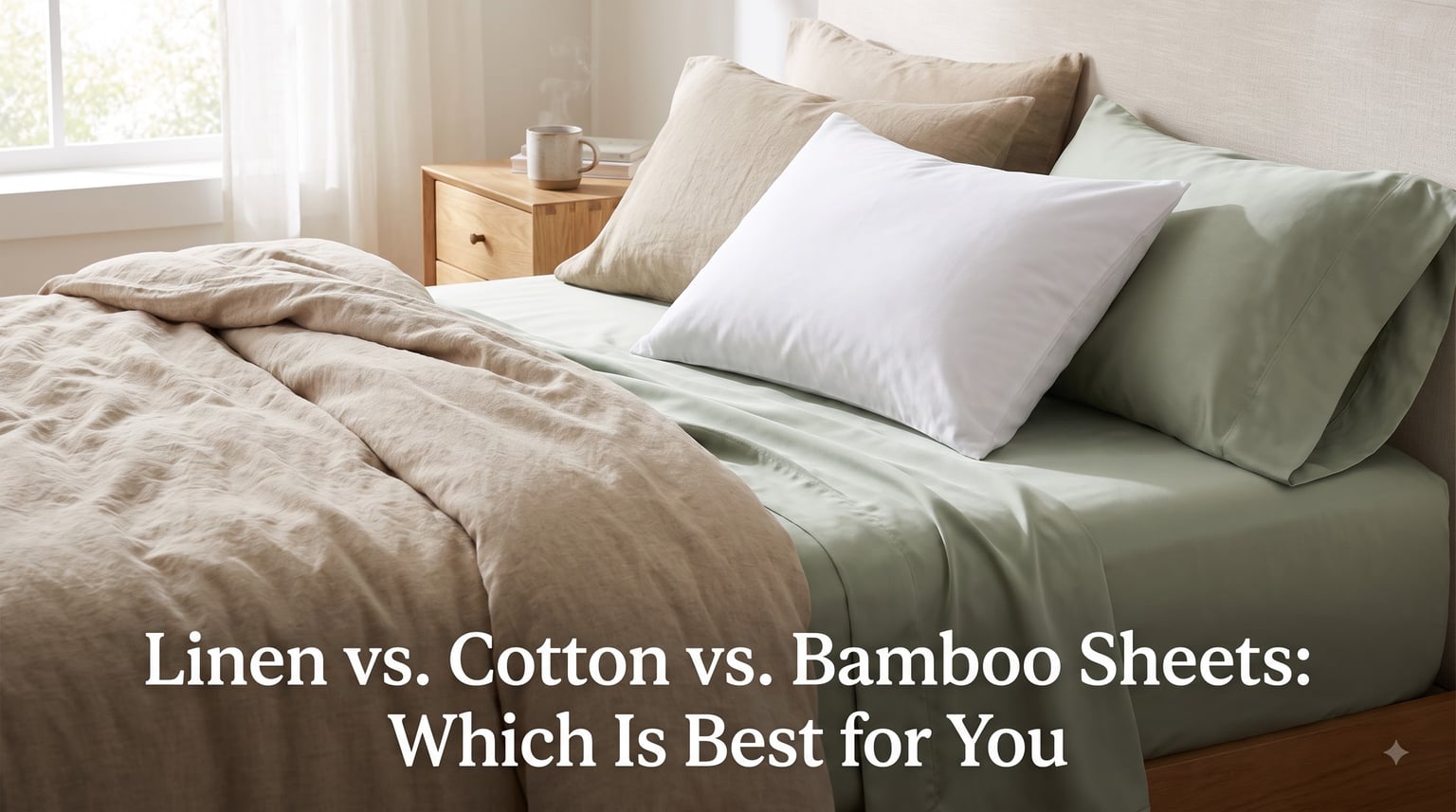
Choosing between linen vs cotton vs bamboo sheets feels overwhelming the moment you start browsing online. I spent three weeks sleeping on all three materials back-to-back, and the differences were clearer than I expected.
The right sheet material affects how well you sleep, how your skin feels in the morning, and how often you have to replace your bedding. In this guide, our team walks you through how each fabric is made, what it actually feels like to sleep on, and which sleeper profile each one fits best. By the end, you’ll know exactly which set deserves a spot on your mattress.
Table of Contents
Bamboo Sheets: Silky Softness Meets Cooling Comfort
Bamboo sheets are often marketed as the eco-friendly, silky alternative to cotton. They have a smooth, almost slick hand-feel that reminds me of high-end sateen, but with noticeably better airflow on warm nights.
How Bamboo Sheets Are Made
Bamboo sheets do not come from bamboo woven like grass baskets. The bamboo stalk is broken down into a pulp, then dissolved into a viscous solution and pushed through spinnerets to form long fibers. That fiber is regenerated into yarn under one of three names:
Bamboo viscose (also called bamboo rayon) – the most common and least expensive process, but it uses carbon disulfide, a chemical that has raised health concerns among manufacturers.
Bamboo lyocell – a closed-loop process that recycles most solvents and is generally considered the cleanest option.
Mechanically processed bamboo – rare, expensive, and the only truly “natural” bamboo textile, but the resulting fabric is rougher and less durable.
Look for the word lyocell on the label if you want the cleanest version. If you see “rayon from bamboo” or “viscose from bamboo,” the sheet itself is technically a regenerated cellulose fiber, not a natural one.
Benefits of Bamboo Sheets
Excellent temperature regulation – bamboo fibers wick moisture away from skin faster than cotton, which hot sleepers in our test noticed on night three.
Silky soft texture – the smooth surface feels cool to the touch and gentle on sensitive skin.
Hypoallergenic and antimicrobial – the fiber naturally resists dust mites and bacteria, a plus for allergy sufferers.
Drape – bamboo sheets hang beautifully on the bed and resist pilling through dozens of wash cycles.
Downsides of Bamboo Sheets
Bamboo sheets are not perfect. Here is what our team ran into during testing:
Chemical processing concerns – cheap viscose bamboo is processed with solvents; if this matters to you, stick to lyocell or GOTS-certified brands.
Slippery feel – the smooth surface can feel slick, and fitted sheets sometimes slide off thinner mattresses.
Shorter lifespan than linen – quality bamboo holds up well for 3 to 5 years, while linen often lasts a decade or more.
Wrinkle unpredictably – bamboo resists creasing more than linen but less than a tight-weave cotton percale.
How to Care for Bamboo Sheets
Wash bamboo sheets in cool water on a gentle cycle with a mild detergent. Skip fabric softener – it coats the fibers and kills the moisture-wicking. Tumble dry low or line dry, and pull them out of the dryer while slightly damp to minimize wrinkles.
Linen Sheets: Breathable, Durable, and Timelessly Cool
Linen is the oldest sheet material in human history, and it is still hard to beat for hot, humid climates. After sleeping on quality linen for a week, I understood why European households have used it for generations.
How Linen Sheets Are Made
Linen comes from the flax plant, a hardy crop that grows in poor soil with minimal water or pesticides. The stalks are pulled (not cut) and left to ret in fields, where dew and microbes break down the woody outer layer. The long bast fibers are then combed, spun into yarn, and woven.
Because flax fibers are longer and stronger than cotton, linen threads can be woven loosely without sacrificing durability. That loose weave is the secret behind linen’s signature breathability.
Benefits of Linen Sheets
Superior airflow – the loose weave and hollow flax fibers let heat escape easily, making linen the gold standard for hot sleepers.
Exceptional durability – quality linen sheets routinely last 10 to 20 years and get softer with every wash.
Excellent moisture absorption – linen can hold up to 20% of its weight in water before feeling damp.
Lower environmental impact – flax needs far less water and fewer chemicals than cotton, and the whole plant is used in production.
Downsides of Linen Sheets
Initial scratchiness – new linen feels coarse compared to bamboo or sateen cotton, though it softens dramatically after 4 to 6 washes.
Wrinkles constantly – the relaxed, rumpled look is part of the charm, but it is not for people who want a crisp bed.
Higher price – quality linen is the most expensive of the three because flax processing is labor-intensive.
Limited color range – linen takes dye less vividly than cotton, so you see more muted tones in stores.
How to Care for Linen Sheets
Machine wash linen on a gentle cycle in lukewarm or cool water. Use a mild detergent and skip the bleach, which weakens the flax fibers. Tumble dry low or line dry, and remove promptly to keep wrinkles manageable. Ironing is optional – most linen fans prefer the lived-in look.
Cotton Sheets: The Versatile Classic
Cotton is the benchmark against which all other bedding is measured. It is the most widely grown sheet fiber in the world, and for good reason: it is comfortable, affordable, and available in dozens of weaves and quality grades.
How Cotton Sheets Are Made
Cotton fibers come from the seed pod of the cotton plant. After harvesting, the fibers are cleaned, combed, and spun into yarn. The quality of cotton varies dramatically by variety:
Egyptian cotton – extra-long staple (ELS) fibers grown in the Nile Valley, known for strength and softness.
Pima cotton – ELS fibers primarily grown in the American Southwest, similar quality to Egyptian.
Upland cotton – the most common variety in the U.S., with shorter fibers that produce a sturdier but rougher sheet.
The weave also changes how cotton feels on the skin. Percale is a one-over-one-under weave that produces a crisp, cool, matte finish – the closest cotton gets to linen. Sateen is a four-over-one-under weave that produces a buttery, lustrous, slightly warmer fabric.
Benefits of Cotton Sheets
Wide range of options – you can find cotton in nearly every price range, weave, and thread count.
Soft from day one – unlike linen, cotton is comfortable the first night you sleep on it.
Breathable – especially percale, cotton moves air well and works in most climates.
Easy to care for – cotton tolerates higher wash temperatures and dries quickly.
Downsides of Cotton Sheets
Conventional cotton is resource-heavy – it uses more water and pesticides than flax or bamboo, though organic cotton solves much of this.
Quality varies widely – cheap cotton pills, fades, and loses softness fast.
Shorter lifespan than linen – most cotton sheets last 3 to 7 years, depending on quality and care.
Wrinkles in sateen – sateen weave is more prone to surface pilling than percale.
How to Care for Cotton Sheets
Wash cotton sheets in warm water with a mild detergent. Tumble dry on low or medium heat and remove promptly to reduce wrinkles. Percale benefits from a quick iron if you want that hotel-crisp finish, while sateen is best left to air-dry partway.
Linen vs Cotton vs Bamboo Sheets: Head-to-Head Comparison
Now that you know how each fabric is made, here is how they stack up where it actually matters – on the bed.
| Factor | Linen | Cotton | Bamboo |
|---|---|---|---|
| Breathability | Excellent | Good (percale) / Fair (sateen) | Very Good |
| Moisture-wicking | Excellent | Good | Excellent |
| Softness (day one) | Coarse | Soft | Silky |
| Durability | 10-20 years | 3-7 years | 3-5 years |
| Wrinkle resistance | Low | Moderate | Moderate |
| Eco impact | Low (flax needs little water) | Varies (organic best) | Varies (lyocell best) |
| Best for | Hot climates, long-term investment | Year-round versatility, budget | Sensitive skin, hot sleepers on a budget |
For raw temperature performance, linen wins by a small margin, with bamboo close behind. Cotton is the safe all-rounder, especially if you live somewhere with shifting seasons. If softness on day one matters more than longevity, bamboo is hard to beat. If you want sheets you can pass down, linen is your fabric.
How to Choose the Right Sheet Material for Your Sleep Style
The best sheet material is the one that matches how you sleep, where you live, and what you care about. Here is what our team recommends based on common scenarios.
Hot Sleepers and Night Sweats
Start with linen if you can stomach the initial texture. It pulls heat away from your body faster than anything else we tested. If linen feels too rough, a bamboo lyocell set is the next best thing and feels great out of the package.
Cold Climates and Winter
Cotton sateen traps a touch more warmth and has that cozy, buttery hand-feel. Layer a percale cotton sheet with a flannel or a heavy duvet for the coldest months.
Sensitive Skin and Allergies
Bamboo lyocell is naturally hypoallergenic and resists dust mites. Choose a set certified by OEKO-TEX Standard 100 to make sure no harmful residues remain in the fabric.
Eco-Conscious Buyers
Look for GOTS-certified organic cotton or European flax linen. For bamboo, only lyocell processed in a closed loop earns a true eco-friendly label. Skip “bamboo” sheets that do not specify how the fiber was made.
Budget Shoppers
Quality cotton percale in the 200 to 400 thread count range delivers the best bang for the buck. Avoid bamboo sheets that seem too cheap – low-quality viscose breaks down fast, and you will replace them within two years.
Luxury and Long-Term Investment
Heavyweight linen (around 170 to 200 gsm) is the gold standard. It is expensive up front, but amortized over 15 years, it costs less per night than replacing cotton every five.
What About Thread Count?
Thread count matters most for cotton. Aim for 200 to 500 in percale or 300 to 600 in sateen. Above 600, the weave gets so dense it actually traps heat. Linen and bamboo are usually sold by weight (gsm) rather than thread count, so focus on fiber origin instead.
FAQs
Is it better to sleep on linen or bamboo sheets?
Both regulate temperature well, but they feel different. Linen runs cooler in hot weather and lasts much longer (10+ years vs 3-5 for bamboo), while bamboo feels silkier from night one. Pick linen if you want durability and peak cooling; pick bamboo if you want instant softness on a moderate budget.
What is the healthiest material for bed sheets?
Organic cotton, European flax linen, and bamboo lyocell are all considered healthy choices when certified by GOTS or OEKO-TEX. These certifications confirm the fabric has been tested for harmful chemicals and is safe for sensitive skin. Avoid conventional viscose bamboo unless the manufacturer discloses a clean solvent recovery process.
What is the downside to bamboo sheets?
The main downsides are chemical processing, a slippery feel, and a shorter lifespan than linen. Most bamboo sheets are made using viscose, which involves solvents like carbon disulfide. Bamboo lyocell is the cleaner alternative. Quality bamboo sheets also tend to be more expensive than entry-level cotton.
Are bamboo sheets chemical free?
Truly chemical-free bamboo sheets are extremely rare. Mechanically processed bamboo exists but produces a rougher fabric sold at a premium. Lyocell bamboo is the closest you will get to a clean process, since it recycles most solvents in a closed loop. Always check for OEKO-TEX or GOTS certifications before buying.
Which sheet material is most durable?
Linen is the most durable sheet material by a wide margin. Quality flax linen routinely lasts 10 to 20 years with proper care and gets softer with every wash. Cotton sheets last 3 to 7 years on average, while bamboo sheets typically need replacing after 3 to 5 years.
What thread count is best for sheets?
For cotton percale, aim for 200 to 400 thread count. For cotton sateen, 300 to 600 works well. Above 600, sheets often trap heat and the quality gains are minimal. Linen and bamboo are usually sold by weight (gsm), so focus on fiber origin and weave rather than a thread count number.
The Bottom Line on Linen vs Cotton vs Bamboo Sheets
The linen vs cotton vs bamboo sheets decision comes down to what you value most. Choose linen if you sleep hot, want sheets that last decades, and prefer a relaxed lived-in look. Choose cotton if you want a versatile, affordable classic that works in every season. Choose bamboo lyocell if you want silky softness and moisture-wicking without the rough break-in period of linen.
Our team suggests starting with one high-quality set in the material that fits your climate and sleep style, then layering in another fabric as your needs change. Whichever you pick, wash gently, skip the fabric softener, and let the fibers do their job. You’ll feel the difference the very first night.