
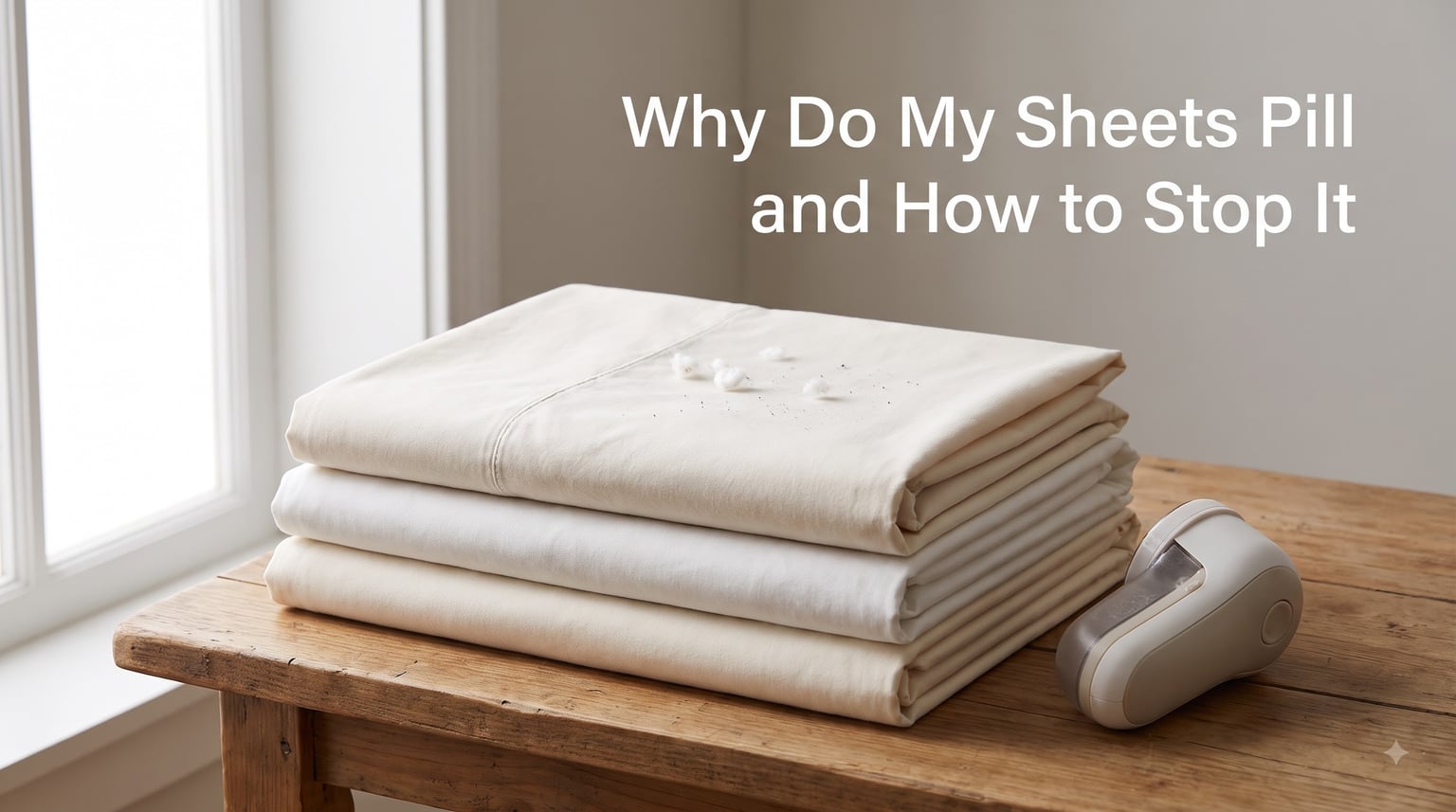
Nothing ruins the feeling of climbing into bed quite like running your legs across a sheet covered in tiny rough balls of fabric. If you have ever asked yourself why your sheets pill after just a few washes, you are far from alone. This is one of the most common bedding complaints we hear, and the good news is that almost all pilling is preventable once you understand what causes it.
Sheet pilling happens when broken fibers tangle together into small fuzz balls on the surface of your fabric. The result is a rough, scratchy texture that makes even expensive sheets feel cheap and uncomfortable. Many people assume pilling means their sheets are low quality, but that is only part of the story.
In this guide, we will break down exactly why sheets pill, what you can do to prevent it, and how to remove pilling that has already started. We will also cover which materials resist pilling best so your next sheet set stays smooth for years. By the end, you will have a complete plan to keep your bedding soft, smooth, and comfortable.
Table of Contents
What Is Sheet Pilling?
Pilling is the formation of small, tangled balls of fiber that appear on the surface of fabric after repeated friction and wear. On bed sheets, these pills look like tiny fuzz balls or little knots of lint stuck to the fabric surface. They feel rough and bumpy against your skin, which is especially noticeable on the parts of the sheet that get the most contact.
To understand pilling, it helps to picture what happens at the fiber level. Every sheet is made up of thousands of individual fibers woven or knit together. When those fibers experience friction, some of them break loose from the weave but remain partially attached to the fabric. Instead of falling off completely, these loose ends tangle with other loose fibers nearby.
As the tangling continues through washing, drying, and daily use, those tangled fibers clump together into the little balls we call pills. Once a pill forms, it tends to stay anchored to the sheet because it is still connected to the underlying fibers. That is why pilling does not just brush away with your hand.
The key thing to understand is that pilling is a mechanical process. It requires movement, friction, and fibers that are short or weak enough to break under pressure. Some fabrics pill almost no matter what you do, while others can go years without a single pill. The difference comes down to fiber quality, weave tightness, and how you care for the fabric.
Why Do My Sheets Pill? The Main Causes
Sheet pilling has several root causes, but they all trace back to two things: friction and fiber weakness. When you understand what triggers each of these, you can target your prevention strategy effectively. Let’s break down the most common reasons sheets develop those frustrating fuzz balls.
Friction From Movement and Washing
Friction is the number one cause of pilling, plain and simple. Every time your body rubs against the sheets during sleep, fibers experience stress. Tossing and turning creates constant abrasion, especially in high-contact areas like the shoulders, hips, and feet. Over time, this friction weakens fibers until they break and tangle.
The washing machine introduces another major source of friction. When sheets tumble against each other and against other laundry items, the agitation pulls and stresses fibers. This is why how you wash your sheets matters just as much as what they are made of.
This also explains one of the most common pilling mysteries: why sheets pill at the foot of the bed. Your feet have thicker, rougher skin than the rest of your body, and they tend to press and drag against the bottom of the fitted sheet. That concentrated friction at the foot area breaks fibers faster than anywhere else on the sheet.
Short-Staple Fibers and Low-Quality Fabric
The length of the fibers in your sheets plays a massive role in whether they pill. Cotton fibers come in different lengths, called the staple length. Short-staple fibers break more easily because there is less fiber anchored within the weave. When a short fiber breaks loose, it has less holding it in place, so it tangles quickly into a pill.
Long-staple and extra-long-staple cottons, like Egyptian cotton and Pima cotton, have fibers that are significantly longer. These longer fibers are harder to break and stay more securely woven into the fabric. That is why high-quality long-staple cotton sheets can go years without pilling while cheap short-staple sheets start fuzzing after a few washes.
Blended fabrics are another culprit. When manufacturers blend cotton with polyester or other synthetic fibers, the different fiber types react differently to friction. The weaker fibers break while the stronger ones hold firm, which actually accelerates pilling because the broken fibers tangle around the intact ones.
Washing Sheets With Towels and Rough Items
If you wash your sheets in the same load as bath towels, you are giving those fibers a serious beating. Towels are deliberately textured and rough to absorb water. When they rub against your sheets in the wash, they act like an abrasive surface, grinding down fibers and speeding up pilling dramatically.
The same goes for washing sheets with items that have zippers, buttons, or rough hardware. Jeans, hoodies with metal drawstring tips, and anything with Velcro can snag and stress sheet fibers during the wash cycle. Even heavily soiled clothing can introduce grit and friction that damages delicate sheet fabric.
Wash your sheets by themselves or only with other lightweight, smooth fabrics. This single habit change can dramatically reduce how quickly your sheets develop pilling.
High Heat Drying Damage
The dryer is where a lot of pilling damage happens, and high heat is the main offender. When you dry sheets on a hot setting, the heat weakens cotton and plant-based fibers, making them more brittle and prone to breaking. Add the constant tumbling friction of a dryer cycle, and you have ideal conditions for pilling.
Over-drying is just as bad as high heat. When sheets stay in the dryer past the point of being dry, the continued heat and tumbling stress fibers unnecessarily. Many people set their dryer to a timed cycle rather than a moisture-sensing auto cycle, which means sheets cook long after they are already dry.
Forum users and bedding enthusiasts consistently report that switching to low heat drying and removing sheets promptly makes a visible difference in pilling within just a few wash cycles.
Body Oils, Lotions, and Skin Cells
This is a cause most guides overlook, but it makes a real difference. Your body naturally produces oils throughout the night, and these oils transfer onto your sheets. Body oils act as a coating on fibers, which can attract dirt and cause fibers to stick together, accelerating the tangling process that forms pills.
If you use lotions, creams, or body oils before bed, you are adding even more residue to your sheets. Skincare products with heavy emollients can leave a film on fabric that traps loose fibers and encourages them to clump. Over weeks and months, this buildup contributes significantly to pilling, especially in the areas where your body makes the most contact.
Dead skin cells also accumulate on sheets and work their way into the fabric weave. This organic debris adds friction points and creates a rougher surface that further stresses fibers during movement and washing.
Harsh Detergents and Fabric Softener Buildup
Using too much detergent or a harsh formula can strip fibers of their natural protective qualities, leaving them more vulnerable to breaking. Powdered detergents can be particularly rough if they do not fully dissolve, leaving abrasive particles in the wash water.
Fabric softener seems like it would help, but it actually makes pilling worse over time. Liquid fabric softeners and dryer sheets coat fibers in a waxy residue that builds up with each wash. This coating prevents fabric from breathing properly and makes fibers sticky, which causes loose ends to cling together and form pills faster.
Many long-term sheet owners on forums recommend skipping fabric softener entirely and using a gentle liquid detergent in modest amounts. This keeps fibers clean without coating them in residue.
How to Prevent Sheets From Pilling
Now that you know what causes pilling, let’s get into the prevention strategies. We will break this into three phases: what to do before washing, during washing, and after washing. Following these steps consistently can keep your sheets smooth for years.
Before Washing: Sorting and Prep
The prevention process starts before your sheets even hit the washing machine. Taking a few minutes to prep properly saves a lot of frustration down the line.
Follow these steps every time you wash:
1. Wash sheets separately from towels, clothing, and anything with zippers or hardware. Sheets should be washed alone or with other smooth, lightweight bedding only.
2. Turn fitted sheets inside out so the surface that touches your skin faces inward. This reduces friction on the most important side of the sheet during the wash.
3. Fasten any elastic corners or ties to prevent them from stretching and snapping during the wash cycle. Loose elastic creates extra movement that stresses fabric.
4. Pre-treat any stains with a gentle spot treatment rather than dumping extra detergent into the full load.
5. Consider using a fine-mesh laundry bag for pillowcases and smaller sheet items to reduce agitation friction.
During Washing: Temperature, Cycle, and Detergent
How you run your washing machine has a huge impact on pilling. Cold water and gentle cycles are your best friends here.
Use these settings every time:
1. Wash in cold or warm water, never hot. Hot water breaks down fibers faster and is rarely necessary for sheets unless you are sanitizing after illness.
2. Select the gentle or delicate cycle. This reduces the agitation speed and gives your sheets a softer wash motion.
3. Use a mild liquid detergent in the amount recommended for a normal load. Avoid powder detergents that may not fully dissolve.
4. Skip the fabric softener completely. It leaves a waxy buildup that accelerates pilling over time.
5. Do not overload the machine. Sheets need room to move freely. A cramped washer increases friction between fabric surfaces.
6. If your machine has a second rinse option, use it occasionally to remove detergent residue that can build up and stiffen fibers.
After Washing: Drying and Storage
The dryer is where most preventable pilling happens. Changing your drying habits can extend the life of your sheets dramatically.
Follow this drying routine:
1. Shake out each sheet before putting it in the dryer to prevent tangled wads that increase friction.
2. Dry on the lowest heat setting or use an air-dry cycle. If your dryer has a moisture sensor, use the auto-dry setting to avoid over-drying.
3. Remove sheets as soon as the cycle ends. Do not let them sit in the dryer tumbling against each other after they are already dry.
4. Line dry whenever possible. Hanging sheets to dry eliminates dryer friction entirely and is the single best thing you can do to prevent pilling.
5. Avoid dryer sheets. Like liquid fabric softener, they leave a residue that builds up on fibers.
6. Consider wool dryer balls if you need static control. They reduce drying time without coating fibers in chemicals.
7. Fold and store sheets in a cool, dry place. Avoid stuffing them into tight linen closet shelves where friction from pulling them out can stress fibers.
Ongoing Habits That Reduce Friction
Beyond laundry care, a few daily habits can help minimize the friction that causes pilling in the first place.
Use a mattress protector to create a smoother surface between your body and the fitted sheet. A good protector reduces the friction transfer from body movement through to the sheet fibers.
Keep your feet moisturized but allow lotion to fully absorb before getting into bed. Rough, callused feet are one of the biggest causes of pilling at the foot of the fitted sheet.
Rotate your sheets regularly so the same set is not getting all the wear. Having two or three sets in rotation gives each set time to recover between uses.
If you sleep with pets, be aware that pet hair and claws add significant friction. A washable throw blanket at the foot of the bed can protect sheets from pet contact.
How to Fix Pilled Sheets (Remove Existing Pilling)
If your sheets already have pilling, do not throw them out just yet. You can remove most pills and restore a smoother surface with the right tools and techniques. Here are the most effective methods.
Use a Fabric Shaver
A fabric shaver is the most effective tool for removing pilling from sheets. These battery-operated devices have a rotating blade behind a protective mesh guard. You run the shaver over the surface of the fabric, and it cleanly cuts away the pills without damaging the underlying weave.
Work in small sections, moving the shaver in circular motions. Empty the collection chamber frequently so it does not clog. Fabric shavers are inexpensive and can bring heavily pilled sheets back to a surprisingly smooth condition.
Try a Disposable Razor Method
If you do not have a fabric shaver, a standard disposable razor works almost as well. Lay the sheet flat on a hard surface, pull it taut, and gently shave the surface using light, one-directional strokes. The razor blades cut through the pills just like a fabric shaver would.
Be careful not to press too hard or shave at an angle, as this can nick or cut the fabric. Clean the razor frequently by rinsing it under water to remove accumulated fiber buildup.
Use a Lint Roller or Tape
For light pilling, a lint roller can pick up loose fuzz balls that are starting to form. This works best as a maintenance step between more thorough shavings rather than as a primary removal method for heavy pilling.
Packing tape wrapped around your hand with the sticky side out works the same way in a pinch. Press it against the sheet surface and peel away to grab loose pills.
Try a Pumice Stone or Sweater Stone
A pumice stone designed for fabric, sometimes called a sweater stone or sweater comb, can gently buff away pills. Rub the stone lightly over the sheet surface in one direction, and the textured surface catches and pulls off the fuzz balls.
This method requires a gentle touch. Pressing too hard can create thin spots in the fabric, so test on a small area first.
After Removing Pilling
Once you have shaved or removed the pills, switch to the prevention strategies above immediately. Removing pilling does not stop the underlying causes, so without changing your washing and drying habits, the pills will return. Consider this a fresh start for your sheets.
Best Sheet Materials That Resist Pilling
If you are shopping for new sheets and want to avoid pilling from the start, material choice is the most important decision you will make. Some fabrics are naturally pill-resistant thanks to their fiber length and weave structure, while others will pill almost no matter how carefully you care for them.
Long-Staple Cotton: The Gold Standard
Long-staple and extra-long-staple cotton is the best choice for pill-resistant sheets. Egyptian cotton and Pima cotton are the two most well-known types, and both have fibers long enough to resist breaking under normal friction. These sheets may cost more upfront, but they stay smooth for years with proper care.
Look for sheets labeled as 100 percent long-staple or extra-long-staple cotton. Be cautious of marketing terms, as some products use the Egyptian cotton label loosely. Authentic Egyptian cotton comes from a specific extra-long-staple cotton variety grown in Egypt.
Percale vs Sateen Weave
The weave of your sheets affects pilling resistance too. Percale is a plain weave with a tight, grid-like structure where each thread crosses over and under the next. This tight interlocking holds fibers firmly in place, making percale more pill-resistant overall.
Sateen has a looser weave where threads float over multiple crossings, creating that signature silky sheen. The floating threads are more exposed and easier to break, so sateen sheets tend to pill slightly more than percale. Many bedding enthusiasts on forums specifically recommend percale for anyone who has struggled with pilling.
Thread Count: More Is Not Always Better
Thread count matters, but not in the way most people think. A thread count between 200 and 400 is ideal for cotton sheets. Anything below 200 tends to have a loose weave that allows fibers to escape and pill easily.
However, extremely high thread counts above 600 often use thinner, weaker multi-ply yarns to artificially inflate the number. These weaker yarns can actually pill more than moderate thread count sheets. Quality of fiber matters far more than the raw thread count number.
Linen: Naturally Pill-Resistant
Linen sheets are made from flax fibers, which are naturally long and strong. Linen resists pilling better than most cotton sheets, and it actually gets softer and smoother with each wash. The initial texture of linen is slightly textured, but it never develops the kind of fuzz balls that plague lower-quality cotton.
TENCEL and Lyocell
TENCEL, a brand name for lyocell fabric, is made from wood pulp fibers that are manufactured to be smooth and long. These fibers resist pilling well and offer excellent moisture-wicking properties. TENCEL sheets are a great option if you want a soft, smooth feel with natural pill resistance.
Materials to Avoid If You Hate Pilling
Microfiber is the material most commonly associated with pilling complaints. Despite marketing claims about softness and durability, microfiber is made from ultra-fine synthetic fibers that break easily and tangle into pills. Forum users consistently report that microfiber is the worst material for pilling, even with careful washing.
Short-staple cotton blends and very low thread count sheets also tend to pill quickly. Flannel can pill, especially in the first few washes, though higher-quality brushed flannel made from long-staple cotton performs better.
If pilling has been a recurring frustration, invest in long-staple cotton percale sheets in the 200 to 400 thread count range. This combination gives you the best natural defense against fuzz balls.
FAQs
How to stop pilling on bedsheets?
To stop pilling on bedsheets, wash them separately in cold water on a gentle cycle, avoid fabric softener, and dry on low heat or line dry. Invest in long-staple cotton percale sheets with a thread count between 200 and 400, and never wash sheets with towels or items that have zippers.
Does pilling mean poor quality?
Pilling does not always mean poor quality, but it does indicate that the fibers are short or weak enough to break under friction. High-quality long-staple cotton sheets rarely pill, while cheaper short-staple or synthetic blend sheets pill easily. If expensive sheets are pilling, the cause is usually washing habits rather than fabric quality.
How to fix pilled bed sheets?
The best way to fix pilled bed sheets is to use a battery-operated fabric shaver, which safely cuts away pills without damaging the fabric. Alternatively, you can use a disposable razor with light strokes, a pumice stone designed for fabric, or a lint roller for light pilling. After removing pills, switch to gentle washing and low-heat drying to prevent them from returning.
Can pilling be reversed?
Yes, existing pilling can be removed using a fabric shaver, disposable razor, or pumice stone. However, removing pills does not fix the underlying cause, so the pilling will return unless you change your washing and drying habits and eventually invest in higher-quality long-staple fiber sheets.
Conclusion
Understanding why your sheets pill is the first step toward keeping your bedding smooth and comfortable for years. The main causes are friction, short-staple fibers, harsh washing habits, high heat drying, and product buildup, all of which are within your control.
Start by adjusting your laundry routine today: wash sheets separately in cold water on a gentle cycle, skip fabric softener, and dry on low heat or line dry. If your current sheets already have pilling, grab a fabric shaver and restore them. When it is time for a new set, invest in long-staple cotton percale sheets, and you will never have to ask why your sheets pill again.