
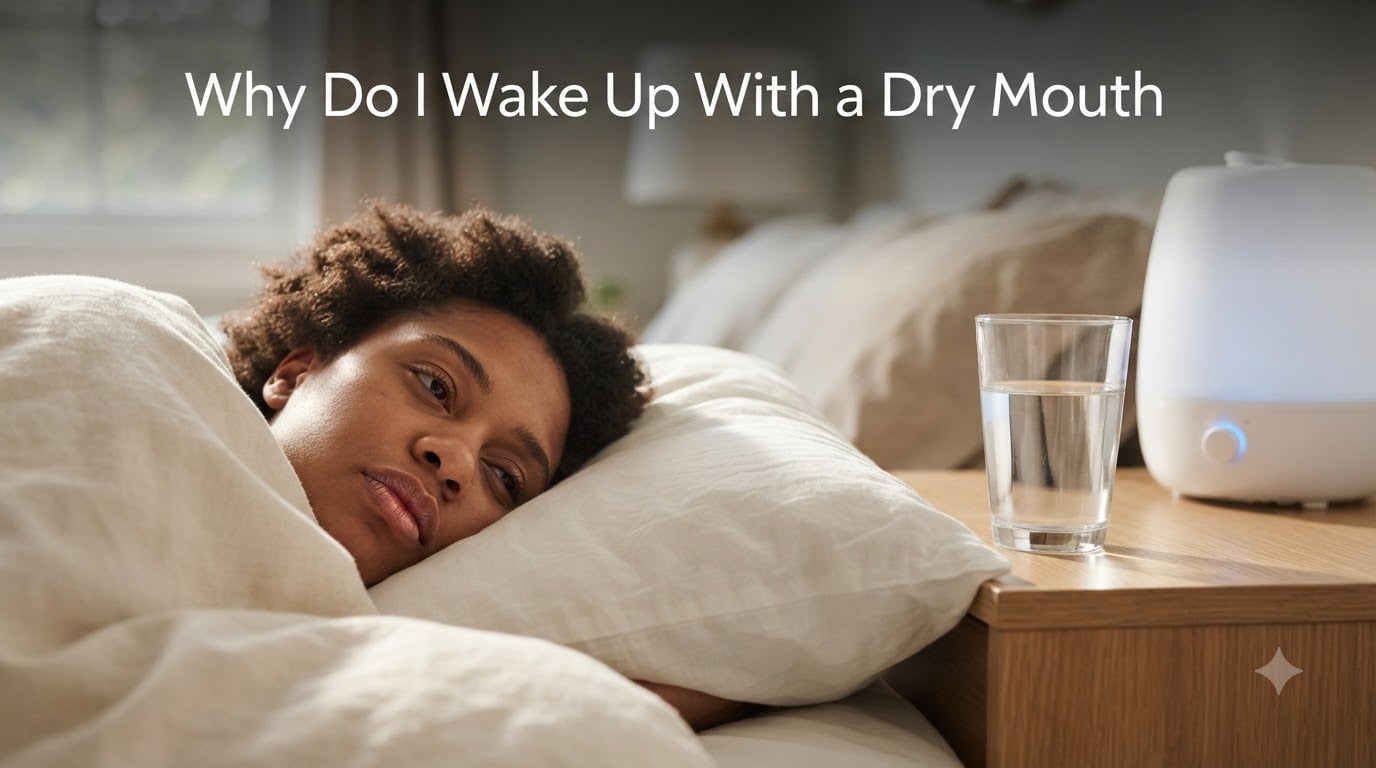
You open your eyes, and your tongue feels like sandpaper stuck to the roof of your mouth. Your throat burns. Your lips are cracked. If this sounds familiar, you are dealing with morning dry mouth, and you are not alone in wondering why this happens night after night.
The medical term for this condition is xerostomia, and it occurs when your salivary glands do not produce enough saliva to keep your mouth moist while you sleep. Understanding why do I wake up with a dry mouth starts with looking at how you breathe, what you take, and what happens in your body overnight.
Most people experience occasional dry mouth from a salty dinner or a dry bedroom. But if you wake up reaching for water every single morning, there is likely an underlying cause worth investigating. The good news is that once you identify the trigger, relief is usually straightforward.
In this guide, we break down every major cause of morning dry mouth, from mouth breathing and medications to sleep apnea and acid reflux. We also share specific, practical remedies you can try tonight, plus clear guidance on when to talk to a doctor.
Table of Contents
What Is Dry Mouth (Xerostomia)?
Dry mouth, or xerostomia, happens when your salivary glands produce less saliva than your mouth needs to stay comfortably wet. Your mouth relies on a steady flow of saliva to wash away food particles, neutralize acids, and keep bacteria in check.
Saliva also helps you speak clearly, taste food, and begin the digestive process. When production drops, especially during the several hours you spend asleep, you wake up with that sticky, cotton-like feeling that makes swallowing difficult.
Some reduction in saliva at night is normal. Your body naturally slows saliva production during sleep to prevent choking. The problem arises when production drops too far or when other factors like mouth breathing dry out what little moisture remains.
Chronic dry mouth is not just uncomfortable. Over time, insufficient saliva creates an environment where bacteria thrive, leading to cavities, gum disease, and oral infections that can become expensive and painful to treat.
Why Do I Wake Up With a Dry Mouth? Common Causes Explained
Waking up with a dry mouth can usually be traced to one of several root causes. Here are the most common culprits, ranked by how frequently they show up in both clinical research and patient experiences.
Mouth Breathing While You Sleep
The single most common cause of morning dry mouth is breathing through your mouth instead of your nose during sleep. When nasal passages are partially or fully blocked, your body compensates by pulling air through your mouth, which constantly evaporates what little saliva your glands produce overnight.
Nasal congestion from allergies, colds, sinus infections, or a deviated septum can all force mouth breathing. Many people do not even realize they are doing it until a partner tells them they snore or sleep with their mouth open.
Forum users on r/sleep frequently report that addressing nasal congestion with strips, sprays, or a humidifier makes the biggest single difference in reducing morning dryness.
Medication Side Effects
Over 400 prescription and over-the-counter medications list dry mouth as a known side effect. If you started a new medication and noticed morning dryness shortly after, the connection is likely direct.
The most common drug classes that reduce saliva production include:
Antidepressants and anti-anxiety medications
Antihistamines and decongestants
Blood pressure medications, especially diuretics
Pain medications, including opioids
Muscle relaxants
Parkinson’s disease medications
If you take multiple medications, the drying effect can compound. Never stop taking a prescribed medication without consulting your doctor, but do bring up dry mouth at your next appointment because alternatives or dosage adjustments may help.
Dehydration
Your body needs adequate water to produce saliva. If you go to bed even mildly dehydrated, your salivary glands cannot keep up with overnight demand, and you wake up with that parched, sticky feeling.
What surprises many people is that timing matters more than total intake. Forum users on Reddit consistently report that sipping water consistently throughout the day works better than chugging a glass right before bed. Drinking a large amount immediately before sleep can actually trigger nighttime urination that further dehydrates you.
Alcohol and caffeine are both diuretics that increase fluid loss. Having wine, beer, or coffee in the evening can leave your body short on water by morning, even if you felt hydrated earlier in the day.
Sleep Apnea and CPAP Machines
Obstructive sleep apnea causes your airway to narrow or close repeatedly during sleep, which often forces mouth breathing and loud snoring. Research suggests that up to 45 percent of CPAP users experience dry mouth as a side effect of their therapy.
The connection works both ways. Sleep apnea itself causes dry mouth through mouth breathing, and CPAP therapy can worsen it by blowing pressurized air continuously through the night. Without proper humidification, that constant airflow strips moisture from your oral and throat tissues.
CPAP users on r/CPAP frequently share that adjusting heated humidifier settings and using a chin strap to keep the mouth closed are the two most effective fixes for CPAP-related dry mouth. Switching from a nasal mask to a full-face mask can also help if mouth breathing is the core issue.
GERD and Acid Reflux
Acid reflux is one of the most underdiagnosed causes of morning dry mouth. When stomach acid flows back into your esophagus and throat during sleep, it irritates the delicate tissues and triggers inflammation that reduces saliva production.
The r/GERD community discusses this connection extensively. Many members report that their dry mouth disappeared once they elevated the head of their bed, avoided late meals, and started appropriate reflux treatment.
If your dry mouth comes with a sour taste, morning hoarseness, or a feeling of something stuck in your throat, acid reflux is a strong suspect that your doctor can help confirm.
Diabetes and Blood Sugar Levels
Persistently high blood sugar causes your body to produce more urine as it tries to flush out excess glucose. This increased urination leads to dehydration, which in turn reduces saliva production and leaves you waking up with a dry mouth.
Dry mouth is one of the classic early warning signs of both type 1 and type 2 diabetes. If you also experience increased thirst, frequent urination, or unexplained fatigue, ask your doctor about a blood sugar test.
For people already diagnosed with diabetes, keeping blood sugar within target ranges is one of the most effective ways to reduce morning dry mouth over the long term.
Aging and Reduced Saliva Production
Saliva production naturally decreases as we age. People over 65 produce significantly less saliva than younger adults, making dry mouth increasingly common in older populations.
This age-related change is often compounded by the fact that older adults tend to take more medications, which adds the drug-related drying effect on top of the natural decline.
Autoimmune Conditions Like Sjogren’s Syndrome
Sjogren’s syndrome is an autoimmune disorder where your immune system attacks the moisture-producing glands, including the salivary and tear glands. The result is chronically dry mouth and dry eyes that do not respond to simple hydration fixes.
This condition primarily affects women and often goes undiagnosed for years. If your dry mouth is severe, persistent, and accompanied by chronically dry eyes, ask your doctor about screening for Sjogren’s.
Vitamin and Mineral Deficiencies
Certain nutritional deficiencies can contribute to dry mouth, particularly vitamin A, vitamin B12, iron, and zinc. These nutrients support the health and function of your salivary glands, and low levels can impair their ability to produce adequate saliva.
A simple blood test can check for these deficiencies. If you follow a restrictive diet or have absorption issues, you may be at higher risk.
Nerve Damage
Your salivary glands are controlled by nerves that signal when to produce saliva. Damage to these nerves from a head or neck injury, surgery, or certain conditions can disrupt those signals and lead to chronic dry mouth.
This cause is less common but important to consider if your dry mouth started after a specific medical event or procedure.
Lifestyle Factors
Smoking or chewing tobacco directly reduces saliva production and irritates oral tissues. Recreational drug use, particularly methamphetamine, can cause severe and rapid onset of dry mouth along with extensive tooth damage.
Even moderate alcohol consumption in the evening can dry you out enough by morning to notice. Cutting back on evening drinks often produces quick improvement.
Symptoms That Often Accompany Morning Dry Mouth
Dry mouth rarely shows up alone. Most people experience a cluster of related symptoms that can help pinpoint the underlying cause.
The most common accompanying symptoms include:
Thick, stringy, or sticky saliva that is hard to swallow
A burning sensation in the throat or on the tongue
Your tongue feeling stuck to the roof of your mouth
Bad breath that does not improve with brushing
Difficulty swallowing dry foods like crackers or bread
A altered sense of taste or persistent metallic taste
Cracked lips, especially at the corners of your mouth
Soreness or raw feeling on your tongue
Reddit users across r/sleep, r/CPAP, and r/GERD frequently describe the tongue-stuck-to-palate sensation and the burning throat as the most disruptive symptoms. These are the ones that jolt you awake and make it hard to get back to sleep.
If you notice thick, white patches in your mouth along with dryness, that may indicate oral thrush, a fungal infection that thrives in dry conditions and requires prescription treatment.
How to Stop Waking Up With a Dry Mouth: Proven Remedies
If you are tired of reaching for water at 3 a.m., here are specific, actionable steps you can take to reduce or eliminate morning dry mouth starting tonight.
1. Stay Hydrated Throughout the Day
Rather than drinking a large glass of water right before bed, aim for consistent hydration from morning through early evening. A good rule is to finish most of your daily water intake at least two hours before sleep.
This gives your body time to absorb the fluid without triggering nighttime bathroom trips that interrupt sleep and worsen dehydration.
2. Use a Humidifier in Your Bedroom
Dry indoor air, especially during winter heating months, pulls moisture from your mouth and throat all night. A bedroom humidifier set between 40 and 50 percent humidity keeps the air moist enough to slow evaporation.
Forum users emphasize that running a humidifier is one of the simplest and most effective changes you can make, particularly in dry climates or heated homes.
3. Try Mouth Tape or a Chin Strap
If mouth breathing is your primary issue, mouth tape can gently train your lips to stay closed during sleep, forcing you to breathe through your nose. Many Reddit users in r/sleep swear by this method and report dramatic improvement within the first few nights.
For CPAP users, a chin strap serves a similar purpose by keeping the jaw from dropping open. Both approaches are inexpensive and low-risk for most people, though check with your doctor if you have nasal obstruction or severe sleep apnea.
4. Clear Your Nasal Passages
If congestion forces mouth breathing, clearing your nose before bed can make all the difference. Saline nasal sprays, nasal strips, and steam inhalation are all gentle, non-medicated options.
For allergy-related congestion, an antihistamine may help, though be aware that some antihistamines actually cause dry mouth. Look for non-drowsy, non-drying formulas or ask your pharmacist for guidance.
5. Stimulate Saliva Production
Sugar-free gum or lozenges stimulate your salivary glands through the mechanical action of chewing and sucking. Look for products containing xylitol, which also helps prevent cavities.
Avoid sugary versions, as sugar feeds the bacteria that thrive in a dry mouth and accelerates tooth decay.
6. Optimize CPAP Humidification
If you use a CPAP machine, make sure the heated humidifier is properly adjusted. Start at a low setting and gradually increase until you find the level that keeps your airway moist without causing condensation in the tube.
The r/CPAP community recommends heated tubing as a worthwhile upgrade, because it prevents rainout and allows higher humidity settings without water pooling in the hose.
7. Adjust Your Evening Habits
Cut off alcohol and caffeine at least three hours before bed. Both are diuretics that increase fluid loss, and alcohol also relaxes throat muscles in ways that can worsen snoring and mouth breathing.
If you smoke, reducing or quitting will improve saliva production and overall oral health. This is one change with the broadest positive impact.
8. Use Alcohol-Free Mouthwash
Many commercial mouthwashes contain alcohol, which is extremely drying to oral tissues. Switch to an alcohol-free formula designed specifically for dry mouth, or ask your dentist for a recommendation.
9. Try Over-the-Counter Saliva Substitutes
For more severe dry mouth, products like Biotene, saliva-stimulating lozenges, and moisturizing oral gels can provide temporary relief by coating the mouth and supplementing natural saliva.
These are especially helpful for people whose dry mouth comes from medications or medical conditions that cannot easily be changed.
10. Elevate the Head of Your Bed
If GERD or acid reflux contributes to your dry mouth, raising the head of your bed by 6 to 8 inches can reduce nighttime acid flow. Use bed risers or a wedge pillow rather than just propping yourself up with regular pillows, which can strain your neck.
What Happens If You Ignore Chronic Dry Mouth
Morning dry mouth might seem like a minor annoyance, but leaving it untreated for months or years leads to real damage. Saliva is your mouth’s primary defense system, and without enough of it, problems compound quickly.
The most common complications of chronic dry mouth include:
Tooth decay and cavities: Without saliva to wash away food particles and neutralize acid, bacteria multiply and erode tooth enamel rapidly. People with chronic dry mouth often develop cavities in unusual locations like the gumline and tooth roots.
Gum disease: The same bacterial overgrowth that causes cavities also attacks your gums, leading to gingivitis and eventually periodontitis that can loosen teeth.
Oral thrush: The fungal infection Candida albicans thrives in dry environments. Oral thrush causes white patches, soreness, and a burning sensation that requires antifungal treatment.
Difficulty wearing dentures: Saliva creates the suction that holds dentures in place. Without it, dentures slip and rub, causing sores and making eating difficult.
Disrupted sleep: Waking repeatedly to drink water or because your mouth is uncomfortably dry fragments your sleep cycles, leaving you tired and unfocused during the day.
Our team has seen estimates that people with chronic dry mouth face cavity rates several times higher than the general population. This is not a condition to simply live with indefinitely.
When to See a Doctor About Morning Dry Mouth
Occasional dry mouth from a dry room or a salty meal is nothing to worry about. But certain signs indicate it is time to involve a medical professional.
Make an appointment with your doctor or dentist if you experience any of the following:
Dry mouth that persists every morning for more than two weeks despite trying home remedies
Sores in your mouth or on your tongue that do not heal
White patches or a coating on your tongue or inside your cheeks
Rapid increase in cavities despite good oral hygiene
Dry mouth accompanied by excessive thirst and frequent urination, which could indicate diabetes
Dry eyes along with dry mouth, which together could signal Sjogren’s syndrome
Dry mouth that started after beginning a new medication
Difficulty swallowing or speaking that affects your daily life
When you see your doctor, bring a list of all medications and supplements you take. Mention how long the dry mouth has lasted, what remedies you have tried, and whether you snore or suspect you might have sleep apnea.
Your doctor may adjust your medications, order blood work to check for diabetes or vitamin deficiencies, refer you to an ear nose and throat specialist, or recommend a sleep study. The right path depends entirely on the underlying cause, which is why a professional evaluation matters.
FAQs
How do I stop waking up with dry mouth?
To stop waking up with a dry mouth, stay hydrated throughout the day, use a bedroom humidifier, try mouth tape if you breathe through your mouth at night, clear nasal congestion before bed, and avoid alcohol and caffeine in the evening. If a medication is causing the dryness, talk to your doctor about alternatives or dosage adjustments.
Is dry mouth at night serious?
Occasional dry mouth at night is not serious and usually resolves with better hydration or a humidifier. However, chronic dry mouth that persists every morning can lead to tooth decay, gum disease, and oral infections. If it lasts more than two weeks despite home remedies, see your doctor to rule out underlying conditions like sleep apnea, diabetes, or medication side effects.
What organ failure causes dry mouth?
Kidney disease is the organ-related condition most commonly associated with dry mouth, because impaired kidney function leads to dehydration and fluid imbalances that reduce saliva production. Liver disease and diabetes-related kidney damage can also contribute. However, dry mouth alone is rarely a sign of organ failure and is much more commonly caused by medications, mouth breathing, or mild dehydration.
What vitamin am I lacking if I have dry mouth?
Deficiencies in vitamin A, vitamin B12, iron, and zinc can all contribute to dry mouth by impairing salivary gland function. Vitamin B12 deficiency is the most commonly linked to oral symptoms, including dry mouth and a sore tongue. A simple blood test can identify any deficiency, and supplementation usually resolves the issue.
Is it normal to wake up with an extremely dry mouth?
It is not normal to wake up with an extremely dry mouth every day. While mild dryness upon waking is common due to naturally reduced saliva production during sleep, severe dry mouth that leaves your tongue stuck to the roof of your mouth or causes a burning throat usually indicates an underlying issue such as mouth breathing, sleep apnea, a medication side effect, or dehydration.
Is dry mouth a symptom of something serious?
Dry mouth can be a symptom of serious conditions including diabetes, Sjogren’s syndrome, sleep apnea, and autoimmune disorders. It can also be a side effect of over 400 common medications. If your dry mouth is persistent, severe, or accompanied by excessive thirst, dry eyes, frequent urination, or rapid tooth decay, see your doctor for a proper evaluation.
Conclusion
Waking up with a dry mouth is a common problem with many potential causes, from simple mouth breathing and dehydration to medications, sleep apnea, acid reflux, and underlying health conditions. The key is identifying which trigger applies to you so you can target your remedy effectively.
Most cases of morning dry mouth respond well to straightforward changes like using a humidifier, adjusting hydration timing, clearing nasal passages, or tweaking CPAP settings. But if the problem persists for more than two weeks despite your best efforts, do not hesitate to see your doctor. Chronic dry mouth is not just uncomfortable. Left untreated, it can damage your teeth and gums and signal a condition that needs medical attention.
Understanding why do I wake up with a dry mouth is the first step toward better sleep, better oral health, and more comfortable mornings. Start with one or two remedies tonight, and if they do not help, schedule that appointment. Your future self will thank you.