
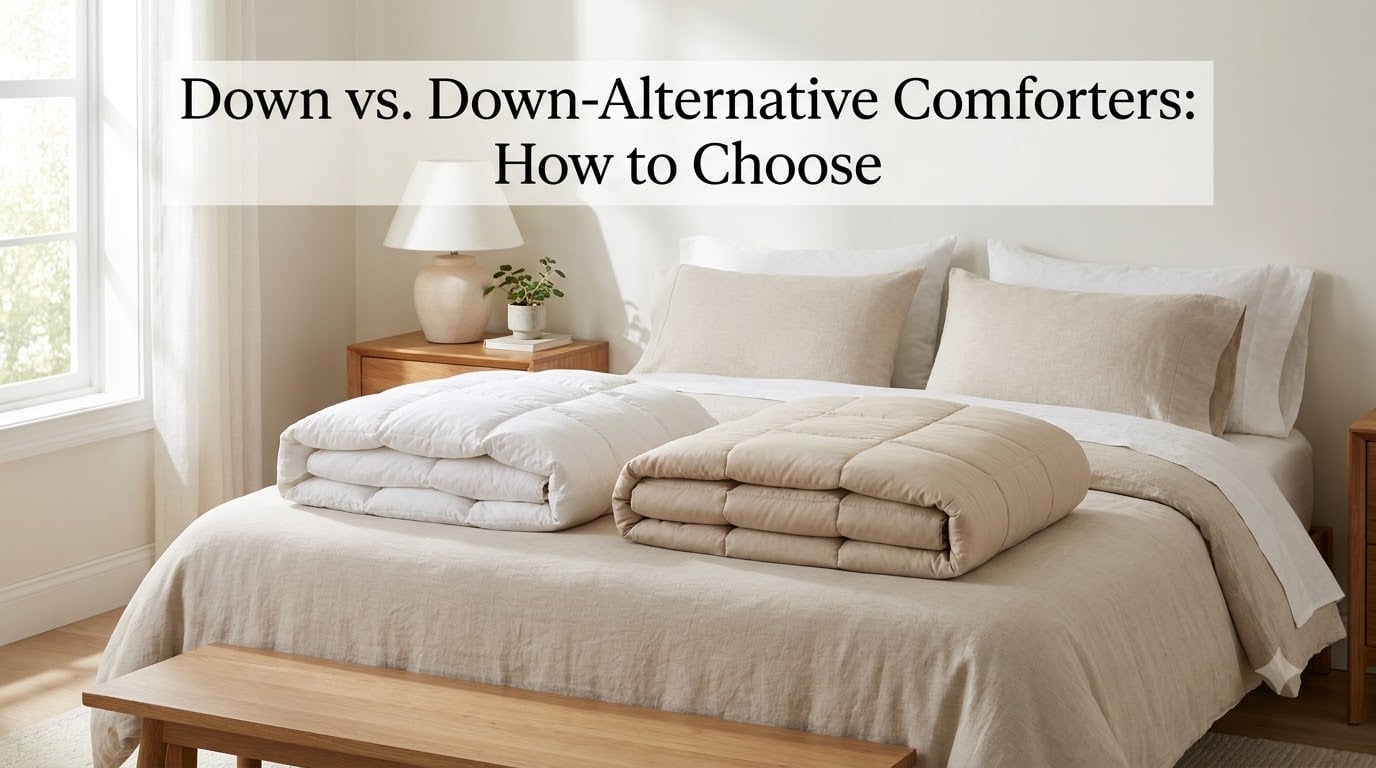
Choosing between down vs down alternative comforters comes down to three things: how warm you sleep, whether you have allergies, and how much maintenance you want to handle. Both fills can deliver a great night’s sleep, but they work very differently under the covers.
Down comforters use the fluffy clusters found beneath goose or duck feathers, prized for their incredible warmth-to-weight ratio and breathability. Down-alternative comforters use synthetic fibers like polyester microfiber or PrimaLoft to mimic that lofty feel without animal products. In this guide, I will walk you through every factor that matters so you can make the right call for your bedroom.
Table of Contents
What Is Down?
Down is the soft, fluffy undercoating that geese and ducks grow to keep themselves warm. It is not the same as feathers. Feathers have a stiff quill, while down clusters are three-dimensional, puffy structures that trap warm air without any heavy quills.
Most down comforters use either goose down or duck down. Goose down clusters tend to be larger and loftier, which is why high-end comforters often specify it. Fill power measures how much space one ounce of down occupies in cubic inches. A fill power of 600 is good, 700 is excellent, and 800+ is considered premium.
Quality down is often certified by the Responsible Down Standard (RDS), which ensures the birds were not live-plucked or force-fed. If ethical sourcing matters to you, look for that certification on the label.
What Is Down-Alternative?
Down-alternative is a synthetic fill designed to mimic the softness and loft of real down. The most common material is polyester microfiber, though premium alternatives use engineered fibers like PrimaLoft, which was originally developed for outdoor gear.
The fill works by creating thousands of tiny air pockets within fine synthetic fibers. These pockets trap warmth similarly to down clusters. However, synthetic fibers need more material weight to match the insulating power of down.
There is a wide quality range in down-alternative comforters. Budget versions under 40 dollars often feel flat within a year. Premium alternatives from brands like Brooklinen, Casper, or Parachute use finer fibers and baffle-box construction to hold their loft much longer. If you go the down-alternative route, I recommend spending a little more for the difference in longevity.
Direct Comparison: Down vs Down-Alternative
Warmth and Insulation
Down wins on warmth-to-weight ratio. Because down clusters trap so much air in such a light package, a 600 fill power comforter feels airy while still keeping you warm. A down-alternative comforter with the same warmth rating will weigh noticeably more on your body.
Fill power is the key number for down. A 400 fill power comforter works for summer, 600 for year-round, and 700+ for cold winters. Down-alternative comforters use GSM (grams per square meter) instead, and the numbers are not directly comparable to fill power. As a rough guide, a 300 GSM down-alternative feels similar to a 500-600 fill power down comforter.
Breathability and Temperature Regulation
Down breathes exceptionally well. Air moves through the natural clusters, which helps moisture escape as you sleep. This is why down comforters feel comfortable across a wider temperature range than many synthetic options.
Down-alternative comforters trap more heat because the dense synthetic fibers restrict airflow. Reddit’s r/Bedding community frequently notes that hot sleepers often feel trapped under down-alternative comforters, even lightweight ones. If you run warm at night, down is usually the better pick unless you specifically choose a cooling down-alternative engineered for hot sleepers.
Allergies and Hypoallergenic Properties
Down itself is not a major allergen, but down comforters can harbor dust mites and the residual proteins from feathers if not properly cleaned. People with severe allergies often react to these, not to the down itself.
Down-alternative comforters are generally considered hypoallergenic because the synthetic fibers do not provide a hospitable environment for dust mites. Look for comforters labeled hypoallergenic and those that have been triple-washed during manufacturing. If allergies are a top concern for you, down-alternative is the safer choice.
Care and Maintenance
This is where down-alternative really shines. Most synthetic comforters can go straight into a home washing machine on a gentle cycle. They dry faster and tolerate frequent washes without damage.
Down comforters are fussier. Many require commercial-sized washing machines or professional dry cleaning. Washing at home in a regular machine can clump the down if the drum is too small. Drying takes hours, and you need to add clean tennis balls or dryer balls to break up clumps.
If you want the lowest-maintenance option, down-alternative wins by a wide margin.
Durability and Lifespan
A well-cared-for down comforter can last 10 to 15 years, sometimes longer. The clusters may compress over time, but a good down comforter holds its warmth for decades.
Down-alternative comforters typically last 3 to 7 years before the fill begins to clump or lose loft. Reddit’s r/BuyItForLife threads repeatedly mention this issue with budget synthetic comforters. Premium alternatives with baffle-box construction can stretch closer to 7 years, but rarely match the lifespan of quality down.
Price and Long-Term Value
Down comforters have a higher upfront cost. Entry-level down starts around 100 dollars, while premium options can exceed 500 dollars. Down-alternative comforters range from 30 dollars for budget picks to 250 dollars for premium versions.
The cost-per-year math often favors down. A 300 dollar down comforter lasting 12 years works out to about 25 dollars per year. A 100 dollar down-alternative lasting 4 years costs 25 dollars per year too. The numbers are surprisingly similar when you compare quality options over time.
Who Should Choose Down Comforters
Down is the right pick if you sleep cold, live in a cool climate, or want a long-term investment. The lightweight warmth is unmatched, especially for side and back sleepers who do not want a heavy comforter pressing down on them.
Down also makes sense if you want a hotel-style luxury feel. The way a quality down comforter drapes and molds around you is hard to replicate with synthetic fill. If you enjoy layering different weights seasonally, down comforters come in summer, year-round, and winter weights that work together as a system.
Finally, if ethics matter, look for RDS-certified down. This certification ensures humane sourcing, which addresses the biggest concern with animal-based bedding.
Who Should Choose Down-Alternative Comforters
Down-alternative is the right call if allergies are a daily concern. The synthetic fill resists dust mites and is easier to wash frequently. Allergy sufferers in our community consistently report fewer symptoms after switching to down-alternative.
Vegans and people who avoid animal products will also want down-alternative. There is no equivalent to genuine down in the synthetic world, but modern microfiber comes impressively close in feel and warmth.
Budget-conscious shoppers and those who want easy care also benefit. If you want to throw your comforter in the washing machine without thinking twice, down-alternative is the clear winner. It is also great for kids’ rooms, dorm rooms, and guest rooms where spills and accidents are more likely.
Climate and Sleeping Position Recommendations
Cold climates favor down. The superior warmth-to-weight ratio shines in winter bedrooms where temperatures drop below 60 degrees Fahrenheit. Down keeps you warm without making the comforter feel like a lead blanket.
Warm climates or year-round use often favors lighter down or cooling down-alternative. Hot sleepers should look for down comforters with 400-500 fill power or down-alternative comforters specifically marketed as breathable.
Side sleepers usually prefer the lighter drape of down. The comforter moves with you rather than weighing you down. Back sleepers often enjoy either type, depending on personal preference. Stomach sleepers who rarely feel cold may prefer a lighter down-alternative that does not trap as much heat around the torso.
Care and Maintenance Tips
For down comforters, air them out weekly to refresh the fill. Wash only once or twice a year, either in a large commercial washer or at a laundromat. Use a down-specific detergent, dry on low heat with dryer balls, and make sure the comforter is fully dry before storing. Always use a duvet cover to protect the comforter from body oils and spills.
For down-alternative comforters, machine wash in cold water on a gentle cycle every few months. Tumble dry on low heat. These comforters handle frequent washing well, which is one of their biggest advantages. A duvet cover is still recommended but less critical than with down.
Store both types in breathable cotton bags, not plastic. Plastic traps moisture and can lead to mildew. Add a cedar block to deter moths and keep the storage area dry.
Cost Comparison Over Time
Let us break down real cost-per-year numbers. A 120 dollar budget down-alternative lasting 3 years costs 40 dollars per year. A 90 dollar budget down-alternative lasting 2 years costs 45 dollars per year. These cheaper options end up costing more over time due to frequent replacement.
A 200 dollar premium down-alternative lasting 6 years costs about 33 dollars per year. A 350 dollar quality down comforter lasting 12 years costs about 29 dollars per year. The math gets even more favorable for down if you factor in how much of that lifespan stays at peak performance.
The bottom line: spending more upfront on either type usually saves money in the long run. Going cheap on down-alternative almost always means replacing it within two years.
Common Myths About Down and Down-Alternative
Myth 1: Down is too hot for summer. A lightweight down comforter with 400-500 fill power works beautifully in warm months. The breathability of down actually helps regulate temperature year-round.
Myth 2: Down-alternative is always cheap. Premium down-alternative comforters use advanced fiber engineering that costs more than entry-level down. Quality varies widely in both categories.
Myth 3: All down causes allergies. Properly cleaned, RDS-certified down causes fewer reactions than people expect. Most allergy issues come from dust mites, not the down itself.
Myth 4: Down-alternative is just as warm as down. It can match warmth, but it takes more weight to do so. The lighter feel of real down is something synthetic fill has not replicated.
FAQs
What is the difference between down and down alternative comforters?
Down comforters are filled with the soft, fluffy clusters found beneath goose or duck feathers, offering excellent warmth-to-weight ratio and breathability. Down-alternative comforters use synthetic materials like polyester microfiber or PrimaLoft to mimic that feel, often at a lower price point and with easier machine-wash care.
Which is warmer, down or down alternative comforters?
Down is warmer for its weight. A 600 fill power down comforter feels lighter while providing more warmth than a similarly priced down-alternative comforter. Down-alternative can match the warmth but requires more fill weight, which makes the comforter heavier on your body.
Is down alternative better for allergies?
Yes, down-alternative comforters are generally better for allergy sufferers. The synthetic fibers resist dust mites and can be washed more frequently at home. While properly cleaned down is not a major allergen, down-alternative removes any risk of feather-related reactions.
How long do down comforters last?
A well-cared-for down comforter typically lasts 10 to 15 years, with some lasting even longer. Down-alternative comforters usually last 3 to 7 years before the fill begins to clump or lose loft, especially budget versions that may need replacement within 2 years.
Can you wash down alternative comforters?
Yes, most down-alternative comforters are machine washable on a gentle cycle with cold water. They can be tumble dried on low heat. This easy-care feature is one of the biggest advantages over down, which usually requires commercial washers or professional cleaning.
Is down worth the extra cost?
Down is worth the extra cost if you sleep cold, want long-term value, or prefer lightweight warmth. A 300 dollar down comforter lasting 12 years costs about 25 dollars per year, which is similar to mid-range down-alternative options that need replacing sooner. The warmth-to-weight ratio and breathability of down are difficult to match.
Final Verdict: Down vs Down-Alternative Comforters
Choosing between down vs down alternative comforters really comes down to your priorities. If you want lightweight warmth, breathability, and a long-term investment, down is hard to beat. If you want easy care, allergy-friendly materials, and lower upfront cost, down-alternative is the practical winner.
For most people, the decision starts with sleep temperature and allergy concerns. Cold sleepers in cool climates usually love down. Hot sleepers, allergy sufferers, and those wanting machine-wash convenience usually prefer down-alternative. Both can deliver a great night’s sleep when matched to your needs.
Whatever you choose, invest in a good duvet cover to protect your comforter, follow the care instructions, and replace your comforter when it no longer keeps you comfortable. A well-chosen comforter is one of the best investments you can make for better sleep.