
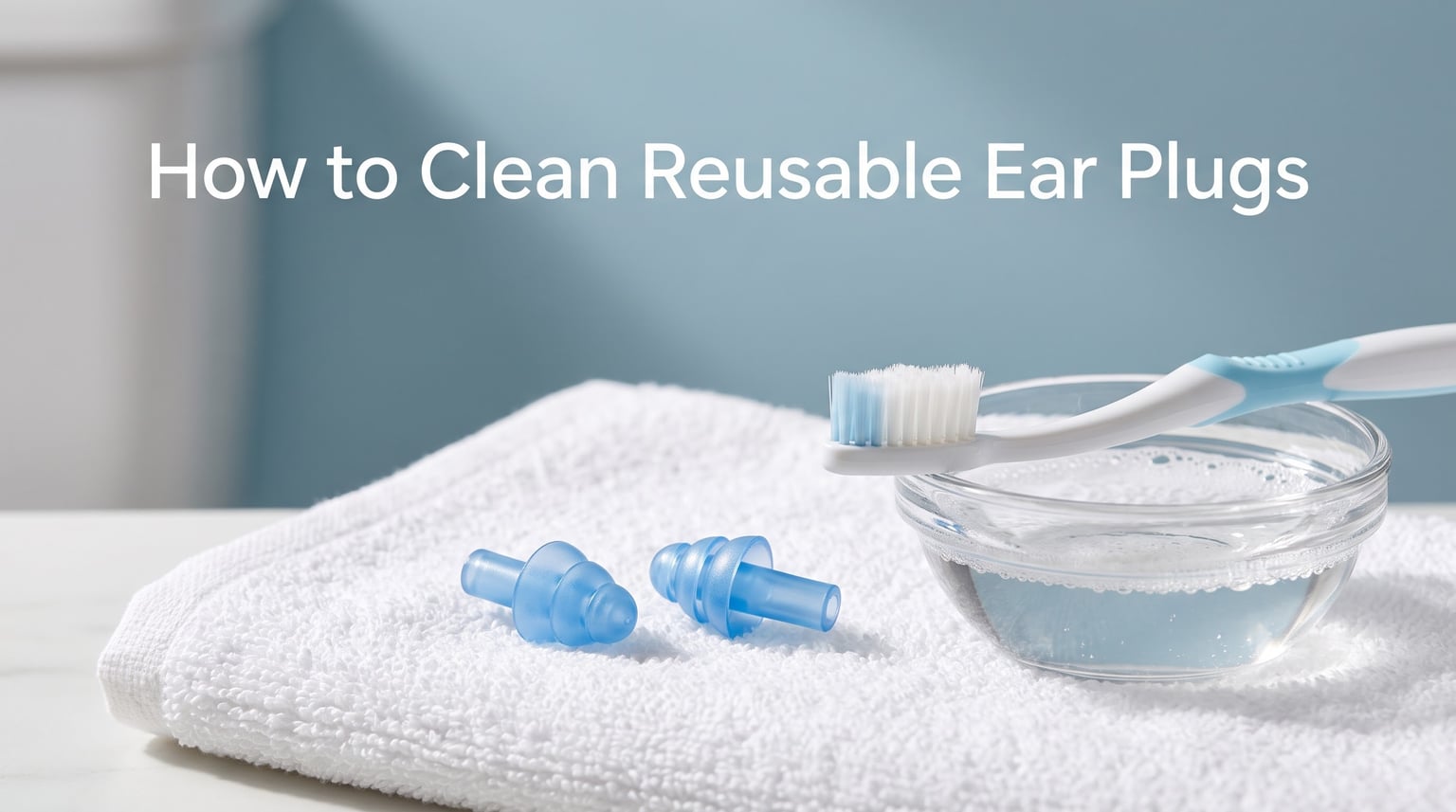
If you use earplugs for sleeping, swimming, motorcycling, or work, you already know how much of a difference clean earplugs make. Dirty earplugs build up earwax, sweat, and bacteria that can lead to ear infections and reduced noise protection. Learning how to clean reusable ear plugs properly keeps them hygienic, extends their lifespan, and protects your hearing health.
Our team has tested cleaning methods across silicone, foam, and flanged earplugs over several months of daily use. The process is simple, but a few details matter. Here is the complete guide.
Table of Contents
What You Need Before You Start?
You only need a few household items to clean reusable earplugs safely. Gather these supplies before you begin:
Mild liquid soap (dish soap or gentle hand soap)
Warm water (not hot)
A soft-bristled toothbrush or soft cloth
A clean towel or paper towel for drying
A storage case with ventilation
That is it. No special cleaners, no expensive kits. The simpler the supplies, the safer they are for your earplugs and your ears.
How to Clean Reusable Ear Plugs: Step-by-Step
The best way to clean reusable earplugs follows four simple steps: soak, scrub, rinse, and air dry. This method works for most silicone and flanged earplugs, including popular brands like Loop, Etymotic, and Howard Leight.
Follow each step in order for the cleanest, safest results.
Step 1: Wash Your Hands First
Start with clean hands. Any dirt or oil on your fingers transfers directly onto the earplugs during cleaning. Wash with soap and warm water for at least 20 seconds before handling them.
Step 2: Soak in Warm Soapy Water
Fill a small bowl or cup with warm water and add a few drops of mild soap. Submerge the earplugs and let them soak for 2 to 3 minutes. This loosens earwax, body oils, and any debris stuck in the grooves.
For earplugs with removable tips (like Loop earplugs), detach the silicone tips from the stem before soaking. This lets the soapy water reach every surface.
Step 3: Gently Scrub Away Wax and Debris
Use a soft-bristled toothbrush or a soft cloth to gently scrub each earplug. Focus on the flanges, ridges, and any acoustic filters where earwax tends to collect. Use small circular motions and light pressure.
Avoid aggressive scrubbing. Silicone can tear and foam can break down if you press too hard. Let the soaking do most of the work.
Step 4: Rinse Thoroughly With Clean Water
Rinse each earplug under warm running water until no soap residue remains. Soap left on the surface can irritate your ear canal the next time you wear them. Check between the flanges to make sure all wax and soap are gone.
Step 5: Air Dry Completely
Place the earplugs on a clean towel or paper towel and let them air dry fully. This usually takes 1 to 2 hours depending on humidity. Never use a hair dryer, radiator, or direct sunlight to speed things up, since heat can warp silicone and damage acoustic filters.
Only store them once they are completely dry. Storing damp earplugs in a sealed case encourages bacteria and mold growth.
Material-Specific Care Instructions
Different earplug materials need slightly different care. Here is how to handle each type.
Silicone Earplugs
Silicone earplugs are the most durable and easiest to clean. Use the full soak, scrub, rinse, and dry method described above. Most silicone earplugs handle warm soapy water without any issue.
If your silicone earplugs have an acoustic filter (common in Loop and high-fidelity earplugs), be careful not to push water into the filter opening. Wipe the filter area gently with a damp cloth instead of submerging it.
Flanged or Triple-Flange Earplugs
Flanged earplugs trap wax between the layers, so pay extra attention to the grooves. A soft toothbrush works well here. Gently brush between each flange to remove buildup.
Inspect the flanges for tears or cracks after every cleaning. Even a small tear reduces the noise reduction rating and can irritate your ear canal.
Reusable Foam Earplugs
Foam earplugs are the trickiest. Standard disposable foam earplugs are not designed to be washed. Some reusable foam models can be wiped with a damp cloth and mild soap, but soaking will break down the foam structure.
For foam, wipe the surface only and let it dry completely. If the foam feels stiff, compressed, or loses its ability to expand back to full size, replace it immediately.
Moldable Wax or Silicone Putty Earplugs
Moldable earplugs that you shape over the ear canal opening cannot be washed in the traditional sense. These collect hair, lint, and skin oils quickly. Replace them when they lose their stickiness or change color.
Most moldable earplugs last about 5 to 10 uses before they need replacing.
What NOT to Use When Cleaning Ear Plugs
Using the wrong cleaner can damage your earplugs and irritate your ears. Avoid these substances completely:
Alcohol or rubbing alcohol — dries out silicone, making it brittle over time
Solvents and chemical cleaners — break down earplug materials and acoustic filters
Hot or boiling water — warps silicone and damages internal filters
Hydrogen peroxide — degrades certain materials with repeated use
Bleach or antibacterial wipes — leave chemical residue that irritates the ear canal
Stick with mild soap and warm water. It is effective, safe, and recommended by audiologists and manufacturers alike.
How Often Should You Clean Reusable Ear Plugs
Cleaning frequency depends on how often you use your earplugs and what you expose them to. Here is a practical schedule based on common use cases.
Daily sleep users: Clean every 2 to 3 days. Nightly use means sweat and skin oils accumulate quickly.
Motorcycle riders and construction workers: Clean after every use. Sweat, dirt, and environmental debris build up fast and increase infection risk.
Swimmers: Rinse with clean water after every pool session to remove chlorine. Do a full soap clean once a week.
Concertgoers or occasional users: Clean before and after each use. Stored earplugs collect dust between uses.
Heavy earwax producers should clean more frequently. If you notice wax buildup after one use, switch to daily cleaning.
Drying and Storage Best Practices
Proper drying and storage matter just as much as cleaning. Damp earplugs stored in a sealed case become a breeding ground for bacteria.
Always air dry earplugs fully before putting them away. Place them on a clean surface in a well-ventilated room. Avoid enclosed containers until they are completely dry to the touch.
Store earplugs in a ventilated case rather than a sealed plastic bag. A case with small air holes lets moisture escape while protecting the earplugs from dust and damage.
Keep the storage case clean too. Wash it with mild soap and warm water weekly, then dry it fully before reuse.
Signs It Is Time to Replace Your Ear Plugs
Even with perfect cleaning habits, reusable earplugs eventually wear out. Replace yours if you notice any of the following:
Tears, cracks, or splits in the silicone or flanges
Loss of flexibility or stiffness in the material
Persistent odor that does not go away after cleaning
Discoloration or visible permanent staining
Reduced noise reduction or a looser fit in the ear canal
Wax or debris stuck inside acoustic filters that will not come out
Most quality reusable silicone earplugs last 3 to 6 months with regular use. Flanged models can last up to a year with careful cleaning. Foam earplugs, even reusable ones, typically last only a few weeks.
Frequently Asked Questions
How often should you wash reusable earplugs?
Wash reusable earplugs every 2 to 3 days for daily use, after every use for motorcycling or construction work, and rinse after every swim. Heavy earwax producers should clean daily.
Can I wash and reuse silicone ear plugs?
Yes, silicone ear plugs are designed for repeated washing. Soak them in warm soapy water, gently scrub with a soft brush, rinse thoroughly, and air dry completely before storing.
How do you clean earwax off earplugs?
Soak the earplugs in warm soapy water for 2 to 3 minutes to soften the wax, then use a soft-bristled toothbrush to gently scrub between flanges and grooves. Rinse thoroughly until all wax and soap residue are gone.
How long should reusable ear plugs last?
Quality reusable silicone earplugs typically last 3 to 6 months with regular cleaning. Flanged models can last up to a year, while reusable foam earplugs usually need replacing after a few weeks of use.
Can you use alcohol to clean earplugs?
No, avoid alcohol and rubbing alcohol on reusable earplugs. Alcohol dries out silicone and makes it brittle over time, shortening the lifespan. Use mild soap and warm water instead.
Conclusion
Knowing how to clean reusable ear plugs properly comes down to four steps: soak in warm soapy water, gently scrub away wax, rinse thoroughly, and air dry completely. Use only mild soap and warm water, avoid alcohol and harsh chemicals, and replace your earplugs when they show signs of wear. With a consistent routine, your earplugs will stay hygienic and effective for months.