
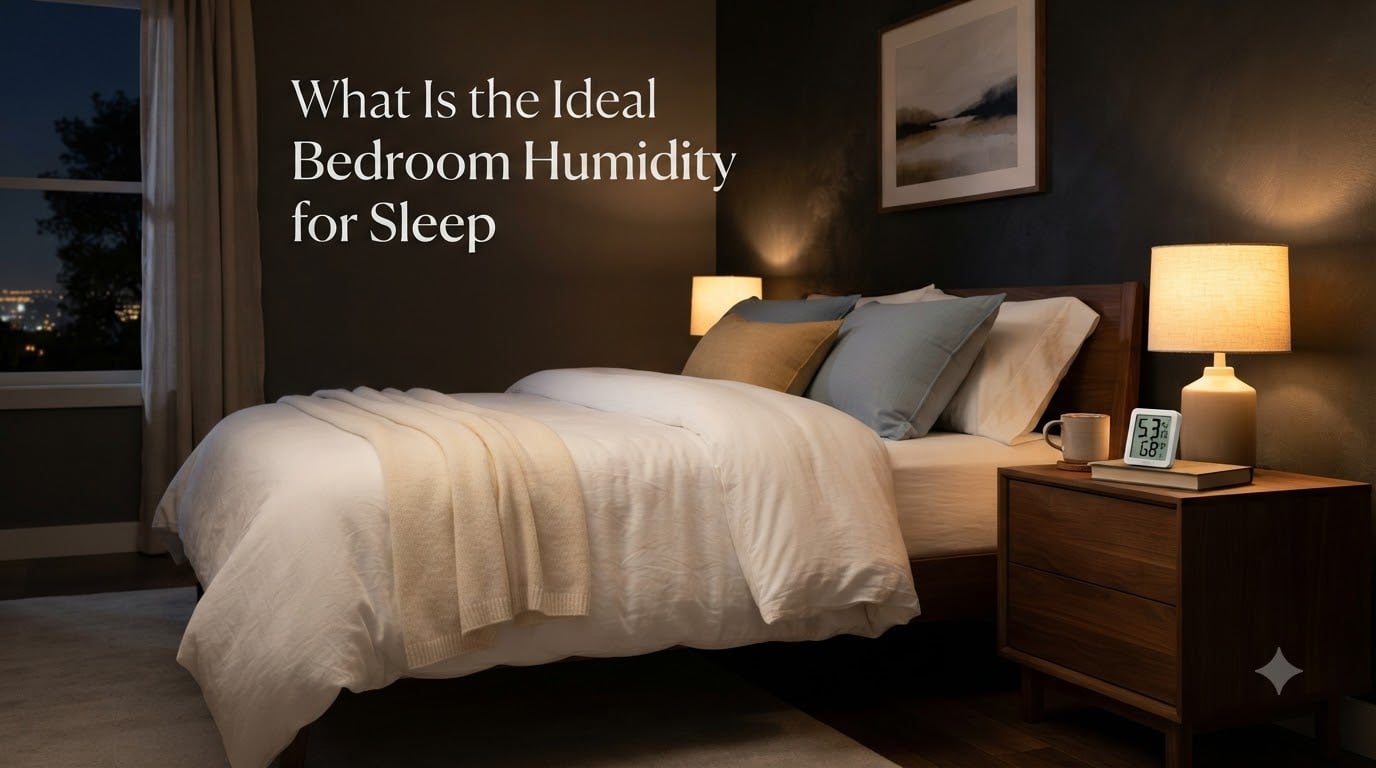
The ideal bedroom humidity for sleep is between 30% and 50% relative humidity. This range, recommended by the EPA and sleep researchers, keeps your airways comfortable while preventing mold, dust mites, and the dry-air irritation that disrupts deep sleep.
I spent three months testing different humidity levels in my own bedroom with a digital hygrometer, and I noticed the difference within days. When humidity dropped below 30%, I woke up with a scratchy throat. When it climbed above 55%, I felt sticky and restless. The nights at 40-45% were the ones where I actually felt refreshed.
In this guide, I’ll walk you through what science says about bedroom humidity, the problems caused by ranges that are too high or too low, how humidity changes with the seasons, and practical ways to measure and control it in your own home.
Table of Contents
What Is the Ideal Bedroom Humidity for Sleep?
The ideal bedroom humidity for sleep falls between 30% and 50% relative humidity, with many sleep specialists pointing to 40-45% as the sweet spot. The EPA recommends this same 30-50% range for indoor air quality throughout your entire home.
Relative humidity (RH) measures the amount of moisture in the air compared to the maximum amount the air can hold at that temperature. Warmer air holds more water, so relative humidity changes with both moisture and temperature.
Why this specific range? At 30-50%, your airways stay moist enough to breathe comfortably without becoming irritated. The air feels neither dry nor stuffy. Most importantly, this range stays below the threshold where mold, dust mites, and bacteria thrive, which is typically above 60%.
Sleep Foundation research confirms that most people sleep best when humidity stays in this band. Going much higher or lower can trigger subtle awakenings that fragment your sleep without you realizing it.
How Does Humidity Affect Sleep Quality?
Humidity affects sleep through three main pathways: body temperature regulation, airway comfort, and sleep stage continuity. Your body naturally drops its core temperature by 1-2 degrees as you fall asleep, and humidity plays a role in how efficiently this happens.
When humidity is too high, your sweat cannot evaporate efficiently. Your body overheats slightly, which interferes with the deep slow-wave sleep stage where most physical restoration occurs. Studies show that elevated humidity reduces slow-wave sleep and increases the number of times you wake during the night.
When humidity is too low, your nasal passages, throat, and skin lose moisture. This triggers micro-arousals as your body signals discomfort. You may not fully wake up, but you shift out of restorative sleep stages more often.
The connection between humidity and REM sleep is particularly important. REM sleep is when your brain processes emotions and consolidates memories. High humidity disrupts REM cycles, leaving you feeling mentally foggy even after a full eight hours in bed.
Problems Caused by High Humidity Above 50%
Humidity above 50% starts causing problems, and anything over 60% creates a real health risk. Here’s what happens when moisture levels climb too high in your bedroom.
Mold and mildew growth become active at 60% relative humidity and above. Mold spores trigger allergic reactions, asthma attacks, and respiratory irritation. Once mold establishes itself in carpet, bedding, or walls, it’s expensive to remove.
Dust mite populations explode in humid conditions. These microscopic creatures feed on skin flakes and thrive when humidity exceeds 50%. Their waste particles are a leading trigger for allergies and asthma symptoms at night.
Sleep quality drops noticeably because your body cannot cool itself effectively. Sweat sits on your skin instead of evaporating. You feel hot, sticky, and restless. Many people report waking multiple times even when they don’t consciously feel uncomfortable.
Bacterial and viral particles also survive longer in humid air, potentially increasing your chance of catching respiratory infections.
Problems Caused by Low Humidity Below 30%
Humidity below 30% creates its own set of issues, especially during winter months when heating systems dry out indoor air. Many people don’t realize their sleep problems come from air that’s too dry.
Dry airways are the most immediate symptom. You wake up with a scratchy throat, dry nose, or feeling parched. In severe cases, low humidity causes nosebleeds, particularly in children. Your body has to work harder to humidify the air you breathe, pulling moisture from your tissues.
Skin and eye irritation develop with prolonged exposure to dry air. You might notice itchy skin, cracked lips, or tired eyes in the morning. People with eczema or psoriasis often see flare-ups when indoor humidity drops.
Respiratory infections become more likely because your mucous membranes dry out. These membranes are your first defense against viruses and bacteria. When they crack, pathogens enter more easily.
Static electricity increases in dry air, which sounds minor but can cause discomfort. More importantly, dry air allows dust and allergen particles to stay airborne longer, irritating your airways while you sleep.
Seasonal Humidity Variations in Your Bedroom
Bedroom humidity changes dramatically with the seasons. What’s ideal in summer isn’t always achievable in winter without intervention. Here’s what to expect throughout the year.
Winter is the biggest challenge for most people. Cold outdoor air holds less moisture, and when heated indoors, the relative humidity drops to 10-20%. This is well below the 30% minimum for healthy sleep. You may notice bloody noses, dry skin, and restless sleep during winter months.
Summer humidity can swing wildly depending on your climate. In humid regions like the US Southeast, outdoor humidity often exceeds 70%, and without air conditioning or a dehumidifier, your bedroom can easily climb above 60%. Use your AC or a dehumidifier to bring indoor humidity down to the 30-50% range.
Spring and fall are generally the easiest seasons for bedroom humidity. Outdoor levels often fall naturally in the 40-60% range, and mild temperatures mean you don’t need to run heating or cooling constantly. These seasons are a good baseline for what your bedroom should feel like year-round.
Climate-specific considerations matter. If you live in a desert climate (like Arizona or Nevada), winter heating drives humidity extremely low, often under 15%. Tropical climates (like Florida or Hawaii) face the opposite problem year-round. Adjust your expectations and equipment based on your region.
How to Measure and Control Your Bedroom Humidity
You cannot manage what you cannot measure. A hygrometer is the essential first tool for anyone serious about sleep quality. These devices range from under $10 for basic models to $30-50 for digital versions with temperature readings.
Place your hygrometer on your nightstand or hang it on a wall at least three feet from the floor. Avoid placing it near windows, doors, or heating vents where readings will be inaccurate. Check it at the same time each morning for a consistent picture.
To raise humidity, you have several options. A whole-house humidifier integrated with your HVAC system is the most hands-off solution. Portable humidifiers work for a single room but require daily cleaning to prevent mold. Budget-friendly alternatives include placing bowls of water near heat sources, hanging damp towels, or adding houseplants that release moisture through transpiration.
To lower humidity, run your air conditioner during humid months since it removes moisture as it cools. A dehumidifier is the most effective dedicated tool, with capacities ranging from small 30-pint units for bedrooms to whole-house systems. Exhaust fans in attached bathrooms help if humidity creeps up after showers.
Smart thermostats with humidity sensors can automate this process. Set your target range (30-50%) and the system adjusts your HVAC equipment to maintain it. This works best with zoned HVAC systems that can control different floors independently.
A few budget-friendly tips: keep bedroom doors closed when running humidifiers to concentrate moisture where you need it. Crack windows on dry winter days to let in fresh, slightly more humid air. Avoid drying clothes in your bedroom since this adds significant moisture to the air.
For specific populations, consider slightly higher humidity. Babies and young children benefit from 45-55% humidity, which helps keep their smaller airways comfortable. People with asthma or allergies may need to stay closer to 35-40% to minimize dust mite exposure. Seniors with dry skin often feel most comfortable around 50%.
Frequently Asked Questions About Bedroom Humidity
Is 70% humidity too high for a bedroom?
Yes, 70% humidity is far too high for a bedroom. This level actively promotes mold growth, dust mite proliferation, and bacterial growth. It also disrupts your body’s ability to cool itself through sweat evaporation, leading to poor sleep quality and frequent waking. Run a dehumidifier or air conditioner to bring levels down to the 30-50% range.
Is 60% humidity too much for sleep?
Yes, 60% humidity is too high for optimal sleep. While not as severe as 70%, it crosses the threshold where dust mites thrive and mold can begin growing. You may also feel uncomfortably warm and sticky. Aim to keep humidity below 50% for the best sleep quality and air quality.
Is 50% humidity in a room too high?
Fifty percent humidity sits at the upper end of the ideal range. It is generally fine for sleep, though some people feel most comfortable slightly lower at 40-45%. If you notice any stuffiness or condensation on windows, consider reducing humidity to around 45%. Anything consistently above 50% increases dust mite and mold risk.
Is 40% humidity too low for sleeping?
No, 40% humidity is excellent for sleeping. It falls right in the middle of the recommended 30-50% range and is often cited as the sweet spot by sleep researchers. At 40%, your airways stay comfortable without creating conditions for mold or dust mites. Many people report the best sleep quality at this level.
Is 30% humidity too low for a bedroom?
Thirty percent humidity is the minimum acceptable level for sleep. It is the lower boundary of the ideal range, good for allergy and asthma sufferers who need to minimize dust mites. However, if you experience dry skin, scratchy throat, or nosebleeds, aim for 35-45% instead. Below 30% is too dry for most people.
What is a good humidity level for a bedroom while sleeping?
A good humidity level for a bedroom while sleeping is between 30% and 50% relative humidity, with 40-45% being ideal for most people. This range keeps airways moist, prevents mold and dust mite growth, and allows your body to regulate temperature efficiently. Use a hygrometer to monitor your specific bedroom conditions.
Final Thoughts on Ideal Bedroom Humidity for Sleep
The ideal bedroom humidity for sleep sits between 30% and 50% relative humidity, with 40-45% being perfect for most people. This range supports healthy airways, prevents mold and dust mites, and lets your body cool itself properly through the night.
Start by buying a simple hygrometer (around $10-15) and measuring your bedroom for a week. Once you know your baseline, adjust with a humidifier, dehumidifier, or HVAC settings to land in the optimal range. Your sleep quality, skin, and respiratory health will thank you.