
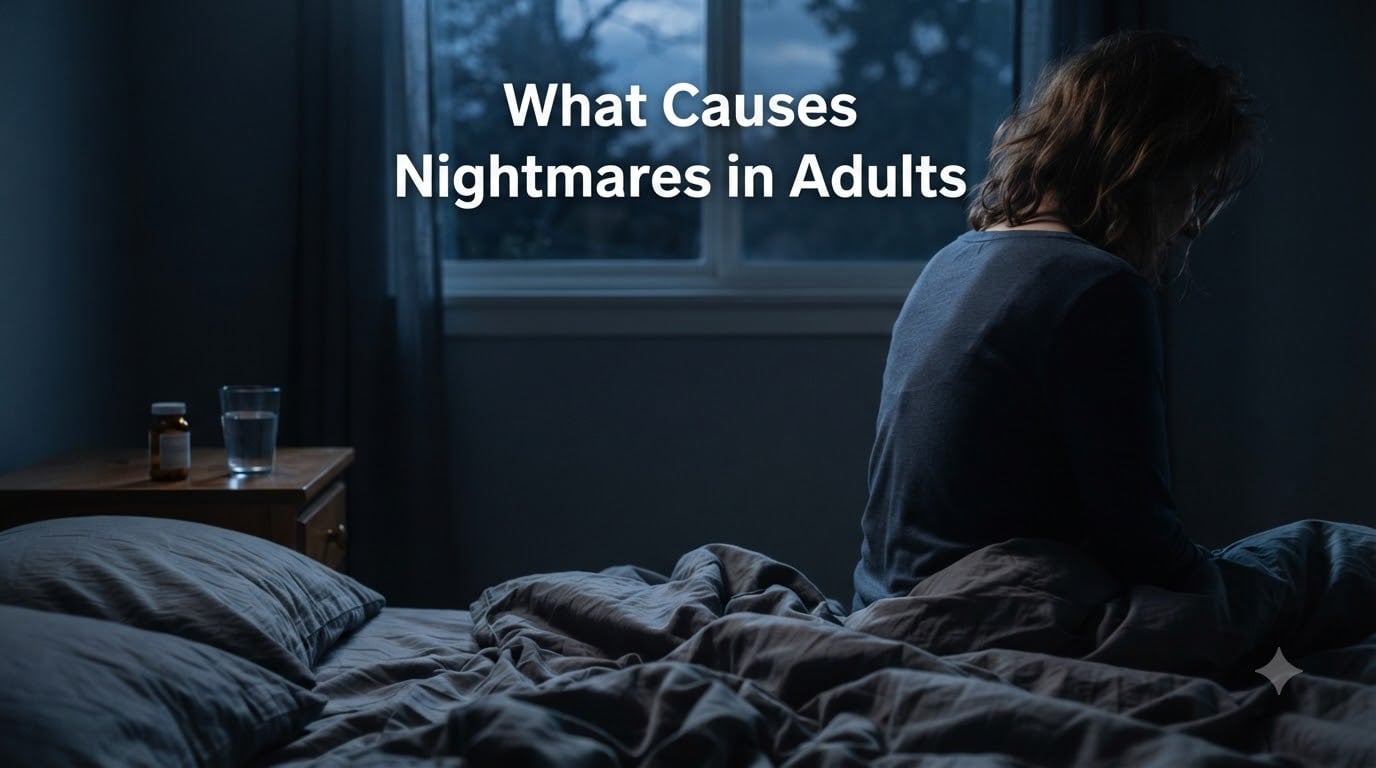
You jolt awake at 3 a.m., heart slamming, sheets twisted around your legs. The dream felt so real that it takes several seconds to remember where you are. If this sounds familiar, you are far from alone — roughly half of all adults experience occasional nightmares, and for some, they become a nightly ordeal that wrecks sleep quality and daytime energy.
Understanding what causes nightmares in adults matters because those vivid, frightening dreams are rarely random. They are your brain’s way of processing stress, sorting through the day’s emotions, or signaling that something — whether a medication, a sleep disorder, or an unresolved anxiety — needs attention. The good news is that once you identify the trigger, nightmares are highly treatable.
In this guide, our team breaks down the full picture: the psychological causes, medical conditions, medications, and lifestyle factors behind adult nightmares. We also cover what no one else is talking about — how work stress, room temperature, and even your age affect nightmare frequency — plus practical, proven ways to get relief.
Table of Contents
What Are Nightmares and How Do They Differ From Bad Dreams?
Nightmares are vividly realistic, disturbing dreams that wake you from sleep, often leaving you with a racing heart, sweating, and a lingering sense of fear. They occur most often during REM (rapid eye movement) sleep, the stage when your brain is most active in processing emotions and memories. Unlike a mildly unpleasant dream that fades quickly, a nightmare feels intense enough to pull you fully awake.
Many people use “bad dream” and “nightmare” interchangeably, but sleep researchers draw a clear line. A bad dream may be unpleasant but typically does not wake you up. A nightmare is intense enough to jolt you awake and leave you recalling vivid details. This distinction matters because frequent awakenings from nightmares fragment your sleep, which has real consequences for your health and mood.
Nightmares vs. Night Terrors: Know the Difference
Night terrors are a completely different phenomenon that trips people up. They occur during deep non-REM sleep, usually in the first third of the night, and the person typically has no memory of the episode. Nightmares, by contrast, happen during REM sleep in the second half of the night and are usually remembered in vivid detail. Someone having a night terror may scream, sit up, or thrash but remains asleep, while someone having a nightmare wakes up and is fully alert.
When Nightmares Become Nightmare Disorder
Occasional nightmares are perfectly normal. But when they happen frequently enough to cause distress, disrupt sleep regularly, or interfere with daytime functioning, a healthcare provider may diagnose nightmare disorder. The clinical criteria include repeated occurrences of extended, extremely dysphoric, well-remembered dreams that threaten survival, security, or physical integrity, along with rapid alertness upon awakening and significant daytime impairment.
Our team has seen in research and community discussions that many adults suffer for years without realizing their nightmares qualify as a diagnosable, treatable condition. One Reddit user described having nightmares “99% of the time” and feeling hopeless — a situation far more common than most people think.
Common Psychological Causes of Nightmares in Adults
Psychological factors are the single most common driver of adult nightmares. Your dreaming brain does not shut off your emotions — it amplifies them, replaying fears, conflicts, and anxieties in symbolic and sometimes literal ways.
Stress and Daily Life Pressure
Daytime stress is the number one cause of nightmares in adults. When you carry tension from work deadlines, financial worries, relationship conflicts, or family responsibilities into sleep, your brain processes that stress through vivid, often threatening dream imagery. Research consistently shows that people experiencing high life stress report significantly more frequent and intense nightmares.
What surprises many people is that even positive stress — a job promotion, a move, planning a wedding — can trigger nightmares. Your brain treats any significant change as something to process, and that processing can take the form of unsettling dreams.
Anxiety Disorders
Generalized anxiety disorder, social anxiety, and panic disorder all increase nightmare frequency. If your mind is stuck in a loop of worry during the day, that loop often continues at night. Studies show that adults with anxiety disorders experience nightmares two to three times more often than those without.
The content of anxiety-driven nightmares tends to reflect specific fears — being unprepared, being judged, losing control — which is why recurring themes can actually point you toward the underlying worry your brain is trying to resolve.
Depression and Nightmares
Depression and nightmares share a complex, bidirectional relationship. Depression can increase nightmare frequency, and frequent nightmares can worsen depressive symptoms by destroying sleep quality. People with depression often report dreams involving themes of loss, failure, guilt, or abandonment.
WebMD highlights an especially important finding: frequent nightmares are associated with higher suicide risk in adults with depression. This connection underscores why persistent nightmares should never be dismissed as “just bad dreams.”
PTSD and Trauma-Related Nightmares
Post-traumatic stress disorder (PTSD) is perhaps the most studied cause of adult nightmares, and for good reason. Harvard Medical School notes that PTSD-related nightmares are qualitatively different from ordinary nightmares — they tend to be literal replays of the traumatic event rather than symbolic dreams. They are also more frequent, more intense, and more resistant to fading over time.
Trauma-related nightmares can persist for years after the triggering event. They affect not just combat veterans but survivors of accidents, assault, abuse, medical trauma, and sudden loss. The key difference is that PTSD nightmares feel like reliving the trauma rather than just dreaming about something scary.
Complex PTSD (CPTSD), which stems from repeated or prolonged trauma, can produce near-nightly nightmares. Community discussions reveal people in their thirties and forties still battling vivid nightmares from childhood trauma — proof that unresolved experiences keep surfacing in sleep until they are addressed.
What Triggers Nightmares in Adults: Medical Conditions
Physical health conditions are an overlooked cause of adult nightmares. When your body is struggling, your brain often reflects that struggle in your dreams.
Sleep Apnea and Breathing Disorders
Obstructive sleep apnea is strongly linked to nightmares. When your airway partially or fully collapses during sleep, your brain detects dropping oxygen levels and triggers a stress response to wake you up. That stress response can feed directly into nightmare content — dreams of drowning, suffocating, or being chased are common among people with undiagnosed sleep apnea.
If you snore loudly, wake up gasping, or feel exhausted despite sleeping eight hours, sleep apnea may be driving both your nightmares and your daytime fatigue. A sleep study can confirm the diagnosis, and treatment (typically CPAP therapy) often reduces nightmare frequency dramatically.
Restless Legs Syndrome
Restless legs syndrome (RLS) causes an irresistible urge to move your legs, especially at night. The sleep disruption it causes can fragment your rest and increase the likelihood of waking during REM sleep, which means more nightmare recall. RLS is frequently underdiagnosed, and many people do not connect their leg discomfort with their disturbing dreams.
Other Medical Conditions
Several other conditions can contribute to nightmare frequency. Chronic pain keeps your nervous system on high alert, increasing the intensity of dreams. Thyroid disorders affect your metabolism and sleep architecture. Heart conditions that reduce blood flow can trigger stress responses during sleep. Even fever and infection can produce vivid, disturbing dreams as your brain processes the physical stress of illness.
Medications and Substances That Cause Nightmares
If you recently started having nightmares, a medication change is one of the first things to investigate. Many common prescriptions list vivid dreams or nightmares as a known side effect.
SSRIs and Antidepressants
Selective serotonin reuptake inhibitors (SSRIs) — including fluoxetine (Prozac), sertraline (Zoloft), and paroxetine (Paxil) — frequently cause vivid dreams or nightmares, especially during the first few weeks of treatment or after a dosage change. SSRIs alter REM sleep patterns, which can intensify dream recall and content. For most people, this side effect fades as the body adjusts. If it persists, your doctor may adjust the dose or switch you to a different medication.
Beta-Blockers and Blood Pressure Medications
Beta-blockers like propranolol, metoprolol, and atenolol are notorious for causing nightmares. These drugs cross the blood-brain barrier and interfere with REM sleep. If you started a blood pressure medication and suddenly began having vivid or frightening dreams, mention it to your prescribing doctor — there are alternative medications that do not have this effect.
GLP-1 Agonists Like Ozempic
Cleveland Clinic specifically highlights GLP-1 agonists such as Ozempic (semaglutide) as medications that can trigger nightmares. While these drugs have gained massive popularity for diabetes management and weight loss, vivid dreams and sleep disturbances are reported side effects. If you are taking a GLP-1 medication and experiencing new nightmares, do not stop taking it — talk to your doctor about whether the timing or dosage might be adjusted.
Other Medications to Watch
Several other drug categories are known nightmare triggers. Antimalarial medications like mefloquine can cause intensely vivid, sometimes disturbing dreams. Statins (cholesterol medications) may cause sleep disturbances in some users. Dopamine agonists used for Parkinson’s disease and RLS are linked to vivid dreams. Even some allergy medications and sleep aids can paradoxically cause nightmares, especially if they alter sleep architecture.
Alcohol and Recreational Substances
Alcohol is a major nightmare trigger that catches many people off guard. While a drink might help you fall asleep faster, alcohol suppresses REM sleep early in the night. When it wears off in the second half, your brain experiences REM rebound — an intense, prolonged period of REM sleep that produces extraordinarily vivid and often disturbing dreams.
This is why people frequently report nightmares after a night of drinking, even if they did not drink heavily. Cannabis use has a similar effect — it suppresses REM sleep, and when you stop using it, the REM rebound can produce intense dreams for weeks.
Withdrawal from alcohol, benzodiazepines, or opioids can produce some of the most intense nightmares a person can experience. If you are going through withdrawal, severe nightmares are a known symptom and should be discussed with your healthcare provider.
Lifestyle Factors That Contribute to Adult Nightmares
Beyond psychology and medication, how you live day to day shapes what happens in your sleep. These are the factors that most articles skip but that community discussions reveal as real triggers.
Sleep Deprivation and Irregular Schedules
When you do not get enough sleep, your brain compensates by spending more time in REM sleep during the sleep you do get. This phenomenon, called REM rebound, produces more intense and more memorable dreams. Essentially, sleep deprivation makes nightmares both more likely and more vivid. An irregular sleep schedule — going to bed and waking up at different times each day — has a similar effect because it destabilizes your natural sleep architecture.
Late-Night Eating and Specific Foods
Eating close to bedtime increases your metabolism and body temperature, which can make sleep more restless and dreams more vivid. Spicy foods are a well-known culprit because they raise body temperature and can cause indigestion. Heavy, fatty meals late at night have a similar effect. Some people also report that dairy products, sugary foods, or heavy carbohydrates before bed intensify their dreams.
You do not have to stop eating entirely after a certain hour. But if nightmares are a problem, try finishing your last meal at least three hours before bedtime and see if it makes a difference.
Screen Exposure and Digital Habits
The blue light from phones, tablets, and computers suppresses melatonin production, making it harder to fall asleep and potentially affecting sleep quality. But beyond the light itself, the content you consume before bed matters. Cleveland Clinic specifically calls out “doomscrolling” — consuming distressing news or social media content late at night — as a nightmare trigger.
Your brain takes the emotional content of what you consumed and incorporates it into your dreams. If the last thing you see before sleep is a frightening news story, an anxiety-inducing work email, or a tense social media debate, that emotional charge can carry directly into your dream content. This goes beyond just doomscrolling — even an intense thriller show or an emotionally charged conversation can seed your nightmares.
Room Temperature and Bedroom Environment
This is the content gap no major competitor covers, but forum discussions consistently identify it as a real factor. A hot bedroom raises your body temperature, which increases brain activity during REM sleep and can make dreams more vivid and more disturbing. Many people on Reddit’s nightmare forums report a clear pattern of worse nightmares during summer months or when their bedroom is too warm.
The ideal sleeping temperature is between 60 and 67 degrees Fahrenheit (15 to 19 degrees Celsius). If you regularly wake up from nightmares sweating, try lowering your thermostat, switching to breathable bedding, or using a fan. This simple environmental change has helped numerous nightmare sufferers reduce both the frequency and intensity of their dreams.
Your bedding itself can play a role. Heavy, non-breathable blankets trap heat, while certain fabrics can make you sweat more. If you share a bed, your partner’s movements, snoring, or body heat can also fragment your sleep and increase nightmare recall.
Age-Related Nightmare Patterns in Adults
Nightmare content and frequency shift as you move through adulthood, and understanding your age-related pattern can help you identify what is driving your dreams. This is something almost no major health publication covers in depth.
Your 20s and 30s
Younger adults tend to have the highest nightmare frequency of any adult age group. Career uncertainty, relationship stress, financial pressure, and identity questions all feed into vivid dream life. People in their twenties frequently report nightmares about being unprepared, failing at work or school, or losing important relationships. Sleep schedules tend to be more erratic in this age range, which adds to REM disruption.
Your 40s and 50s
In midlife, nightmare content often shifts to themes of responsibility, health concerns, and family conflict. Work stress peaks for many people in this age range, as does the sandwich-generation pressure of caring for both children and aging parents. Women in perimenopause and menopause frequently report increased nightmares, driven by hormonal changes that affect sleep architecture and body temperature regulation.
Your 60s and Beyond
Older adults often experience fewer nightmares overall, but those who do have them tend to find them more distressing. Medication side effects become a more significant factor in this age group, as does the higher prevalence of sleep apnea and other medical conditions. Dreams in older adults often center on themes of loss, mortality, and reflecting on the past. Some research suggests that REM sleep decreases with age, which may explain the overall reduction in nightmare frequency.
Work-Related Stress and Recurring Nightmares
No major health publication addresses this directly, but our analysis of forum discussions and community feedback reveals it as a significant pattern. Work stress does not just cause general anxiety — it produces specific, recognizable nightmare themes that millions of adults experience.
The classic work nightmare involves showing up unprepared, missing an important deadline, or facing public humiliation in a professional setting. These dreams are so common that they cross industries, job levels, and cultures. A teacher dreams of losing control of a classroom. A nurse dreams of making a medication error. An executive dreams of freezing during a critical presentation. The specifics change, but the underlying theme — fear of inadequacy and failure — is universal.
Burnout amplifies this pattern. When you are chronically overworked, your brain never fully disengages from professional stress, even during sleep. This is why recurring work nightmares are often one of the first signs that your job is affecting your mental health. If you notice an increase in work-themed nightmares, it may be time to evaluate your workload, set better boundaries, or consider whether your current role is sustainable.
Performance anxiety dreams can also become self-reinforcing. You stress about work, have a nightmare about it, wake up anxious, carry that anxiety into the next workday, and then dream about it again the following night. Breaking this cycle requires addressing the root cause — the daytime stress — rather than just trying to suppress the dreams.
How to Stop Nightmares in Adults: Treatment and Prevention
Understanding what causes nightmares in adults is only half the battle. The other half is knowing how to reduce their frequency and intensity. The strategies below are backed by clinical research and have helped countless adults reclaim their sleep.
1. Improve Your Sleep Hygiene
Basic sleep hygiene is the foundation of nightmare prevention. Go to bed and wake up at the same time every day, even on weekends. Keep your bedroom cool, dark, and quiet. Avoid screens for at least an hour before bed, or use blue-light-filtering glasses if you must use devices. Limit caffeine after noon and avoid alcohol within three hours of bedtime.
2. Try Imagery Rehearsal Therapy (IRT)
Imagery Rehearsal Therapy is one of the most effective treatments for chronic nightmares, and it is surprisingly simple. During the day, write down a recurring nightmare. Then rewrite the ending to be neutral or positive. Rehearse this new version in your mind several times a day. Over time, your brain begins to incorporate the new ending into the actual dream.
Clinical studies show that IRT can reduce nightmare frequency by 50 to 80 percent in people with PTSD and chronic nightmare disorder. It requires no medication, has no side effects, and can be done on your own or with a therapist’s guidance.
3. Review Your Medications
If you suspect a medication is causing nightmares, do not stop taking it abruptly. Instead, schedule a conversation with your prescribing doctor. Mention the nightmares specifically and ask whether the drug is known to cause vivid dreams. In many cases, a simple switch to a different medication in the same class resolves the problem entirely.
Bring a list of everything you take, including over-the-counter medications and supplements. Sometimes the interaction between two medications is the culprit rather than a single drug.
4. Practice Stress Management
Since stress is the leading cause of adult nightmares, reducing daytime stress directly reduces nighttime dreams. Effective approaches include journaling before bed to process the day’s worries, practicing progressive muscle relaxation or deep breathing exercises, and engaging in regular physical activity (though not within two hours of bedtime).
Mindfulness meditation has shown particular promise for reducing nightmare frequency. Even ten minutes a day of guided meditation can lower baseline anxiety levels and create a calmer mental state at bedtime.
5. Treat Underlying Medical Conditions
If sleep apnea, restless legs syndrome, or another medical condition is driving your nightmares, treating the underlying condition is the most effective solution. A sleep study can identify whether you have a sleep disorder. If you do, treatments like CPAP therapy for sleep apnea often eliminate the associated nightmares entirely.
6. Address Trauma With Professional Support
For PTSD and trauma-related nightmares, specialized therapies can make an enormous difference. Eye Movement Desensitization and Reprocessing (EMDR), cognitive processing therapy, and trauma-focused cognitive behavioral therapy have all shown effectiveness in reducing trauma-related nightmares. Prazosin, a blood pressure medication, is sometimes prescribed off-label specifically for PTSD nightmares.
When to Seek Professional Help for Nightmares
Occasional nightmares are normal and nothing to worry about. But certain signs indicate it is time to talk to a healthcare provider or sleep specialist.
Seek professional help if your nightmares occur more than once a week, consistently wake you from sleep, or cause you to fear going to bed. Other red flags include nightmares that started after beginning a new medication, dreams that replay a traumatic event, daytime exhaustion from disrupted sleep, or mood changes like increased anxiety, irritability, or depression.
Also seek help if you act out your dreams physically — kicking, punching, or shouting during sleep. This can be a sign of REM sleep behavior disorder, a condition that requires medical evaluation and is distinct from ordinary nightmares.
Start with your primary care physician, who can rule out medication side effects and basic medical causes. From there, they may refer you to a sleep specialist for a sleep study or to a mental health professional for therapy. The most important thing to know is that chronic nightmares are treatable — you do not have to just live with them.
FAQs
Why am I suddenly having nightmares as an adult?
Sudden nightmares in adults are most commonly triggered by new stress, a recent medication change, alcohol use before bed, sleep deprivation, or an underlying condition like sleep apnea. If the nightmares started recently, look first at what changed in your life around the same time — a new job, a new prescription, a change in sleep habits, or increased alcohol intake.
What triggers nightmares in adults?
The most common triggers include stress and anxiety, PTSD and trauma, medications like SSRIs and beta-blockers, alcohol and recreational substances, sleep deprivation, sleep apnea, late-night eating, an overheated bedroom, and distressing media consumption before bed.
How to stop nightmares in adults?
Effective approaches include improving sleep hygiene, trying Imagery Rehearsal Therapy (IRT), reviewing medications with your doctor, managing daytime stress through meditation or journaling, treating underlying sleep disorders, and lowering your bedroom temperature. For trauma-related nightmares, professional therapies like EMDR can be highly effective.
What are nightmares trying to tell you?
Nightmares are not literal prophecies but rather your brain processing emotions, stress, and unresolved conflicts. Recurring themes often point to specific worries — unpreparedness dreams reflect performance anxiety, chase dreams reflect avoidance, and loss dreams reflect grief. Pay attention to patterns rather than individual dreams.
What time of night do nightmares occur?
Nightmares occur during REM sleep, which is longest and most intense in the second half of the night, typically between 2 a.m. and 6 a.m. This is why most people remember nightmares from the early morning hours rather than right after falling asleep.
What helps prevent nightmares?
To prevent nightmares, maintain a consistent sleep schedule, keep your bedroom cool (60 to 67 degrees Fahrenheit), avoid alcohol and heavy meals before bed, limit distressing media at night, manage stress through relaxation techniques, and address any underlying medical or psychological conditions with professional help.
Conclusion
Figuring out what causes nightmares in adults starts with looking at your life honestly — your stress levels, your medications, your sleep habits, and your bedroom environment. Nightmares are your brain’s signal that something needs attention, and once you identify that something, the path to better sleep becomes clear.
Whether your trigger is work stress, a new prescription, a hot bedroom, or unresolved trauma, effective treatments exist. Start with the basics tonight: cool the room, skip the late-night drink, and wind down without screens. If nightmares persist, reach out to a healthcare provider. You deserve restful sleep, and it is within reach.