
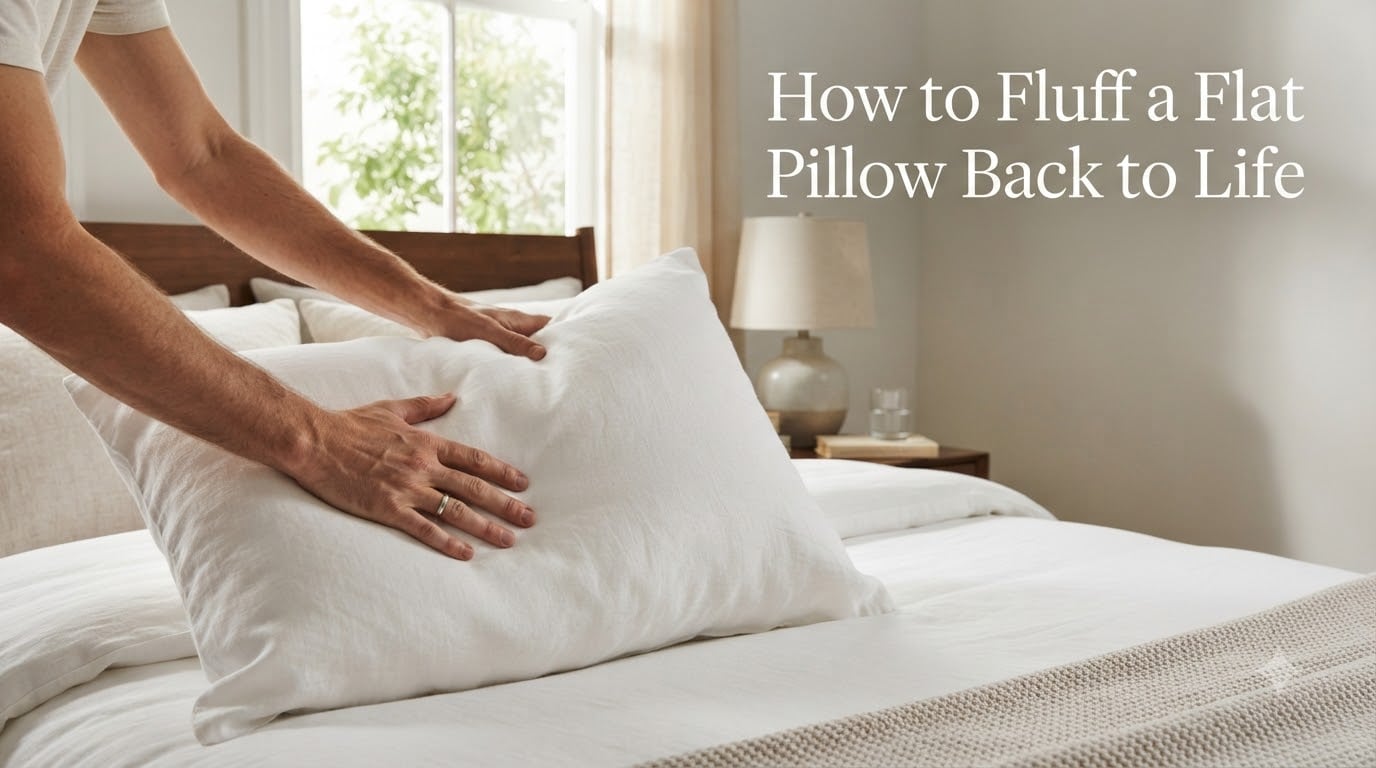
That pancake-flat pillow on your bed is more than an annoyance. It is a sign that your head and neck are not getting the support they need, and that is a fast track to neck pain and poor sleep. Our team has tested and refined every pillow-fluffing method out there, from the classic accordion squeeze to the tennis ball dryer trick, and I want to share what actually works.
Yes, you can make flat pillows fluffy again in most cases. Whether your pillow is down, feather, polyester, hollow fibre, or memory foam, there is a fluffing technique that fits. Here is your complete guide on how to fluff a flat pillow back to life without buying anything new.
Table of Contents
Why Pillows Go Flat (And Why It Matters)
Pillows flatten because of repeated compression from body weight night after night. The fill material breaks down, shifts, and loses the air pockets that give it bounce and loft.
Sweat, skin oils, and dead skin cells work their way into the filling and weigh it down. Over months, this buildup causes the fill to clump together and pack tight.
A flat pillow means your neck is not properly aligned with your spine. That is the root cause of the morning stiffness you might be brushing off. Fluffing redistributes the fill and restores those air pockets so the pillow can support you properly.
How to Fluff a Flat Pillow Back to Life by Hand
Hand fluffing is the fastest method and costs nothing. Our team considers this the first line of defense for any pillow type except solid memory foam.
Grab two opposite corners of the pillow and push them toward each other like an accordion. Squeeze and release in quick bursts for about 30 seconds. This forces air back into the compressed filling.
Next, hold the pillow by its edges and slap the sides with your palms. Work from top to bottom, targeting any clumps you feel. Break apart lumps by massaging them between your fingers.
Finish by grabbing the pillow through the fabric and pulling sections of fill apart. Shake it out vigorously and give it two or three firm whacks against your mattress. This redistributes the fill evenly and brings back that fluffy pillow feel.
Do this every morning when you make the bed. It takes about a minute and prevents fill from settling into dead spots overnight.
The Dryer Method with Tennis Balls
When hand fluffing is not enough, the dryer method delivers deeper revival. This is the approach I personally use every few weeks, and it works wonders on down, feather, and polyester pillows.
Grab two clean tennis balls and toss them into the dryer with your pillow. Set the dryer to low heat or air fluff. High heat can melt synthetic fibres and damage down clusters.
Run the cycle for 15 to 20 minutes. The tennis balls bounce around and physically break apart clumped filling while warm air re-lofts the material.
Take the pillow out while it is still warm. Give it a few hand squeezes and slaps to settle the fill. Let it cool flat for 10 minutes before putting it back in its case.
One caution from the Reddit bedding community: do not use this method on solid memory foam pillows. The tumbling action will tear the foam apart. Stick with hand fluffing and air methods for those.
The Sun and Air Method for Outdoor Revival
Sunlight is a natural deodorizer and loft restorer. The UV rays kill bacteria and break down moisture trapped in the fill that contributes to flattening.
Place your pillow outside in direct sunlight for two to three hours. Flip it halfway through so both sides get exposure. Gently slap and squeeze the pillow every hour to help air circulate through the filling.
This method works on every pillow type including memory foam. The warmth from the sun helps the material expand and release trapped moisture. It also leaves your pillow smelling fresh without any chemical cleaners.
Pillow-Type Specific Tips
Not all pillows respond to the same techniques. Here is how to fluff a flat pillow back to life based on its fill material.
Down and Feather Pillows
Down and feather pillows respond best to all three methods. Hand fluffing daily is essential because natural fill shifts easily. The dryer method with tennis balls is especially effective since the tumbling action re-lofts individual feather clusters.
Polyester and Hollow Fibre Pillows
Synthetic fills tend to clump into hard balls over time. Focus on breaking apart those clumps by hand. Use the dryer method on low heat every two weeks. Avoid over-washing, since polyester fibres mat together when wet and some never fully recover their bounce.
Memory Foam Pillows
Solid memory foam cannot be fluffed the same way. Never put it in the dryer. Instead, knead the foam with your hands to break up compressed areas and use the sun method to help it expand. Shredded memory foam can be hand-fluffed like polyester but still skips the dryer.
Daily Maintenance to Prevent Flatness
Prevention is the best pillow maintenance. Fluff your pillow by hand every morning when you get out of bed. This one habit adds months to your pillow’s usable life.
Flip and rotate your pillow every few days so weight distributes evenly across the fill. Use a pillow protector underneath your pillowcase to block sweat and oils from reaching the filling.
Air out your pillows weekly by stripping the bed and letting them sit uncovered for an hour. This releases trapped moisture before it has a chance to weigh down the material.
When to Replace Your Pillow Instead
Sometimes a pillow is simply too far gone to revive. The community consensus across multiple Reddit threads is that when nothing brings back the bounce, replacement is the right call.
Try the fold test. Fold your pillow in half and squeeze out the air. If it stays folded instead of springing back open, the fill has lost its resilience and the pillow needs replacing.
Look for permanent lumps that will not break apart, visible yellow stains, or a noticeable odor even after airing out. Allergies acting up at night is another signal.
The 3-2-1 pillow rule is a helpful guideline for replacement timing. Replace down pillows every 3 years, synthetic pillows every 2 years, and your pillow protector every 1 year. This keeps your sleep surface fresh and supportive.
Frequently Asked Questions
How to revive flat bed pillows?
Revive flat bed pillows by hand fluffing with the accordion technique, running them through the dryer on low heat with two tennis balls for 15 to 20 minutes, or placing them in direct sunlight for two to three hours. Daily hand fluffing prevents flattening from returning.
Can you make flat pillows fluffy again?
Yes, most flat pillows can be revived. Down, feather, polyester, and hollow fibre pillows respond well to hand fluffing, the dryer method, and sun airing. Solid memory foam pillows can be revived with kneading and sunlight but should never go in the dryer.
How to fluff flat pillows in a dryer?
Place two clean tennis balls and your pillow in the dryer. Set it to low heat or air fluff and run for 15 to 20 minutes. The tennis balls bounce and break apart clumped filling while warm air restores loft. Remove the pillow while warm and hand fluff before cooling.
What is the 3 2 1 pillow rule?
The 3-2-1 pillow rule is a replacement guideline. Replace down pillows every 3 years, synthetic pillows every 2 years, and your pillow protector every 1 year. This timeline keeps your sleep surface supportive and free from allergen buildup.
What to do with old flattened pillows?
If fluffing methods no longer revive a pillow, it is time to replace it. Old pillows can be repurposed as pet bedding, floor cushions, or cleaning rags. Some textile recycling programs also accept used pillows.
Final Thoughts
Learning how to fluff a flat pillow back to life is one of the simplest ways to improve your sleep without spending a dime. A minute of hand fluffing each morning, a dryer cycle every couple of weeks, and regular sun airing will keep most pillows supportive for their full lifespan.
Pay attention to the fold test and replacement timelines. When the fill stops bouncing back, no amount of fluffing will fix it. Until then, your pillow still has plenty of life left with the right care routine.