
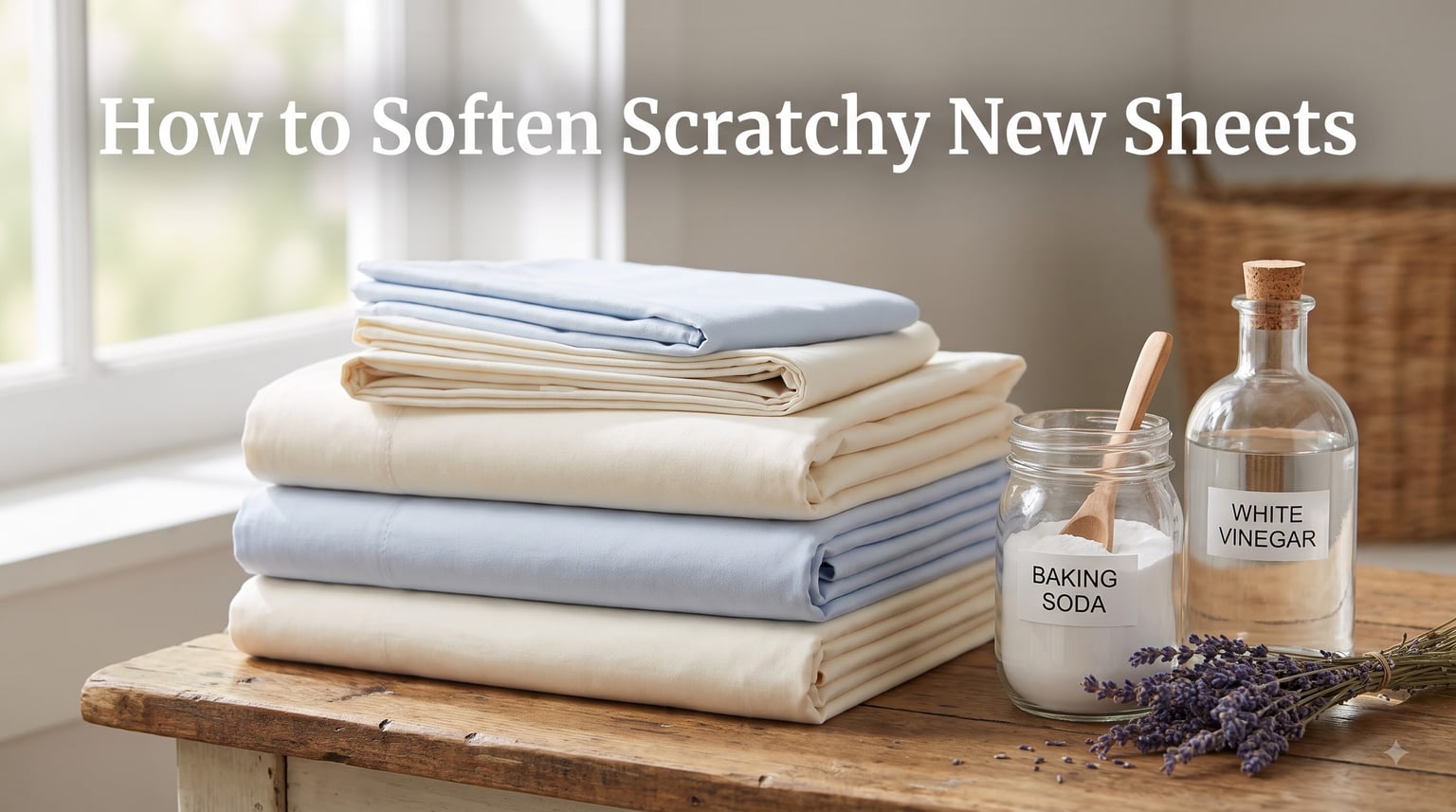
There is nothing quite like the disappointment of buying fresh sheets, making the bed with high expectations, and lying down on what feels like a sheet of sandpaper. I have been there more times than I care to admit. The good news is that learning how to soften scratchy new sheets is straightforward once you understand what is making them stiff in the first place.
Most new sheets feel rough because of chemical residues from the manufacturing process and the natural state of the cotton or bamboo fibers themselves. These are not permanent problems. With the right washing techniques and a little patience, even the stiffest new sheets can transform into something you actually want to sleep on.
In this guide, I will walk you through the exact methods I have used to soften dozens of sheet sets, from the baking soda and vinegar trick to natural alternatives and drying strategies that make a real difference. I will also share realistic timelines so you know what to expect along the way.
Table of Contents
Why New Sheets Feel Scratchy in the First Place
New sheets feel scratchy for a combination of reasons, and understanding them helps you choose the right fix. The main culprits are manufacturing residues, the natural stiffness of cellulose fibers, and the specific weave or fiber quality of your sheets.
During manufacturing, sheets are treated with a chemical mixture called “sizing” that keeps them looking crisp and pressed on the store shelf. This sizing agent coats the fibers, making them feel stiff and rough. It is the same reason new jeans feel cardboard-like until you wash them a few times. Manufacturers also use dyes, formaldehyde-based wrinkle treatments, and other finishes that leave residue behind.
Beneath those chemical coatings, the cotton or bamboo fibers themselves start out stiff. Cellulose fibers, which make up cotton, linen, and bamboo sheets, have naturally rigid cell walls. These fibers only become flexible and soft after repeated washing, agitation, and moisture exposure gradually break down the fiber structure.
The weave of your sheets matters too. Percale weave uses a simple one-over-one pattern that creates a crisp, matte feel. Many people love percale for its durability and breathability, but it starts out noticeably stiffer than sateen. Sateen weave uses a three-over-one pattern that creates a silky surface, so it feels softer right out of the package.
Fiber quality plays a role as well. Short-staple cotton fibers, which are common in budget sheets, have more exposed fiber ends that poke against your skin. Long-staple cotton, like Egyptian or Pima cotton, has fewer ends and feels smoother naturally. If your sheets are made from short-staple cotton with a tight percale weave and a heavy chemical finish, they will feel especially scratchy at first.
How to Soften Scratchy New Sheets: The Baking Soda and Vinegar Method
This is the method I recommend first, and it is the one that consistently shows up in forum discussions and expert guides. Baking soda lifts chemical residues and mineral buildup while vinegar dissolves detergent residue and acts as a natural fabric softener. Together, they strip away everything that is making your sheets feel rough.
Here is the step-by-step process I have refined over years of testing:
Step 1: Load your new sheets into the washing machine by themselves. Do not add other clothing or laundry items. Sheets need plenty of room to agitate freely so the cleaning agents can reach every fiber.
Step 2: Add 1 cup of baking soda directly into the drum with the sheets. If you have a front-load washer, place the baking soda in the main detergent compartment instead. Use warm water on the hottest setting your sheets can handle, which for most cotton sheets is around 104 to 140 degrees Fahrenheit.
Step 3: Run the full wash cycle without adding any detergent. The baking soda is doing the cleaning work here. Adding detergent would create competing chemical reactions and reduce effectiveness.
Step 4: After the first wash cycle completes, run a second rinse cycle. This time, add 1/2 cup of white vinegar to the fabric softener dispenser or directly into the drum during the rinse portion. The vinegar will dissolve any remaining residue and soften the fibers naturally.
Step 5: After the vinegar rinse, run one more plain water rinse to flush out any remaining vinegar smell and loosened residue. At this point your sheets should already feel noticeably softer.
Step 6: Dry the sheets immediately using the method I describe later in this guide. Do not let damp sheets sit in the washer, as that can create new odors and stiffness.
I recommend doing this treatment before you ever sleep on your new sheets. The first wash sets the foundation for how soft your sheets will become over time. If your sheets are extremely stiff, you can repeat this baking soda and vinegar process a second time after your first few nights of use.
One important note: never mix baking soda and vinegar in the same wash cycle. They will neutralize each other and become essentially useless. Baking soda goes in the wash cycle, and vinegar goes in the rinse cycle. This separation is what makes the method work.
If you have a front-load washer, the process is the same but pay extra attention to where you add each ingredient. Front-load machines use less water, so you may want to reduce the baking soda to 3/4 cup and the vinegar to 1/3 cup to prevent oversudsing or clogging the dispenser.
Natural Softening Alternatives That Actually Work
While the baking soda and vinegar method is my go-to, several other natural approaches work well, especially if your sheets need a different treatment or if you want to avoid buying extra ingredients.
Epsom Salt Soak Method
Epsom salts work differently than baking soda. The magnesium in Epsom salts helps relax fiber bonds, which creates a softer hand feel. Dissolve 1 cup of Epsom salts in a bathtub of warm water and soak your sheets for 1 to 2 hours. Then wring them out and run them through a regular wash cycle with mild detergent.
This method takes more time and effort, but many people on Reddit and bedding forums swear by it for particularly stubborn sheets. The soak allows the magnesium to penetrate deeply into the fibers, which a quick machine wash may not achieve.
Washing Soda for Tougher Cases
Several forum users I came across recommend washing soda (sodium carbonate) over baking soda (sodium bicarbonate) for serious softening. Washing soda is more alkaline and cuts through chemical residues more aggressively. Use it the same way you would use baking soda: 1 cup in the wash cycle followed by a vinegar rinse.
Washing soda is available in the laundry aisle of most grocery stores. Just be aware that it is stronger than baking soda, so it may not be ideal for delicate fabrics like silk or very thin bamboo sheets. Stick with regular baking soda for those materials.
Enzyme-Based Washing Powder
Enzyme detergents break down proteins, starches, and other organic compounds. Since many manufacturing finishes are starch-based, enzyme detergents can dissolve them more effectively than regular detergent. Look for detergents labeled as enzyme-based or bio-based and run your sheets through a warm wash cycle.
This approach is gentler than the baking soda method and works well for maintenance washes after you have done the initial softening treatment. I use enzyme detergent for my regular sheet washing now, and it helps maintain softness over time.
The Multiple Wash Approach
Sometimes simplicity wins. Running your new sheets through 3 to 5 regular wash cycles with mild detergent and warm water will naturally break down chemical residues and soften fibers through mechanical agitation alone. This is the most time-intensive method, but it requires no special ingredients.
I suggest combining this approach with the baking soda and vinegar method for the fastest results. Do the chemical treatment first, then continue with regular washes over the following weeks. Each wash will incrementally improve softness.
Fabric Softener: When to Use It and When to Skip It
Fabric softener is the first thing many people reach for when sheets feel rough. It does work in the short term by coating fibers with a thin layer of softening agents. But I want to be honest about the trade-offs because fabric softener causes more problems than it solves for most sheet materials.
The main downside is residue buildup. Fabric softener coats fibers in a waxy film that accumulates with each use. Over time, this buildup makes sheets feel gummy rather than soft, reduces breathability, and can even trap odors. It also reduces the absorbency of towels and moisture-wicking sheets, which defeats the purpose of buying performance bedding.
If you have microfiber or synthetic blend sheets, a small amount of fabric softener occasionally will not cause major problems. These materials handle the coating better than natural fibers. But for cotton, linen, and bamboo sheets, I recommend skipping fabric softener entirely and using white vinegar in the rinse dispenser instead. Vinegar provides similar softening benefits without the waxy buildup.
Dryer sheets have the same issues as liquid fabric softener. They leave a residue that builds up over time. If you want the scent benefit, try wool dryer balls with a few drops of essential oil instead. You get the fragrance without the coating.
The bottom line: fabric softener is a quick fix that creates long-term problems. Natural methods like baking soda and vinegar deliver better results without the hidden costs.
How to Dry Sheets for Maximum Softness
How you dry your sheets matters almost as much as how you wash them. The wrong drying method can undo all the softening work you just did.
Tumble dry on low heat for the best results. High heat damages cotton fibers and can cause them to become brittle and rough. Set your dryer to a low or medium setting and remove the sheets while they are still slightly damp. Over-drying is one of the most common reasons sheets feel scratchy even after proper washing.
Wool dryer balls are my favorite drying accessory. They bounce around in the dryer, separating the sheets and improving air circulation. This reduces drying time and helps fluff the fibers naturally. Three or four wool dryer balls per load makes a noticeable difference in softness. As a bonus, they last for hundreds of loads and are completely chemical-free.
If you prefer line drying, know that it will create a crisper feel rather than a soft one. Some people actually prefer this, especially for percale sheets. The stiffness from line drying comes from fibers settling in a rigid position as they dry without agitation. If you line dry and want to soften the result, try a 10-minute tumble in the dryer on low heat afterward to fluff the fibers back up.
Avoid dryer sheets as I mentioned earlier. If you want static reduction, the wool dryer balls handle that too. And never leave sheets sitting in the dryer after the cycle ends. The heat and lack of movement will press wrinkles into the fabric, creating a stiff, creased texture.
Hard Water Problems: Why Your Sheets Stay Scratchy
If you have tried every softening method and your sheets still feel rough, hard water might be the hidden culprit. Hard water contains high levels of calcium and magnesium minerals that bond with detergent and deposit on fabric fibers. This creates a mineral coating that makes sheets feel stiff and scratchy no matter how many times you wash them.
You can test for hard water with an inexpensive kit from any hardware store. If your water hardness is above 7 grains per gallon, you likely have a mineral buildup problem. Other signs include white spots on glassware, soap that does not lather well, and clothes that feel stiff after washing.
The vinegar rinse I described earlier helps with mild hard water issues. The acetic acid in vinegar dissolves mineral deposits on fibers. For harder water, increase the vinegar to 1 cup per rinse cycle. You can also add 1/2 cup of borax to the wash cycle alongside your baking soda for extra mineral-fighting power.
For severe hard water, a whole-house water softener is the most effective long-term solution. It is a significant investment, but it will transform not just your sheets but all your laundry, your skin, and your plumbing. At the very least, consider a showerhead filter if a full system is not feasible.
I have seen cases where people blamed the sheets when the real problem was their water. If multiple sets of sheets from different brands all feel rough, hard water is almost certainly the issue.
How Long Until New Sheets Feel Soft: A Realistic Timeline
One of the most common questions I see in forums is how many washes it takes for new sheets to soften. The answer depends on the material, weave, and whether you are using active softening methods.
With the baking soda and vinegar treatment, most cotton sheets show dramatic improvement after just one or two applications. You should notice a clear difference after the first treatment. If you are only doing regular washes without any special treatment, expect 5 to 8 wash cycles before sheets reach their comfortable baseline.
Percale sheets take longer to soften than sateen. Percale is designed to have a crisp feel, and it gradually softens over the first 3 to 6 months of regular use. Many percale fans actually prefer this break-in period because the final result is a unique crisp-but-soft texture that lasts for years.
Linen sheets have the longest break-in period. New linen can feel stiff and almost papery. With regular washing and use, linen softens beautifully over 6 to 12 months. The reward for your patience is some of the most comfortable and breathable bedding available.
Bamboo and microfiber sheets tend to feel soft right away or after just one or two washes. If your bamboo sheets feel scratchy, it is almost always a chemical residue problem that the baking soda method will solve quickly.
If you have washed your sheets 10 or more times, tried the baking soda and vinegar method at least twice, and they still feel rough, you may have a low-quality sheet set that will never soften properly. At that point, replacement is more practical than continued effort.
Prevention: How to Buy Sheets That Won’t Need Breaking In
The easiest way to deal with scratchy sheets is to avoid buying them in the first place. After years of testing different sheet materials, I have learned what to look for to get soft sheets straight from the package.
Choose long-staple cotton whenever possible. Egyptian cotton and Pima cotton (also called Supima) are made from long-staple fibers that have fewer rough fiber ends. These sheets feel smoother from day one and soften faster than short-staple alternatives. The label should specifically say “long-staple” or name the cotton variety.
Do not get fooled by thread count alone. Thread count above 400 is often achieved by twisting multiple thin threads together rather than using better quality fibers. A 300-thread-count sheet made from long-staple cotton will feel softer and last longer than a 600-thread-count sheet made from short-staple cotton. Anything in the 200 to 400 range with good quality cotton is ideal.
Consider the weave based on your texture preference. Sateen feels silky and soft right away. Percale feels crisp and cool, and it softens gradually over months. Both are excellent choices, but if you want immediate softness, go with sateen.
Look for OEKO-TEX certification on the packaging. This certification means the sheets have been tested for harmful chemicals and substances. Sheets with this certification tend to have fewer manufacturing residues to wash out, which means they start softer and require less breaking in.
Bamboo viscose and lyocell sheets offer a different path to softness. These materials feel exceptionally smooth against the skin and rarely need aggressive softening treatments. The trade-off is that they are less durable than cotton and may pill over time. For the softest possible first-night experience, bamboo and lyocell are hard to beat.
FAQs
Why do my new sheets feel scratchy?
New sheets feel scratchy because of chemical residues left from the manufacturing process, including sizing agents, dyes, and wrinkle treatments. The natural stiffness of cellulose fibers in cotton and bamboo also contributes to that rough feel. These factors fade with proper washing.
Why do my new sheets feel like sandpaper?
Sheets feel like sandpaper when short-staple cotton fibers have many exposed ends that poke against your skin. This is common in budget sheets with a tight percale weave and heavy chemical finishes. The baking soda and vinegar washing method removes the residue and softens the fibers.
Do new sheets soften over time?
Yes, new sheets soften over time with regular washing and use. Most cotton sheets reach comfortable softness after 5 to 8 regular washes, or 1 to 2 cycles with the baking soda and vinegar method. Percale takes 3 to 6 months, and linen can take 6 to 12 months to fully soften.
Does vinegar really soften cotton sheets?
Yes, vinegar softens cotton sheets by dissolving detergent residue and mineral buildup that coats fibers. Use 1/2 cup of white vinegar in the rinse cycle. The vinegar smell dissipates completely during drying, and the result is noticeably softer sheets without chemical coatings.
How many washes does it take to soften new sheets?
With the baking soda and vinegar method, most sheets soften after 1 to 2 treatments. Without special treatment, expect 5 to 8 regular wash cycles. Sateen sheets soften faster than percale, and bamboo or microfiber sheets typically feel soft after just 1 to 2 washes.
Is baking soda safe for all sheet materials?
Baking soda is safe for cotton, linen, and most bamboo sheets. For delicate materials like silk or very thin bamboo lyocell, use a smaller amount (1/2 cup instead of 1 cup) or skip it and use a gentler enzyme detergent instead. Always check the care label on your sheets first.
The Bottom Line on Softening Scratchy Sheets
Knowing how to soften scratchy new sheets comes down to understanding that roughness is temporary and treatable. The baking soda and vinegar method is your best first step, and it works for the vast majority of cotton, bamboo, and linen sheets. Pair it with low-heat drying and wool dryer balls, and you will be sleeping on soft, comfortable bedding within days instead of months.
Remember to skip fabric softener, check for hard water issues if sheets stay rough, and look for long-staple cotton or OEKO-TEX certification next time you shop. Your future self will thank you when the new sheets feel wonderful from night one.