
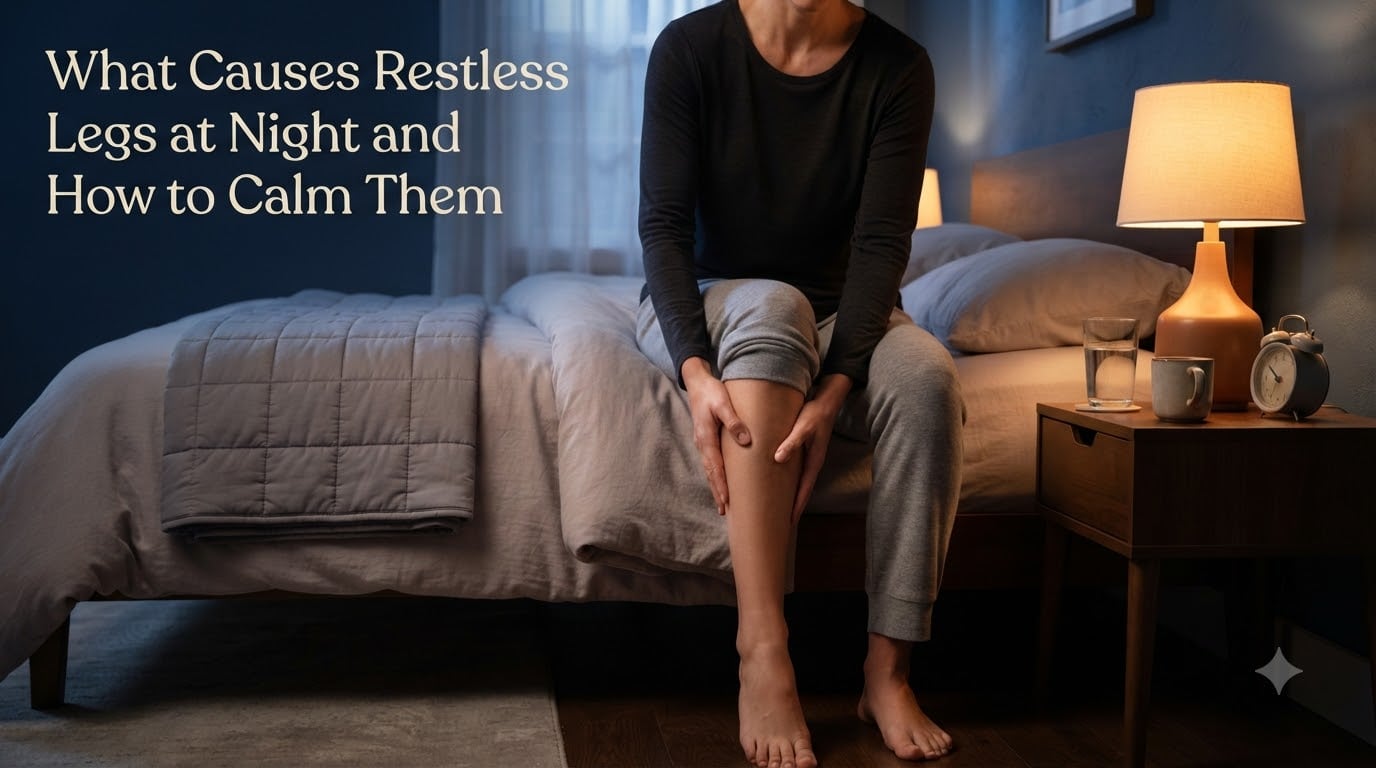
If you have ever lain in bed at midnight with legs that simply will not settle, you already know how exhausting restless legs at night can be. That creeping, tugging, “got to move” feeling steals hours of sleep, week after week, and it can quietly drain your energy, mood, and focus during the day.
I have spent years digging into the science behind this condition, and I have also collected real experiences from thousands of people who live with it. In this guide, I will walk you through what actually causes restless legs at night, why symptoms flare up after dark, and exactly how to calm them, both tonight and over the long term.
You will learn about the dopamine and iron connection doctors look for, the seven quickest relief techniques I recommend trying tonight, and the lifestyle changes that stop restless legs at night from coming back. I will also tell you when it is time to book a doctor’s appointment instead of fighting it alone.
Table of Contents
What Is Restless Legs Syndrome and Why It Happens at Night
Restless legs syndrome (RLS), also called Willis-Ekbom disease, is a neurological sleep-related movement disorder that creates an uncontrollable urge to move your legs, usually because of uncomfortable sensations deep inside them. The Cleveland Clinic classifies it as a sleep disorder because the symptoms overwhelmingly strike when you are at rest, especially in the evening and at night.
RLS is surprisingly common. Research suggests it affects roughly 7 to 10 percent of adults in the United States, and women experience it about twice as often as men. Many people go undiagnosed for years because they assume the sensations are just stress, growing pains, or “bad circulation.”
One reason restless legs at night feel so relentless is that they follow your body’s internal clock. The condition is closely tied to the circadian dip in dopamine, a neurotransmitter that helps your muscles relax and your brain settle into sleep. As evening arrives, dopamine levels naturally fall, and in people with RLS, that drop is sharp enough to trigger the uncomfortable sensations and the urge to move.
A simple way to recognize it: the sensations appear when you sit or lie still, intensify the longer you stay still, and feel better the moment you move. If that pattern rings true for you, it is almost certainly RLS.
Common Symptoms and Sensations People Describe
The most honest description I can offer is that restless legs at night feel like nothing you would wish on your worst enemy. People describe a mix of crawling, throbbing, itching, tingling, pulling, aching, and an electric “fizzing” deep in the calves or thighs.
Doctors diagnose RLS using four criteria often called the URGE model. You likely have RLS if your symptoms match this pattern:
- U – an Urge to move the legs, usually with uncomfortable sensations
- R – Rest worsens the symptoms
- G – Getting up and moving provides relief
- E – Evening and nighttime make the sensations worse
On forums like r/RestlessLegs, I have seen people describe the sensation as “sparkling water running through my veins,” “bugs crawling under the skin,” and “an itch you can never scratch deep enough.” One reader wrote to me: “It is not pain, exactly, it is worse. It is the inability to leave my legs alone.”
Symptoms can also spread beyond the legs. In moderate to severe cases, people report sensations in the arms, hips, or even torso. Periodic limb movements of sleep (PLMS), which are involuntary leg twitches every 20 to 40 seconds, often tag along and further fragment sleep.
Pay attention to how often symptoms hit. Doctors consider RLS “significant” if it occurs two or more times a week, causes distress, or interrupts your sleep. Anything less than that is still worth tracking because RLS tends to progress over time without action.
What Causes Restless Legs at Night: Dopamine, Iron, and Triggers
Researchers have not pinned restless legs on a single cause, but two biological drivers keep showing up: dopamine pathway dysfunction and low brain iron levels. Understanding these will help you see why certain remedies actually work.
The Dopamine Connection
Dopamine is the chemical messenger your brain uses to control smooth, deliberate muscle movement. In RLS, the dopamine system in a region called the basal ganglia does not work as it should, especially at night when dopamine naturally dips. The result is that your muscles never get the “off” signal they need to settle.
That is also why dopamine-targeting drugs such as pramipexole and ropinirole are often prescribed. They can be very effective at first, but over time the brain can develop a tolerance and symptoms actually worsen. Doctors call this augmentation, and it is one of the biggest challenges in long-term RLS care.
The Iron Connection
Your brain needs iron to produce dopamine. When brain iron is low, even a normal dopamine system can sputter. Studies show that many people with restless legs at night have ferritin levels (a marker of stored iron) below 75 ng/mL, even when their standard blood counts look “normal.”
This is why a ferritin test is one of the first things a knowledgeable doctor will order. Iron deficiency is also the most common reversible cause of RLS.
Secondary Causes and Common Triggers
Sometimes restless legs at night are caused by another condition. The most common culprits include:
- Pregnancy, especially in the third trimester (affects up to 1 in 5 expectant mothers)
- Iron deficiency anemia and low ferritin without anemia
- End-stage kidney disease and dialysis
- Peripheral neuropathy, often tied to diabetes
- Multiple sclerosis and other neurological conditions
Common everyday triggers that make symptoms flare include:
- Caffeine, especially after noon
- Alcohol in the evening
- Nicotine
- Sedating antihistamines like diphenhydramine (Benadryl)
- Antidepressants such as SSRIs, mirtazapine, and tricyclics
- Antipsychotics and certain anti-nausea drugs
- Dehydration and intense late-night exercise
If you have been chasing restless legs at night for months, scan your medicine cabinet before anything else. One reader on our site removed a daily Benadryl and reported a 70 percent drop in nightly symptoms within two weeks.
Primary vs Secondary RLS
Primary (idiopathic) RLS has no clear underlying disease and often runs in families. Secondary RLS is driven by another condition such as iron deficiency, pregnancy, or kidney disease. Treating the underlying cause is what brings relief in secondary RLS, which is why getting a proper workup matters.
Quick Relief Techniques You Can Try Tonight
If you need to calm restless legs at night right now, start with these seven techniques. They are not cures, but I have seen them work for enough people, including myself, to recommend them confidently.
- Walk it off. Stand up and walk around the room for 5 to 10 minutes. Movement signals your brain to release dopamine, which interrupts the cycle almost immediately.
- Stretch your calves and hamstrings. Slow wall stretches for 30 seconds each help reset muscle tension. The “runner’s lunge” stretch is especially popular in RLS communities.
- Take a warm bath or shower. Heat relaxes muscles and can temporarily improve circulation. Aim for 10 to 15 minutes about an hour before bed.
- Massage your legs. Use a foam roller, massage gun, or your own hands to apply firm pressure from ankle to thigh. Some readers swear by pressing the area behind the knee.
- Apply a heating pad or cold pack. Try one for 15 minutes. Some people respond better to heat, others to cold. Alternate to find your match.
- Use compression. Compression socks, leggings, or even a tightly wrapped blanket can calm the “fizzing” feeling. Many forum users describe the relief as instant.
- Distract your brain. Get out of bed and do something mildly engaging, like a quiet puzzle, gentle tidying, or reading a printed book. Returning to bed when the urge fades can break the cycle.
One quick warning: avoid sitting still in bed scrolling your phone. The mental frustration plus the immobility almost always makes restless legs at night worse.
Lifestyle Changes and Natural Remedies for Long-Term Relief
The real win with restless legs at night is preventing episodes from starting in the first place. These lifestyle shifts take a few weeks to show full effect, but they are the foundation of lasting relief.
Build RLS-Specific Sleep Hygiene
General sleep advice applies, but RLS has its own quirks. I recommend these habits to anyone whose restless legs at night regularly interrupt sleep:
- Go to bed and wake up at the same time every day, even on weekends.
- Reserve the bed for sleep and intimacy only. Do not work, scroll, or eat in bed.
- Sleep in a cool room, around 65 degrees Fahrenheit (18 degrees Celsius).
- Try sleeping on your stomach with a pillow under your hips, which some readers find reduces leg twitching.
- A heavy blanket or weighted blanket can provide calming pressure. Aim for about 10 percent of your body weight.
Move Your Body During the Day
Moderate, regular exercise is one of the few interventions that consistently helps restless legs at night. A 30-minute walk, swim, or yoga session earlier in the day tends to reduce symptom severity.
Avoid intense exercise within two to three hours of bedtime. Pushing too hard late in the day can backfire and make symptoms flare.
Eat for Iron, Magnesium, and Folate
Because low brain iron is such a common driver, prioritize iron-rich foods daily:
- Red meat, liver, and poultry
- Shellfish, especially clams and oysters
- Lentils, beans, and tofu
- Spinach, Swiss chard, and pumpkin seeds
- Fortified cereals paired with vitamin C to boost absorption
Magnesium-rich foods such as dark chocolate, almonds, avocados, and bananas also help some people relax before bed. Folate from leafy greens, asparagus, and legumes supports healthy nerve function.
Cut the Worst Triggers
If you are serious about calming restless legs at night, treat these like the offenders they are:
- No caffeine after 12 pm, including coffee, black tea, energy drinks, and chocolate.
- Limit alcohol, especially within 3 hours of bed. It fragments sleep even when it makes you drowsy.
- Stop nicotine. Smokers report more severe RLS symptoms, on average.
- Stay hydrated during the day, but taper fluids in the two hours before bed so bathroom trips do not add to the chaos.
Consider Natural Supplements
The evidence is mixed but worth mentioning because many readers ask about it. Magnesium glycinate (200 to 400 mg before bed), vitamin D if your levels are low, and B-complex vitamins have all helped some people.
For iron, never supplement on your own if you suspect deficiency. Too much iron can damage organs. Get your ferritin tested first, then work with a clinician on the right dose.
Medical Treatments and When Iron or Medication May Help
If lifestyle changes are not enough to calm your restless legs at night, it is time to involve a doctor. The right treatment depends on what’s driving your RLS and how severe it is.
Iron Supplementation
When ferritin levels are below 75 ng/mL (some specialists say below 100), oral or intravenous iron can dramatically reduce symptoms. IV iron works faster and avoids the constipation that oral iron often causes. Many of my readers describe it as “the closest thing to a cure” they have tried.
Prescription Medications
Doctors use several classes of drugs for moderate to severe RLS. Each has trade-offs:
- Alpha-2-delta ligands such as gabapentin and pregabalin are often first-line because they treat pain and improve sleep.
- Dopamine agonists like pramipexole and ropinirole work well at first but can cause augmentation over time.
- Mild opioids such as low-dose methadone are reserved for severe, refractory cases.
- Benzodiazepines like clonazepam may help sleep but carry dependency risks.
Work with a neurologist or sleep specialist if possible. Family doctors do a great job with general health, but RLS medication management has subtle nuances that benefit from a specialist’s eye.
When to See a Doctor About Restless Legs at Night
You do not need to wait until things get severe. Book an appointment soon if you notice any of these signs:
- Symptoms appear two or more times per week
- Sleep is regularly disrupted, leaving you tired during the day
- You are relying on movement or tricks to fall asleep most nights
- Symptoms began after starting a new medication
- Your partner notices twitching or kicking in your sleep
- You feel depressed, anxious, or unable to focus because of poor sleep
- Symptoms started during pregnancy and have not improved after delivery
Your doctor will likely run blood work (ferritin, iron studies, B12, folate, kidney function, blood sugar), review your medications, and may refer you for a sleep study if periodic limb movements are suspected.
Frequently Asked Questions
How do I stop restless legs immediately so I can sleep?
Get out of bed, walk around for 5 to 10 minutes, stretch your calves, and take a warm shower. Then return to bed with a heating pad or compression socks. Most people feel relief within 15 minutes using this combination.
What flares up restless legs?
Common triggers include caffeine, alcohol, nicotine, dehydration, intense late-night exercise, sedating antihistamines like diphenhydramine, and antidepressants such as SSRIs. Low iron and pregnancy are the most common biological triggers.
What vitamin stops restless leg syndrome?
Iron is the most important nutrient linked to restless legs. Vitamin D, magnesium, folate, and B12 may also help if you are deficient. Get your ferritin level tested before supplementing iron, since excess iron can be harmful.
What is a natural calm for restless leg syndrome?
The most reliable natural remedies are moderate daily exercise, a warm bath before bed, leg massage or foam rolling, magnesium glycinate supplements, compression socks or a weighted blanket, and avoiding caffeine and alcohol in the evening.
Can stress and anxiety cause restless legs at night?
Stress and anxiety do not directly cause RLS, but they strongly worsen symptoms. Cortisol spikes and shallow nighttime breathing can lower dopamine function and increase muscle tension, both of which intensify restless legs.
Is restless legs a sign of something serious?
Most cases of RLS are not dangerous, but it can signal iron deficiency, kidney disease, diabetes, or pregnancy. Severe, untreated RLS raises the risk of daytime fatigue, depression, and cardiovascular problems, so it is worth a proper evaluation.
Final Thoughts
Restless legs at night are real, they are common, and most importantly, they are treatable. The path to calmer legs usually starts with two simple steps: cleaning up your evening routine and asking a doctor to check your ferritin level. From there, you can layer in movement, massage, and the right supplements or medications if needed.
If you remember nothing else from this guide, remember this: restless legs at night are not just stress, not just aging, and not something you have to silently endure. The combination of dopamine dysfunction and low iron is a well-studied pattern, and acting on it can give you back hours of sleep each week.
Tonight, try the quick relief techniques. This week, schedule that blood work. And if your symptoms are frequent or severe, do not wait it out. A few targeted changes can transform your nights, and your days, sooner than you think.