
If you share a bedroom with someone who snores, or if you wake up feeling exhausted despite a full night’s sleep, you already know how frustrating snoring can be. Roughly 37 million Americans snore regularly, and the causes range from harmless to potentially serious. Understanding snoring causes and how to stop it starts with one simple fact: snoring happens when air cannot flow freely through your nose or mouth during sleep, causing throat tissues to vibrate against each other.
The good news is that most people can reduce or eliminate snoring with a combination of lifestyle changes, home remedies, and targeted habits. In this guide, I will break down exactly why snoring happens, who is most at risk, and the most effective strategies to stop it, including quick fixes you can try tonight.
Whether your snoring is a mild annoyance or something that worries your partner, this article covers everything from sleep position tips to oropharyngeal exercises that real people have used successfully. Let’s get into what actually works.
Table of Contents
What Is Snoring, Really?
Snoring is the rumbling, snorting, or harsh rattling sound your body makes when air cannot flow freely through your nose or mouth during sleep. When you fall asleep, the muscles in your throat, tongue, and soft palate relax. As these muscles relax, they partially block your airway and vibrate as air pushes through the narrowed space.
Think of it like a balloon: when you let air out through a wide opening, there is almost no sound. But pinch that opening down to a narrow slit, and the balloon makes a loud, vibrating noise. The same principle applies to your airway during sleep.
Everyone snores occasionally, especially during deep sleep, when fighting a cold, or after having a few drinks. But chronic, loud snoring is different. It can signal that your airway is narrowing more than it should, and in some cases it points to a condition called obstructive sleep apnea.
What Causes Snoring: The Root Factors
Understanding snoring causes and how to stop it requires knowing what is narrowing your airway in the first place. The causes fall into four main categories: muscle relaxation, physical blockages, anatomy, and lifestyle factors.
Muscle Relaxation During Sleep
The most fundamental cause of snoring is that your throat muscles relax too much when you sleep. This is completely normal to a degree, but for some people, the relaxation goes further than it should. The tongue falls backward, the soft palate sags, and the airway narrows significantly.
As air forces its way through this tightened space, the floppy throat tissues flutter and vibrate. The narrower the airway, the louder the snoring. This is why snoring tends to get worse with age, because muscle tone naturally decreases over time.
Nasal and Airway Blockages
If you cannot breathe through your nose, you breathe through your mouth, and mouth breathing dramatically increases the odds of snoring. Common nasal blockages include a deviated septum, chronic sinus infections, seasonal allergies, and nasal polyps.
During allergy season, swollen nasal passages force many people to mouth-breathe at night, triggering snoring even in people who never snore otherwise. A simple saline rinse before bed can sometimes clear things up enough to restore nasal breathing.
Anatomy: Soft Palate, Uvula, Tonsils, and Adenoids
Your physical anatomy plays a major role in whether you snore. A low, thick soft palate or an elongated uvula can narrow the airway and create more tissue to vibrate. Enlarged tonsils and adenoids are a leading cause of snoring in children.
Some people are simply built with a narrower airway or a longer soft palate that makes snoring more likely. Carrying extra weight around the neck also compresses the airway from the outside, which is one of the reasons weight and snoring are so closely linked.
Lifestyle Factors: Alcohol, Smoking, and Sedatives
Alcohol is one of the biggest snoring triggers because it acts as a muscle relaxant. Drinking within three hours of bedtime relaxes your throat muscles even more than normal sleep does, causing the airway to collapse further. This is why people who never snore often snore loudly after a night of drinking.
Sedatives and sleeping pills have a similar effect. They relax the central nervous system, which includes the muscles that keep your airway open. Smoking irritates and inflames the throat and nasal tissues, causing swelling that narrows the airway over time.
Who Snores Most? Common Risk Factors
Not everyone snores equally. Several factors increase your odds of becoming a habitual snorer, and knowing your risk profile helps you target the right solutions.
Men are more likely to snore than women, partly because they tend to carry more fat around the neck. Being overweight is one of the strongest risk factors, because excess tissue around the throat directly compresses the airway. Even a modest weight loss of 10 percent can significantly reduce snoring.
Age matters too. As we get older, muscle tone throughout the body decreases, including in the throat. Snoring tends to peak between ages 40 and 60. Pregnancy also increases snoring risk due to hormonal changes and weight gain. Finally, genetics play a role. If your parents snored heavily, you are more likely to snore as well.
How to Actually Stop Snoring: Lifestyle Changes That Work
Now for the part most people care about. When it comes to snoring causes and how to stop it, lifestyle changes are your first line of defense. These are the strategies that doctors recommend first and that real users have confirmed actually work.
1. Change Your Sleep Position
Sleeping on your back is one of the biggest snoring triggers because gravity pulls your tongue and soft palate backward, narrowing the airway. Switching to side sleeping can reduce or eliminate snoring almost immediately for back-sleepers.
One classic trick from sleep forums is sewing a tennis ball into the back of your pajama top. It makes back-sleeping uncomfortable enough that you naturally roll onto your side. Many people have reported this simple fix solved their snoring within days.
2. Lose Extra Weight
If you are overweight, especially around the neck, losing even a few pounds can open up your airway. Extra fat tissue in the neck is like a weight pressing down on your throat all night. Weight loss is one of the most effective long-term solutions for snoring.
You do not need to reach your ideal weight to see results. Many people notice a significant reduction in snoring after losing just 5 to 10 percent of their body weight.
3. Avoid Alcohol Before Bed
Stop drinking alcohol at least three hours before bedtime. This gives your body time to metabolize it so that your throat muscles are not overly relaxed when you fall asleep. The same rule applies to sedatives and sleeping pills.
4. Try Nasal Strips or Dilators
If your snoring stems from nasal congestion or a narrow nasal passage, external nasal strips can physically widen your nostrils. Internal nasal dilators go a step further by opening the nasal valve from inside. These are inexpensive and many snorers swear by them.
5. Elevate Your Head While Sleeping
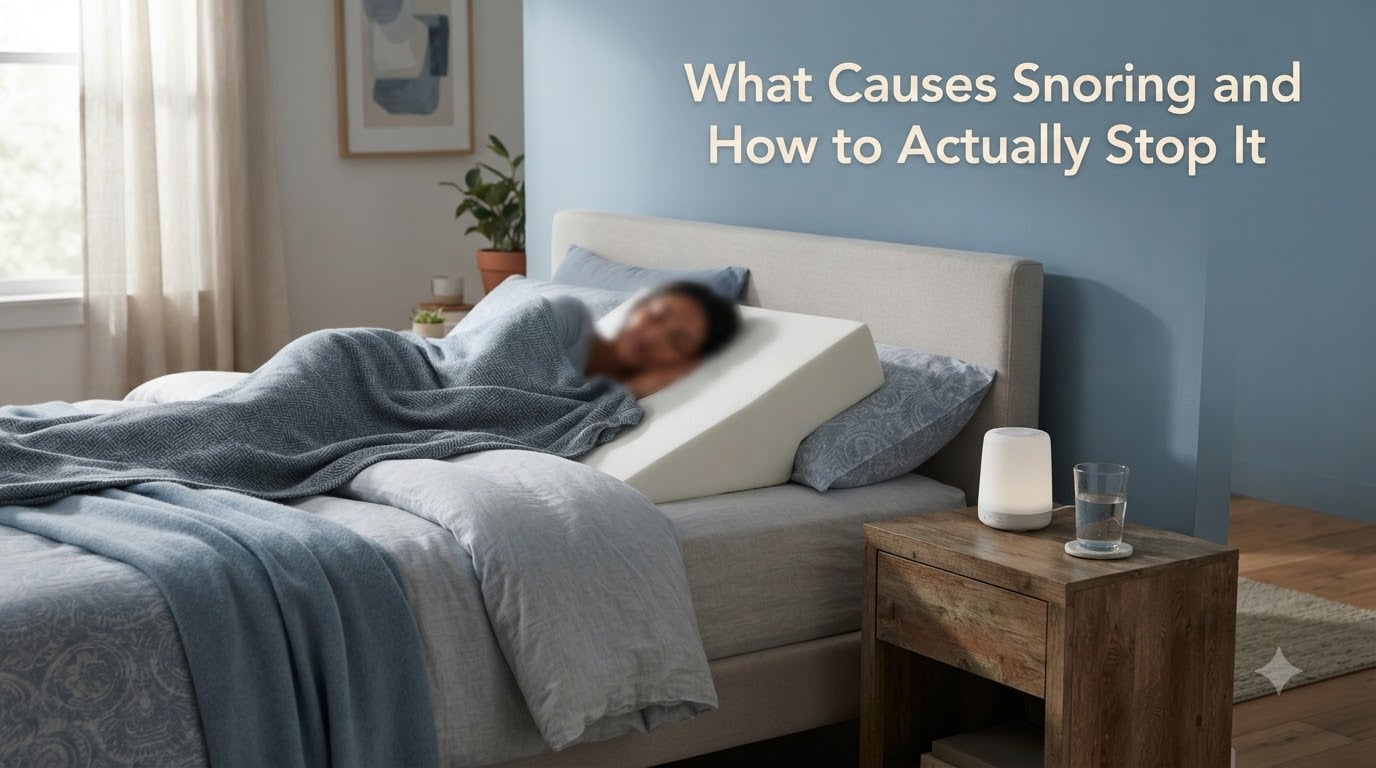
Raising the head of your bed by about four inches can help keep your airway open. A wedge pillow is one of the most popular solutions, with many users on forums reporting it completely eliminated their snoring for around 30 to 40 dollars.
You can also use extra pillows, but a wedge pillow provides a consistent angle that works better for most people. The goal is to lift your entire upper body slightly, not just kink your neck.
6. Quit Smoking
Smoking inflames and irritates the lining of your throat and nasal passages, causing swelling that narrows the airway. Quitting smoking improves snoring over time as the inflammation subsides and your airway heals.
Quick Remedies to Try Tonight
Sometimes you need fast results. If you or your partner want to sleep quietly tonight, here are the quickest snoring fixes you can implement right now.
Take a warm shower before bed to open your nasal passages with steam. Use a saline nasal spray to clear congestion. Sleep on your side using a body pillow for support. Skip the evening drink, and make sure your head is elevated with a wedge pillow or stacked pillows.
Turn on a humidifier in your bedroom. Dry air irritates the throat and nasal membranes, increasing congestion and snoring. Keeping the room at a comfortable humidity level helps your airway stay clear throughout the night.
Finally, stay hydrated. Dehydration makes the mucus in your soft palate stickier, which can increase snoring. Aim for adequate water intake throughout the day, but stop drinking about an hour before bed so you are not waking up to use the bathroom.
Natural Remedies and Oropharyngeal Exercises
One of the most under-discussed solutions for snoring is oropharyngeal exercises, also called mouth and tongue exercises. These strengthen the muscles of your tongue, soft palate, and throat so they do not collapse as much during sleep.
Researchers have found that regular throat exercises can significantly reduce snoring in people with mild to moderate obstructive sleep apnea. Many Reddit users in sleep communities report that just 4 to 5 minutes of these exercises before bed made a noticeable difference within weeks.
Here are four exercises you can start doing tonight. Repeat each one daily for the best results.
Tongue slide: Place the tip of your tongue against the roof of your mouth and slide it backward along the palate. Do this 20 times. This strengthens the tongue muscle and helps keep it from falling backward during sleep.
Palate push: Press your entire tongue flat against the roof of your mouth and hold for 5 seconds. Repeat 10 times. This tones the soft palate and surrounding muscles.
Jaw shift: Move your jaw to the left and hold for 10 seconds, then move it to the right and hold for 10 seconds. Repeat 5 times on each side. This exercises the muscles around your airway.
Say the vowels: Open your mouth wide and clearly pronounce each vowel sound (A, E, I, O, U) 20 times each. This works multiple throat muscles at once and is one of the simplest exercises to remember.
Consistency matters more than intensity. Doing these exercises for about 10 minutes total per day is enough for most people to see improvement within a few weeks.
When Snoring Is Serious: Snoring vs. Sleep Apnea
Occasional light snoring is usually nothing to worry about. But loud, frequent snoring accompanied by other symptoms may indicate obstructive sleep apnea, a condition where breathing repeatedly stops and starts during sleep.
The key difference is that sleep apnea involves actual pauses in breathing. A partner might notice that you stop breathing for a few seconds, then gasp, choke, or snort before resuming. This can happen dozens of times per hour, and it prevents you from getting deep, restorative sleep.
Warning signs that your snoring might be sleep apnea include gasping or choking during sleep, waking up with a dry mouth or sore throat, morning headaches, excessive daytime sleepiness, difficulty concentrating, and mood changes. If you experience any of these, talk to a doctor.
Untreated sleep apnea is linked to serious health problems including high blood pressure, heart disease, stroke, type 2 diabetes, and depression. A sleep study, either in a lab or at home, is the standard way to diagnose it.
The bottom line: if someone has observed you stopping breathing during sleep, or if you feel exhausted despite sleeping 7 to 8 hours, do not ignore it. See a healthcare provider.
Medical Treatments for Persistent Snoring
If lifestyle changes and exercises are not enough, several medical options can help. The right treatment depends on what is causing your snoring and whether sleep apnea is involved.
Oral Appliances
A dentist specializing in sleep medicine can create a custom oral appliance that repositions your jaw or tongue to keep the airway open. These devices, sometimes called mandibular advancement devices, are effective for many people with mild to moderate snoring or sleep apnea. Forum users who tried combining a tongue-restraining device with a nasal dilator reported excellent results.
CPAP Machine
For obstructive sleep apnea, a CPAP (continuous positive airway pressure) machine is the gold standard treatment. It delivers a steady stream of air through a mask to keep your airway open all night. While some people find CPAP masks uncomfortable at first, most adjust within a few weeks. Newer machines are quieter and more comfortable than older models.
Surgery
Surgery is generally a last resort for snoring that has not responded to other treatments. Procedures include uvulopalatopharyngoplasty (UPPP), which removes excess tissue from the soft palate and throat, and maxillomandibular advancement, which repositions the jaw. For some patients, hypoglossal nerve stimulation, a small implant that keeps the airway open, is an option.
Surgery carries risks and does not work for everyone. Most doctors recommend trying lifestyle changes, oral appliances, and CPAP before considering surgical options.
Helping a Partner Who Snores
Snoring does not just affect the person doing it. Partners of chronic snorers lose an average of an hour of sleep per night, and the frustration can strain even strong relationships. If your partner snores, here is how to approach it without conflict.
Frame the conversation around care, not complaint. Express concern about their health, especially if you have noticed pauses in breathing. Offer to help them try solutions together rather than presenting an ultimatum.
While you work on the root cause, consider earplugs or a white noise machine for yourself. Some couples find that sleeping in separate rooms a few nights a week, sometimes called a sleep divorce, actually improves their relationship because both partners wake up rested and less irritable.
FAQs
Is there any way to actually stop snoring?
Yes, most people can reduce or eliminate snoring. The most effective approaches include losing weight, sleeping on your side, avoiding alcohol before bed, using nasal strips or a wedge pillow, and doing throat exercises. If lifestyle changes do not help, oral appliances or a CPAP machine can make a major difference.
How can I stop insanely loud snoring?
Loud snoring often responds to a combination of fixes: switch to side sleeping immediately, avoid all alcohol within 3 hours of bed, elevate your head with a wedge pillow, and use nasal strips. If loud snoring comes with gasping or choking, see a doctor to check for sleep apnea.
How can I cure snoring naturally?
Natural remedies include side sleeping, weight loss, throat and tongue exercises done daily, staying hydrated, using a humidifier, and avoiding alcohol and sedatives before bed. Saline nasal rinses and steam inhalation can also help clear nasal passages that contribute to snoring.
Is it unhealthy to snore a lot?
Frequent loud snoring can be a sign of obstructive sleep apnea, which is linked to high blood pressure, heart disease, stroke, and daytime fatigue. Light occasional snoring is usually harmless, but chronic snoring with gasping, choking, or daytime sleepiness should be evaluated by a doctor.
Is there a way to permanently stop snoring?
There is no single permanent cure for snoring, but long-term solutions exist. Maintaining a healthy weight, treating nasal issues, using an oral appliance, or in some cases surgery can provide lasting relief. For sleep apnea, consistent CPAP use effectively manages snoring long-term.
Does sleeping position really affect snoring?
Yes, sleeping on your back is one of the biggest snoring triggers because gravity pulls your tongue and soft palate backward into the airway. Switching to side sleeping can reduce or stop snoring immediately for many back-sleepers.
Conclusion
Snoring is common, but it is not something you just have to live with. By understanding snoring causes and how to stop it, you can take real steps toward quieter, more restful sleep. Start with the basics: sleep on your side, skip the evening drink, elevate your head, and try throat exercises.
If those changes do not make a difference within a few weeks, or if your partner has noticed pauses in your breathing, talk to a doctor about sleep apnea. The right treatment, whether it is an oral appliance, CPAP, or targeted lifestyle change, can transform your sleep and your health.
Your next step is simple: pick one or two strategies from this guide and try them tonight. Quiet, restorative sleep is within reach for most people, and the sooner you start, the sooner you will notice the difference.