
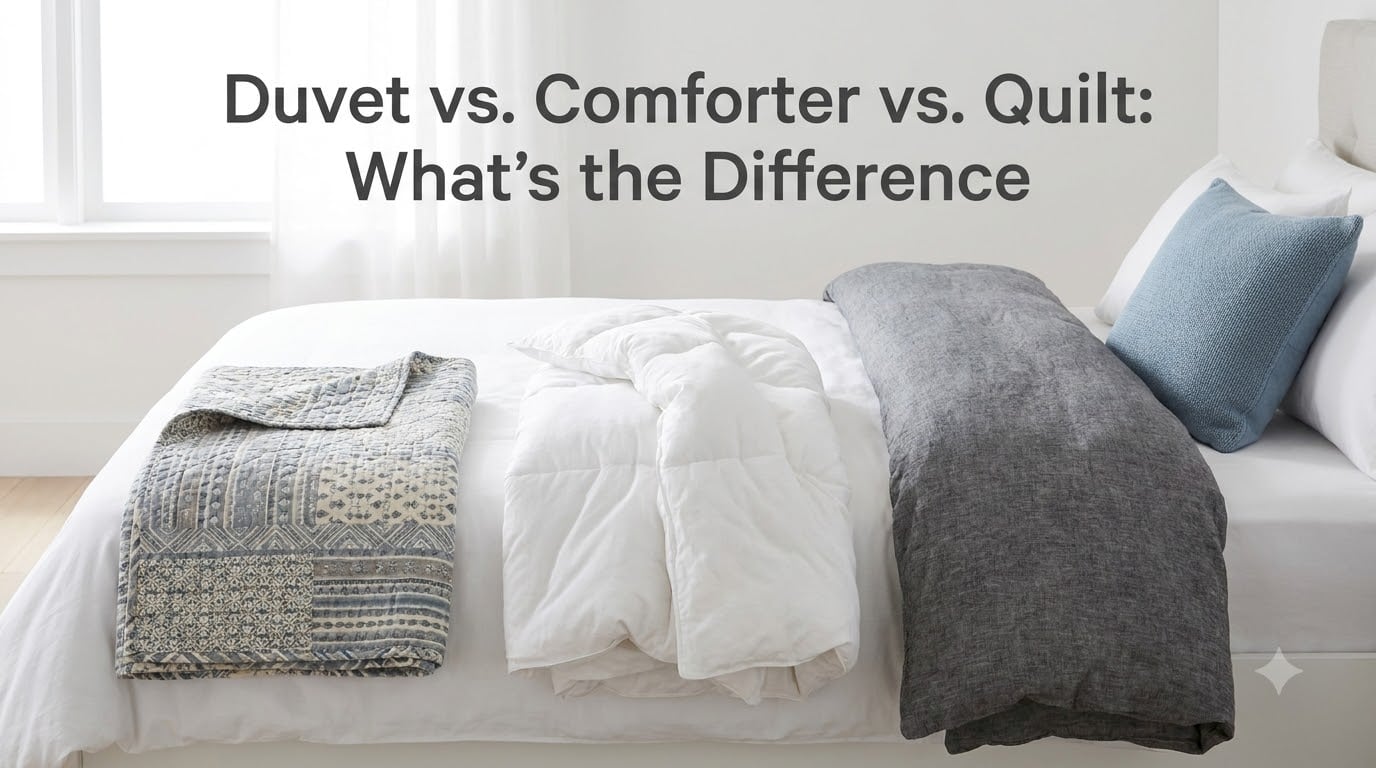
Walk into any bedding store and you will hear three words thrown around like they mean the same thing: duvet, comforter, and quilt. They do not. I spent weeks researching the Duvet vs Comforter vs Quilt difference so you do not have to, and the distinctions come down to construction, warmth, and how much effort you want to put into laundry day.
Each of these three bedding types serves a different sleeper. Hot sleepers, cold bedrooms, kids who spill things, people who want hotel-grade fluff at home — there is a right answer for each scenario. Once you understand how each one is built, the choice becomes obvious.
In this guide, our team breaks down exactly what makes a quilt different from a comforter, what separates a duvet from both, and which option fits your sleep style, climate, and budget. We also clear up the cultural confusion around why Americans say “comforter” while Europeans say “duvet” — a question that comes up constantly on forums.
Table of Contents
What Is a Quilt?
A quilt is a thin, flat bed covering made from three layers stitched together: a decorative top layer, a thin inner layer called batting, and a backing fabric. The stitching — usually in decorative patterns — holds all three layers in place. Quilts offer minimal loft, meaning they sit relatively flat on the bed rather than puffing up.
The batting inside a quilt is what gives it any insulation at all. Cotton batting is the most common and provides light warmth with excellent breathability. Some quilts use wool or polyester batting for slightly more insulation, but even those remain thinner than a comforter or duvet.
Traditional quilts feature patchwork designs sewn from fabric scraps, but modern quilts often use a single piece of fabric on top — called a wholecloth quilt. Either way, the defining feature is that stitched-through construction with minimal fill.
People on forums consistently mention reaching for quilts during summer months. If you sleep hot or live in a warm climate, a quilt gives you a layer of coverage without trapping body heat. Many hot sleepers in forum discussions specifically call out quilts as their go-to for breathable bedding.
What Is a Comforter?
A comforter is a single-piece, thick bed covering filled with down, down alternative, or synthetic fibers and quilted to keep the fill evenly distributed. Unlike a duvet, a comforter does not need a separate cover — the outer shell is part of the product itself.
Comforters have more loft than quilts, meaning they puff up and create that fluffy, cloud-like look you see in hotel rooms and catalog photos. The fill is held in place by stitched patterns or baffling — internal walls that create chambers for the fill to expand into.
Fill density in comforters is often measured in GSM (grams per square meter). Higher GSM means more fill and more warmth. A lightweight summer comforter might sit around 150 GSM, while a winter-weight model can reach 400 GSM or more.
The trade-off with comforters is cleaning. Since the outer shell is permanently attached, you have to wash the entire bulky item. Many comforters require commercial-size washers or professional dry cleaning, which forum users frequently cite as a frustration.
What Is a Duvet?
A duvet is a soft, flat bag filled with down, feathers, or synthetic fibers, designed to be used inside a removable duvet cover. This two-part system is the defining difference between a duvet and a comforter. The insert provides warmth, while the cover provides style and protection.
Think of a duvet insert as the pillow and the cover as the pillowcase. You can swap covers to change your bedroom decor without buying a new insert. When the cover gets dirty, you strip it off and wash it like a regular sheet — no trips to the laundromat for a giant comforter.
Duvet warmth is measured by fill power for down fills. A fill power of 600 is considered good quality, while 800 and above indicates premium insulation that traps more air with less weight. Synthetic duvets use GSM ratings similar to comforters.
This is where the cultural divide kicks in. Most Europeans grow up with the duvet-and-cover system and find comforters unusual. Many Americans, on the other hand, grew up with one-piece comforters and find the two-part duvet setup confusing at first. Forum discussions show this exact divide, with American users asking how the cover even attaches.
Duvet covers typically close with buttons, zippers, or ties at the bottom edge. Some people find putting the insert into the cover annoying, but once it is set up, the convenience of washing just the cover wins most people over.
Duvet vs Comforter vs Quilt: Head-to-Head Comparison
Now that you know what each one is, let us compare them directly across the categories that actually matter when you are standing in a store trying to decide.
Warmth
Duvets win on warmth, especially down-filled models with high fill power. They trap the most air and provide the best insulation for cold sleepers and winter nights. Comforters come in second — they offer solid warmth but generally max out lower than a premium duvet insert.
Quilts are the coolest option by design. Their thin batting and breathable cotton construction make them ideal for summer, warm climates, or layering over a sheet on mild nights. If you sleep hot, this is a feature, not a drawback.
Loft and Thickness
Duvets have the most loft, followed closely by comforters. Both create that plush, inviting look that makes a bed feel luxurious. Quilts sit flat and offer almost no visual volume.
If making your bed look like a magazine photo matters to you, a duvet or comforter is the way to go. Quilts look more casual and tailored — which some people actually prefer.
Ease of Cleaning
Duvets are the easiest to keep clean because you only wash the cover. Strip it off, throw it in your regular washing machine, and you are done. The insert itself only needs washing a few times a year.
Quilts are typically machine-washable at home since they are thin and lightweight. Comforters are the hardest to clean — their bulk means many require commercial machines or professional cleaning.
Durability
Quilts often last the longest because their simple three-layer construction has less to break down. A well-made cotton quilt can serve you for decades. Duvet inserts also last a long time since they stay protected inside a cover most of the time.
Comforters tend to have the shortest lifespan because the fill compresses over time and the entire item gets washed repeatedly, which wears down both the shell and the fill.
Price
Quilts are generally the most affordable option, especially cotton styles. Comforters cover a wide range — budget options are cheap, but premium down comforters can get expensive. Duvets have a higher upfront cost because you buy both the insert and the cover, but replacement covers are inexpensive and let you refresh your look without starting over.
Versatility
Duvets win on versatility. You can change covers for seasons, styles, or moods without buying a new insert. Quilts are versatile for layering — many people use them over a comforter or duvet in winter for extra warmth and texture.
Which Bedding Type Is Best for Hot Sleepers vs Cold Sleepers
Your body temperature at night should drive your bedding choice more than any other factor. Here is how each type stacks up for different sleepers.
For Hot Sleepers
Quilts are the clear winner for hot sleepers. The thin cotton construction and minimal batting allow air to circulate, preventing the heat buildup that causes night sweats. Many forum users who sleep hot specifically recommend quilts for summer use.
A lightweight duvet with a low GSM rating and a breathable cotton cover can also work for warm sleepers. Avoid heavy comforters entirely — their dense fill traps heat.
For Cold Sleepers
Duvets with high fill power are unmatched for cold sleepers. A 700 or 800 fill power down duvet in a winter-weight cover will keep you warm in freezing bedrooms without feeling heavy on your body.
Thick comforters with high GSM ratings are a solid second choice. Quilts alone are not enough for cold sleepers, though they work well as an extra layer on top of a duvet or comforter.
For All-Season Use
A medium-weight duvet with a removable cover is the most flexible all-season option. Use it alone in summer, add a quilt on top in winter, and swap covers to match the season. This layering approach is what many hotels use to accommodate different guests.
Seasonal Bedding Guide: Which to Use When
Most competitors skip seasonal guidance, but it is one of the most practical things you can know about these three bedding types. Here is a month-by-month breakdown.
Spring: A quilt or lightweight comforter hits the sweet spot. Nights are cool but not freezing, and you want something that breathes as temperatures fluctuate. A cotton quilt over a flat sheet works well for most spring conditions.
Summer: Go with a quilt or a very thin, breathable duvet with low fill power. Hot sleepers may even prefer just a sheet, but a quilt gives you coverage without overheating. Forum users in warm climates consistently recommend quilts for summer.
Fall: Transition to a comforter or a medium-weight duvet. As nights get colder, you need more insulation than a quilt provides. A comforter in the 200 to 300 GSM range covers most fall weather.
Winter: A high fill power duvet is your best friend. Pair it with a quilt layered on top for maximum warmth and a cozy, textured look. Cold sleepers in harsh climates should look for fill power ratings of 700 or higher.
How to Choose Between Duvet, Comforter, and Quilt?
Still not sure which one is right for you? Work through these five questions and the answer will become clear.
1. How warm or cool do you sleep?
If you run hot at night, lean toward a quilt. If you run cold, a duvet with high fill power is your best bet. Comforters sit in the middle and work for moderate sleepers who want consistent warmth year-round.
2. How much laundry effort can you handle?
If easy washing matters to you — especially with kids or pets — a duvet with a removable cover is the practical choice. You wash a cover as easily as a bedsheet. Comforters require the most effort to clean.
3. What is your budget?
Quilts are the most affordable entry point. Comforters vary widely in price. Duvets cost more upfront since you buy an insert and a cover separately, but you save money over time by only replacing covers.
4. Do you like switching up your bedroom decor?
If you enjoy changing your bedroom look with the seasons, a duvet system lets you swap covers for a fraction of the cost of buying new bedding. Quilts and comforters commit you to one look unless you buy multiples.
5. Do you prefer a flat or fluffy bed?
If you love that cloud-like, puffy hotel bed look, you want a duvet or comforter. If you prefer a clean, flat, tailored appearance, a quilt delivers exactly that aesthetic.
Care and Cleaning: Which Is Easiest to Maintain
Maintenance is where these three bedding types really separate from each other. Forum users frequently cite cleaning difficulty as a major pain point, so let us break it down honestly.
Quilt Care
Most cotton quilts are machine-washable in a standard home washer. Use cold water on a gentle cycle and tumble dry on low heat or line dry. The thin construction means quilts dry relatively quickly compared to bulkier options.
Avoid high heat, which can shrink cotton fabric and damage batting. With proper care, a quality quilt can last for many years without losing its shape or stitching.
Comforter Care
Comforters are the hardest to clean because of their bulk. Many models do not fit in standard home washers and require trips to a laundromat with commercial-size machines. Some comforters specify dry cleaning only, which adds to the ongoing cost.
Between washes, spot cleaning and airing out your comforter helps extend its freshness. Using a top sheet reduces how often you need to wash the comforter itself.
Duvet Care
Duvets are the easiest to maintain day to day. Wash the cover weekly with your regular laundry — it is no different from washing a bedsheet. The insert only needs washing two to three times per year.
When you do wash the insert, follow the fill-specific instructions. Down inserts need gentle washing and thorough drying with tennis balls to re-fluff. Synthetic inserts are typically more forgiving and can go through a normal wash cycle.
FAQs
Why do people use duvets instead of comforters?
People use duvets because the removable cover makes cleaning far easier than washing a bulky comforter. You can swap covers to change your bedroom style, and the insert stays protected inside the cover, lasting longer than a comforter that gets washed repeatedly.
Why do Americans use comforters instead of duvets?
American bedding tradition favored the one-piece comforter because it is simpler to set up — no stuffing an insert into a cover. European bedding culture developed around the two-piece duvet system, and the preference has stayed cultural rather than practical.
Do hotels use duvet or comforter?
Most hotels use a duvet insert inside a fresh cover for each guest, often layered with a decorative comforter or quilt folded at the foot of the bed. The duvet-and-cover system lets hotels wash just the cover between guests, which is more efficient than laundering a full comforter every time.
Can I put a regular comforter in a duvet?
Yes, you can use a comforter as a duvet insert inside a duvet cover. Many people do this to get the easy-washing benefit of a duvet cover. Just make sure the comforter dimensions match the cover size and use the internal ties to keep it from shifting around.
Which is warmer, a quilt or a comforter?
A comforter is warmer than a quilt. Comforters have significantly more fill and loft, which traps more body heat. Quilts use thin batting and are designed for light coverage, making them better suited for summer or warm climates.
What is the difference between a duvet and a comforter?
A duvet is a two-part system — a fill insert used inside a removable cover. A comforter is a single-piece bed covering with the fill permanently enclosed in its outer shell. Duvets are easier to clean since you wash only the cover, while comforters require washing the entire item.
Conclusion
Understanding the Duvet vs Comforter vs Quilt difference comes down to three things: how each is constructed, how warm it keeps you, and how easy it is to clean. Quilts are thin, breathable, and perfect for hot sleepers and summer. Comforters are a single-piece all-rounder with solid warmth. Duvets offer maximum warmth, easy cleaning, and style flexibility through a removable cover system.
Pick the one that matches your sleep temperature, your laundry patience, and your budget. There is no universally best option — only the best option for how you sleep.