
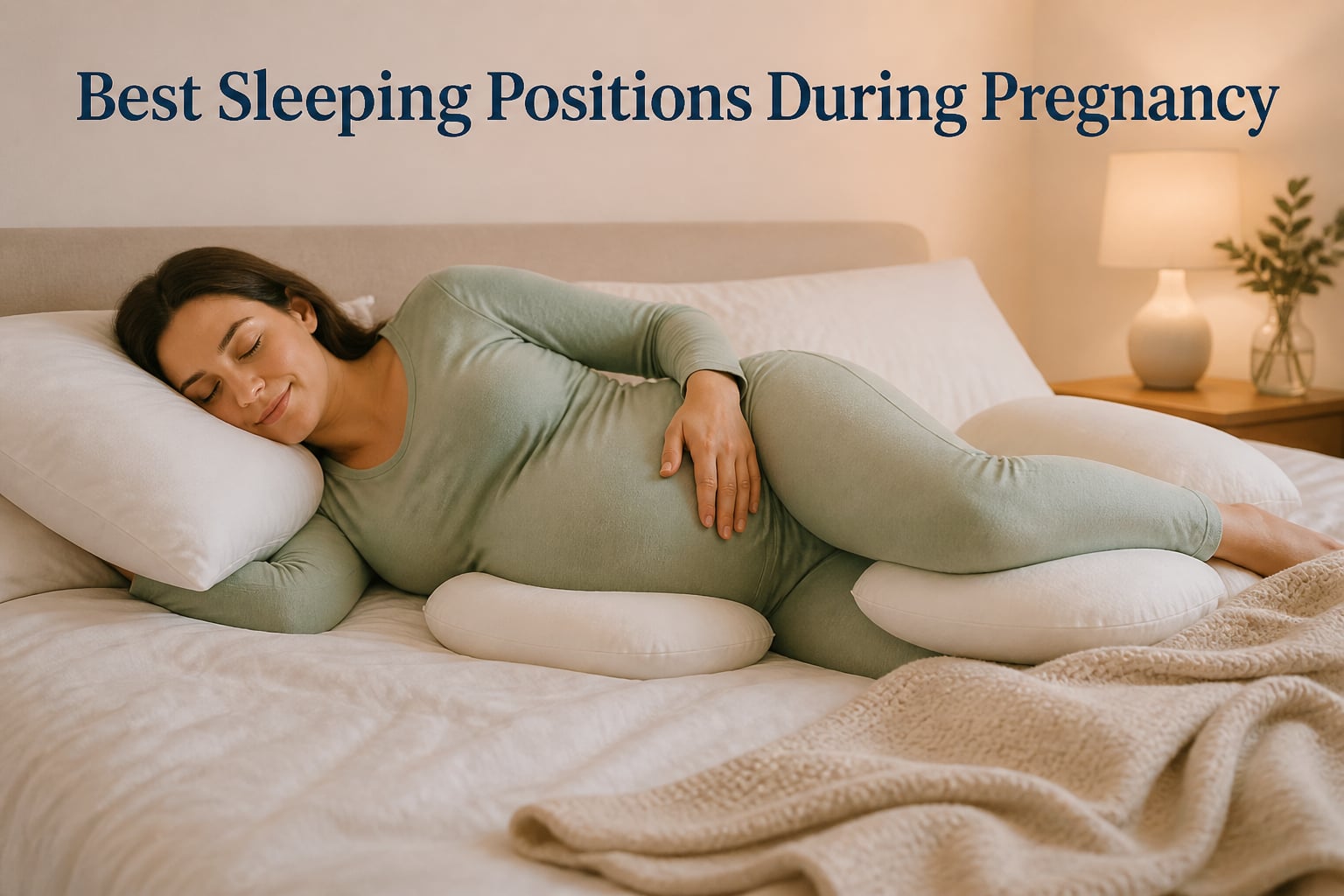
Finding the best sleeping positions during pregnancy can feel like an impossible puzzle. Your body is changing daily, the belly keeps growing, and every position that felt comfortable last month now causes back pain, hip aches, or breathlessness. I have talked with dozens of expecting mothers through pregnancy forums and compiled their real experiences alongside medical guidance to help you sleep better tonight.
Sleep position matters more than most people realize when you are pregnant. Research published by the National Institutes of Health shows that going to sleep on your side after 28 weeks significantly reduces certain risks compared to sleeping flat on your back. The good news is that with the right setup, you can stay comfortable and safe throughout all three trimesters.
In this guide, I will walk you through exactly which positions work best, which ones to avoid, and how to create a pillow setup that actually keeps you comfortable. Whether you are in your first trimester or counting down the final weeks, these practical tips will help you get the rest you need.
Table of Contents
Why Sleep Position Matters During Pregnancy?
Sleep position becomes a health consideration during pregnancy because of how your growing uterus interacts with your circulatory system. As your baby grows, the uterus gets heavier and starts pressing against major blood vessels when you lie in certain positions.
The main concern involves the inferior vena cava, a large vein that carries blood from your lower body back to your heart. When you lie flat on your back, the weight of the uterus can compress this vein. This compression reduces blood flow back to the heart, which means less blood reaches the placenta and your baby.
Reduced blood flow can cause several problems. You might feel dizzy, lightheaded, or nauseous when lying on your back. Some women notice their blood pressure drops or their legs swell more. More importantly, sustained compression can reduce the oxygen and nutrients reaching the placenta.
A landmark study published in the BMJ found that women who went to sleep on their backs after 28 weeks had a higher risk of stillbirth compared to those who slept on their sides. While the overall risk remains low, the research prompted the American Pregnancy Association and other medical organizations to recommend side sleeping as the safest option in the second and third trimesters.
The Best Sleeping Position: Side Sleeping (SOS)
The best sleeping position during pregnancy is called SOS, which stands for Sleep On Side. Medical professionals and the American Pregnancy Association recommend this position because it provides the best circulation for both you and your baby throughout pregnancy.
Here is exactly how to get into the SOS position properly:
Lie on your side with your knees and knees bent slightly
Place a pillow between your knees to keep your hips aligned
Add a small pillow under your belly to support the weight
Use another pillow behind your back to prevent rolling onto your back
Keep your arms relaxed in front of you or hugging a pillow
This position takes pressure off your spine and pelvis while keeping blood vessels free from compression. Many women in pregnancy forums report that once they build this pillow fortress, they sleep better than they have in weeks.
If you start on your left side and get uncomfortable, switching to your right side is perfectly fine. The goal is simply to stay on one side or the other rather than flat on your back. Do not stress about maintaining one specific side all night.
Why Left Side Is Preferred Over Right Side
Doctors typically recommend the left side as the ideal sleeping position during pregnancy. The reason comes down to anatomy. Your inferior vena cava runs slightly to the right side of your spine, so sleeping on your left side keeps the uterus from pressing against it.
Left side sleeping offers several specific benefits:
Maximizes blood flow to the placenta and your baby
Improves kidney function, which helps reduce swelling in your hands, feet, and ankles
Decreases pressure on the aorta, the main artery carrying blood from your heart
May help reduce swelling and varicose veins
Supports better digestion and may reduce heartburn symptoms
That said, sleeping exclusively on your left side all night is not mandatory. Many healthcare providers and midwives actively reassure patients that switching between left and right side is completely safe. I have seen this concern come up repeatedly in pregnancy forums, and the consensus from medical professionals is clear: any side sleeping is good, and right side sleeping will not harm your baby.
If you wake up on your right side, do not panic. Just roll back to your left side and settle in again. Stressing about your sleep position can cause more harm than the position itself.
Sleeping Positions to Avoid During Pregnancy
Two positions become problematic as pregnancy progresses. Understanding why helps you make better choices for your comfort and your baby’s health.
Sleeping on Your Back
Back sleeping, also called the supine position, is the main position to avoid after the first trimester. As your uterus grows heavier, lying flat on your back allows it to press directly on the inferior vena cava and the aorta.
This compression can lead to several uncomfortable symptoms:
Dizziness, lightheadedness, or feeling faint
Nausea, especially when you try to get up
Shortness of breath or difficulty breathing
Numbness or tingling in your legs
Increased swelling in your feet and ankles
Lower back pain from the pressure
Some women develop a condition called supine hypotensive syndrome, where back sleeping causes a significant drop in blood pressure. This can make you feel extremely unwell and reduces blood flow to the placenta.
The NHS and medical guidelines recommend avoiding back sleeping starting around 28 weeks. If you naturally wake up on your back, simply roll onto your side. One accidental night of back sleeping is not a cause for alarm.
Sleeping on Your Stomach
Stomach sleeping becomes increasingly difficult and eventually impossible as your belly grows. During the first trimester, it is generally safe since the uterus is still protected within the pelvis.
By the second trimester, stomach sleeping becomes uncomfortable for most women. The pressure on your growing abdomen can cause pain and disrupt sleep. It will not harm your baby since the amniotic fluid provides cushioning, but you will likely find it too uncomfortable to maintain.
Most women naturally stop stomach sleeping as their pregnancy progresses. If you are a habitual stomach sleeper, transitioning to side sleeping early in pregnancy can make the adjustment easier.
Best Sleeping Positions During Pregnancy by Trimester
Your sleep needs and challenges change throughout pregnancy. Here is what to expect during each trimester and how to adapt your sleep position accordingly.
First Trimester (Weeks 1 to 12)
In the first trimester, you can generally sleep in any position that feels comfortable. Your uterus is still small and sits within your pelvis, so it does not compress blood vessels regardless of how you lie.
This is the ideal time to start training yourself to sleep on your side. If you are a back or stomach sleeper, beginning the transition now makes the later months much easier. Start introducing a pillow between your knees and practice falling asleep on your side.
First trimester challenges usually involve fatigue and morning sickness rather than position discomfort. Sleep whenever you can, and do not worry about specific positions at this stage.
Second Trimester (Weeks 13 to 26)
The second trimester is when side sleeping becomes important. Your uterus is now growing above the pelvis, and back sleeping starts to put pressure on your vena cava. This is the time to commit to the SOS position.
Many women find the second trimester the most comfortable period for sleep. Morning sickness usually fades, energy returns, and your belly is large enough to warrant a pregnancy pillow but not so large that every position hurts.
Invest in a good pregnancy pillow during this trimester if you have not already. A C-shaped or U-shaped pillow provides full-body support and makes side sleeping much more sustainable.
Third Trimester (Weeks 27 to 40)
The third trimester is the hardest for sleep, according to most expecting mothers. Your belly is large, finding any comfortable position is a challenge, and you probably wake up several times per night.
Side sleeping is non-negotiable during this trimester. Research consistently shows that going to sleep on your side after 28 weeks is the safest choice. Use every pillow you have: between your knees, under your belly, behind your back, and even under your top arm.
Many women in pregnancy forums recommend sleeping in a semi-reclined position for the final weeks, especially if heartburn or shortness of breath becomes severe. Propping yourself up with a wedge pillow can provide relief while keeping you off your back.
Pillow Support Setup for Side Sleeping
The right pillow setup can make the difference between a restless night and genuine rest. Here is how to build a support system that works.
Start with the essential pillow placements:
Between your knees: A standard or knee pillow keeps your hips level and reduces lower back strain
Under your belly: A small wedge or rolled towel supports the weight of your growing abdomen and reduces ligament pulling
Behind your back: A firm pillow prevents you from rolling onto your back during the night
Under your top arm: Hugging a pillow keeps your shoulders stacked and prevents chest compression
Under your head: Use a pillow that keeps your neck aligned with your spine, possibly slightly elevated if heartburn is an issue
Types of Pregnancy Pillows
Three main types of pregnancy pillows dominate the market, each suited to different needs:
C-shaped pillows wrap around your back and between your knees, providing targeted support without taking over the entire bed. They work well if you share a bed with a partner and have limited space.
U-shaped pillows surround both sides of your body, allowing you to switch sides without rearranging pillows. They are ideal for later pregnancy when repositioning becomes difficult but take up significant bed space.
Wedge pillows are small, triangular cushions you can place under your belly, behind your back, or elevate your upper body. They are affordable, versatile, and great for travel or supplementing your existing pillow setup.
Many mothers I have heard from use a combination: a body pillow for the main support plus wedges for fine-tuning. Experiment to find what works for your body type and bed configuration.
Common Sleep Challenges and How to Solve Them
Pregnancy introduces specific sleep challenges that go beyond position. Here are practical solutions for the most common complaints.
Heartburn and Acid Reflux
Heartburn affects up to 80 percent of pregnant women, especially in the third trimester. The pregnancy hormone progesterone relaxes the valve between your stomach and esophagus, allowing acid to creep up.
To reduce nighttime heartburn, elevate your upper body with pillows or a wedge. Sleep on your left side, which positions your stomach below your esophagus and reduces reflux. Avoid eating within three hours of bedtime, and steer clear of spicy, fried, or acidic foods in the evening.
Hip and Pelvic Pain
Hip pain is one of the most reported sleep complaints in pregnancy forums. The hormone relaxin loosens your pelvic ligaments, which can cause sharp pain when lying on your side.
A pillow between your knees is the single most effective fix for hip pain. It keeps your top leg from pulling downward and straining the hip joint. A mattress topper can also distribute pressure more evenly across your hip.
If hip pain persists, try alternating sides more frequently or placing a thin folded blanket under your hip for extra cushioning.
Shortness of Breath
As your uterus expands, it pushes against your diaphragm and reduces lung capacity. This makes breathing more difficult, especially when lying down.
Sleeping in a semi-upright position helps tremendously. Stack two or three pillows behind your back or use a wedge pillow to elevate your torso 30 to 45 degrees. This gives your lungs more room to expand and reduces the breathlessness that keeps many pregnant women awake.
Frequent Urination
Needing to urinate multiple times per night is almost universal in pregnancy. Your growing uterus presses on your bladder, and your kidneys are processing extra fluid.
Reduce fluid intake in the two hours before bedtime, but stay well-hydrated during the day. When you do get up at night, use the trip to practice getting up from a side-lying position rather than rolling flat onto your back first.
Anxiety About Sleep Position
Many expecting mothers in online forums report significant anxiety about accidentally rolling onto their backs. This stress can itself prevent sleep.
Here is what midwives and obstetricians consistently say: if you wake up on your back, just roll over. Your body wakes you up for a reason, and short periods of back sleeping are unlikely to cause harm. The research focuses on the position you fall asleep in, since that is where you spend the most continuous time.
A pillow behind your back provides both physical and mental comfort by making back-rolling difficult and giving you a soft landing if it happens.
Tips for Better Sleep Throughout Pregnancy
Beyond position, several habits can dramatically improve your sleep quality during pregnancy.
Establish a consistent bedtime routine. Go to bed and wake up at the same time each day. Your body responds well to rhythm, even when pregnancy hormones try to disrupt it.
Create a sleep-friendly environment. Keep your bedroom cool, dark, and quiet. Blackout curtains, a fan or white noise machine, and a comfortable room temperature around 65 to 68 degrees Fahrenheit promote deeper sleep.
Stay active during the day. Moderate exercise like walking, swimming, or prenatal yoga improves sleep quality. Just avoid vigorous activity within three hours of bedtime.
Limit screens before bed. The blue light from phones and tablets suppresses melatonin production. Switch to a book or calming music in the hour before sleep.
Use relaxation techniques. Deep breathing, progressive muscle relaxation, and guided meditation apps designed for pregnancy can calm your mind and prepare your body for rest.
Watch your fluid timing. Drink plenty of water throughout the day but taper off in the evening to reduce nighttime bathroom trips.
Consider your partner’s needs too. If your pillow setup takes over the bed, have an honest conversation about sleep arrangements. Some couples temporarily switch to separate sleeping spaces, and that is completely normal and healthy during pregnancy.
When to Contact Your Healthcare Provider?
While most sleep discomfort during pregnancy is normal, certain symptoms warrant a call to your doctor or midwife.
Contact your healthcare provider if you experience:
Persistent headaches that do not go away
Sudden or severe swelling in your face, hands, or feet
Difficulty breathing that does not improve with position changes
Regular contractions before 37 weeks
Severe pain that is not relieved by position changes or pillows
Vaginal bleeding or fluid leakage
Dizziness or fainting that occurs frequently
Sleep apnea symptoms, such as loud snoring or gasping during sleep
Pregnancy sleep apnea is more common than many people realize and can affect your blood pressure and your baby’s health. If your partner notices you stopping breathing during sleep, mention it to your provider.
Frequently Asked Questions
What sleeping position should be avoided when pregnant?
Sleeping flat on your back should be avoided after the first trimester, especially after 28 weeks. Back sleeping allows the growing uterus to compress the inferior vena cava, reducing blood flow to the placenta. This can cause dizziness, low blood pressure, and reduced oxygen delivery to your baby. Side sleeping is the recommended alternative.
Is it okay to sleep propped up while pregnant?
Yes, sleeping propped up or in a semi-reclined position is safe and often recommended during pregnancy. Elevating your upper body with pillows can relieve heartburn, reduce shortness of breath, and decrease snoring. As long as you are not lying completely flat on your back, a propped position is a good option, especially in the third trimester.
Which trimester is hardest to sleep in?
The third trimester is typically the hardest for sleep. Your belly is at its largest, making it difficult to find a comfortable position. Heartburn, frequent urination, hip pain, and shortness of breath all peak during this period. Most expecting mothers report their worst sleep quality during the final 8 to 12 weeks of pregnancy.
Can I lay in bed all day while pregnant?
While resting is important during pregnancy, staying in bed all day is generally not recommended unless your healthcare provider advises it for a specific medical reason. Prolonged inactivity can increase the risk of blood clots, worsen back pain, and contribute to muscle weakness. Gentle movement and moderate exercise actually improve sleep quality and overall pregnancy health.
Conclusion
Finding the best sleeping positions during pregnancy comes down to one core principle: sleep on your side. The left side offers the best circulation benefits, but right side sleeping is perfectly safe too. Build a pillow fortress, avoid back sleeping after 28 weeks, and give yourself grace when you wake up in a different position than you started.
Every pregnancy is different, so experiment with pillow combinations and sleep positions until you find what works for your body. Talk to your healthcare provider about any persistent sleep concerns, and remember that occasional discomfort is a normal part of the journey. With the right setup and a few practical adjustments, you can get the restful sleep you and your baby need.