
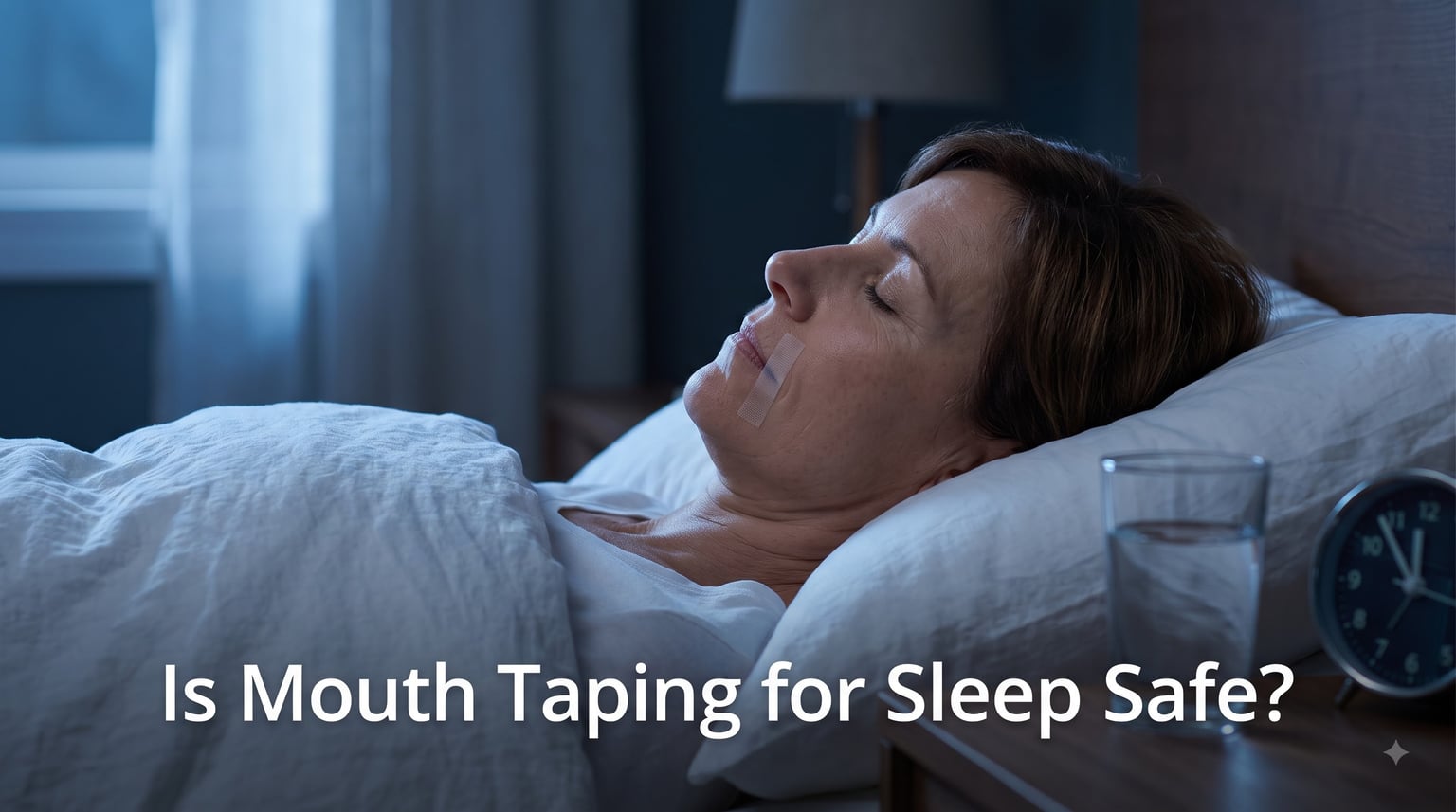
Is mouth taping for sleep safe? The short answer is that it is generally not recommended by medical professionals, and it can be dangerous for people with sleep apnea, nasal congestion, or certain other health conditions. While the practice has exploded on social media as a snoring remedy and sleep hack, the scientific evidence backing its benefits remains thin, and the risks are well documented by sources like Cleveland Clinic, WebMD, and the NIH.
Our team spent weeks reviewing medical research, expert opinions from sleep specialists, and hundreds of real user experiences from forums to give you a clear, honest answer. Here is everything you need to know about mouth taping safety in 2026, including who should avoid it entirely, what the science actually says, and safer alternatives that work.
Table of Contents
What Is Mouth Taping and Why Has It Become So Popular?
Mouth taping is the practice of placing adhesive tape over your lips before bed to keep your mouth closed during sleep. The goal is to force nasal breathing instead of mouth breathing throughout the night. Some people use specialized medical-grade tapes, while others reach for porous paper tape or silicone-based options sold online.
The trend took off on TikTok and Instagram, where influencers claim it eliminates snoring, improves sleep quality, and even sharpens facial features. The mouth taping market has grown into a billion-dollar industry, fueled largely by celebrity endorsements and viral wellness content. But popularity does not equal safety, and the gap between social media claims and medical evidence is significant.
Nasal breathing does have real health advantages. Your nose filters allergens, humidifies the air you breathe, and produces nitric oxide, which helps improve oxygen circulation. The problem is not the goal of nasal breathing. The problem is forcing it by sealing your mouth shut with tape while you sleep, especially when you cannot consciously monitor what your body is doing.
Claimed Benefits of Mouth Taping (and What the Evidence Actually Shows)
Proponents of mouth taping point to several potential benefits. The most common claims include reduced snoring, better sleep quality, less dry mouth and bad breath, improved oxygen levels, and even facial structure improvements. These claims sound appealing, but the research paints a much more cautious picture.
A 2024 review published by the NIH concluded that mouth taping is not recommended for moderate or severe obstructive sleep apnea patients because it may impose dangers rather than benefits. The study highlighted that while nasal breathing is healthier in theory, forcing it with tape does not address the underlying causes of mouth breathing, such as nasal obstruction or airway anatomy.
Here is what the limited evidence does suggest. A small number of studies indicate that mouth taping may mildly reduce snoring intensity in some healthy adults who have no underlying breathing conditions. But these studies are small, short-term, and lack the rigor needed to make broad safety recommendations. No study has proven that mouth taping treats any medical condition.
It is worth separating the real benefits of nasal breathing from the unproven claims about taping. Nasal breathing is genuinely better for your health. But there are safer ways to encourage it than taping your mouth shut, which we cover later in this article.
Safety Risks: Is Mouth Taping Dangerous?
The safety risks of mouth taping are the main reason sleep specialists and medical institutions urge caution. These risks fall into several categories, and some can be serious.
Oxygen deprivation and worsened sleep apnea. If you have undiagnosed obstructive sleep apnea, sealing your mouth shut can restrict your airway further. Sleep apnea already causes repeated breathing pauses during the night. Removing your mouth as a backup airway can drop your oxygen levels to dangerous lows. Reddit users with sleep apnea have shared alarming stories of waking up gasping, with some describing near-suffocation experiences.
Anxiety, panic, and claustrophobia. Waking up with your mouth taped shut can trigger a fight-or-flight panic response. Forum users on r/SleepApnea and r/HubermanLab frequently report intense anxiety and claustrophobia when they wake up disoriented and cannot open their mouth immediately. For anyone with a history of anxiety or panic disorders, this risk is significant.
Skin irritation and allergic reactions. Adhesive tapes can cause redness, soreness, rashes, and even minor skin damage when removed. The skin around your mouth is delicate, and repeated nightly application of adhesive takes a toll. Users report everything from mild irritation to painful peeling after several nights of use.
Ineffectiveness with nasal congestion. If your nose is stuffed from allergies, a cold, or a deviated septum, taping your mouth shut forces you to try breathing through a blocked airway. This can lead to mouth puffing, where air trapped in your cheeks partially opens the tape, or worse, labored breathing throughout the night.
Aspiration risk. If you experience acid reflux or vomit during sleep, having your mouth sealed could prevent clearing the airway. People with GERD face a specific danger here, as stomach acid could be inhaled if the mouth cannot open freely.
Who Should NEVER Use Mouth Taping: Contraindication Checklist
Certain groups should avoid mouth taping entirely. If any of the following conditions apply to you, do not tape your mouth at night without first consulting a doctor:
Obstructive sleep apnea of any severity, including undiagnosed sleep apnea
Chronic nasal congestion from allergies, sinus issues, or deviated septum
Asthma, COPD, or other respiratory conditions that affect breathing
Gastroesophageal reflux disease (GERD) or frequent acid reflux
Heart or cardiovascular disease that affects oxygen needs
TMJ disorders or jaw problems that could be aggravated by restricted jaw movement
Anxiety, panic disorders, or claustrophobia that could be triggered by a sealed mouth
Children and adolescents, whose airways are still developing
Anyone taking sedatives or sleep medications that deepen sleep and reduce arousal responses
Houston Methodist pulmonologist Dr. Faisal Zahiruddin specifically warns against mouth taping for anyone with chronic allergies, congestion, sleep apnea, or GERD. The Cleveland Clinic echoes this, noting that mouth taping can actually cause more harm than good, especially for people who snore or have sleep apnea.
Does Mouth Taping Actually Work? What the Research Says
The scientific evidence for mouth taping is limited and inconclusive. The NIH review found no large-scale, peer-reviewed clinical trials proving that mouth taping effectively treats snoring, sleep apnea, or any other medical condition. Most claims trace back to small pilot studies or anecdotal reports shared on social media.
WebMD notes that mouth taping has not been proven to treat any health issue. While some small studies suggest it may slightly reduce snoring in certain healthy adults, the sample sizes are too small and the durations too short to draw reliable conclusions. The University of Colorado Anschutz medical center has similarly cautioned that the risks may outweigh the benefits for most people.
This is a case where the absence of evidence matters. When a practice carries documented risks but lacks proven benefits, medical professionals tend to recommend against it until better data exists. That is exactly where mouth taping sits today in the medical consensus.
Real User Experiences: What People on Forums Actually Report
We analyzed hundreds of discussions across Reddit communities like r/SleepApnea, r/HubermanLab, r/CPAP, and r/sleep, along with sleep forums like cpaptalk.com. The experiences are mixed, but a clear pattern emerges.
Some healthy users with mild snoring report modest improvements in sleep quality and reduced morning dry mouth. These tend to be people with no underlying health conditions who breathe reasonably well through their noses. They often describe mouth taping as something that took getting used to but ultimately helped.
On the other side, users with sleep apnea strongly warn against mouth taping. Multiple people on r/SleepApnea describe waking up gasping for air, feeling suffocated, or discovering their oxygen levels had dropped dangerously low. One common thread is that many of these users did not realize they had sleep apnea until mouth taping made their symptoms dramatically worse.
Skin irritation is another frequent complaint. Users who tried standard paper tape often switched to silicone-based or hypoallergenic options to reduce redness and soreness. Several people noted their tape fell off during the night, making the practice ineffective on top of uncomfortable.
The most consistent advice from forum veterans is simple. If you snore loudly, feel exhausted during the day, or suspect any breathing issue, get a sleep study before trying mouth taping. Treating an undiagnosed condition with tape is dangerous, and forum users who learned this the hard way are vocal about warning others.
Safe Alternatives to Mouth Taping
If your goal is to reduce mouth breathing and improve sleep, several proven alternatives carry far less risk than taping.
Chin straps. A chin strap gently supports your jaw to keep your mouth closed during sleep. It is less restrictive than tape and can be removed easily if you need to breathe through your mouth. Many former mouth taping users switched to chin straps and report better comfort with similar results.
Nasal strips and dilators. Products like Breathe Right strips physically open your nasal passages from the outside, making nasal breathing easier without sealing your mouth. Internal nasal dilators serve a similar function for people with narrow nasal valves.
Saline nasal sprays and rinses. If congestion is the reason you mouth-breathe at night, a saline rinse before bed can clear your nasal passages naturally. This addresses the root cause rather than forcing a workaround.
CPAP therapy. If you have been diagnosed with sleep apnea, a CPAP machine is the gold standard treatment. Some CPAP users combine their machine with a chin strap to prevent mouth leaks, which is a medically supervised approach to the same goal mouth taping tries to achieve.
Mandibular advancement devices. These dental appliances reposition your jaw to keep the airway open during sleep. A dentist specializing in sleep medicine can fit one for you, and it addresses both snoring and mild sleep apnea effectively.
If You Still Want to Try Mouth Taping: A Harm Reduction Guide
Despite the risks, some healthy adults without contraindications still want to try mouth taping. If you fall into that category after honestly evaluating your health, here is how to reduce the risks.
First, use only medical-grade, hypoallergenic tape designed for skin contact. Never use duct tape, Scotch tape, or any household adhesive. Porous paper tapes like 3M Micropore are popular among users for being gentle on skin. Silicone-based tapes are another option for people with sensitive skin.
Second, apply a small vertical strip over just the center of your lips rather than taping your entire mouth. This leaves the sides slightly open, allowing emergency mouth breathing if your nose becomes blocked during the night. Some users fold over one end of the tape to create a pull tab for easy removal.
Third, try it during a daytime nap first rather than a full night of sleep. This lets you gauge your comfort level and breathing response in a lower-stakes setting. If you feel any anxiety, claustrophobia, or difficulty breathing, stop immediately.
Finally, never combine mouth taping with alcohol, sedatives, or sleep medications. These substances deepen your sleep and reduce your ability to wake up if something goes wrong. The combination significantly increases the risk of oxygen deprivation going unnoticed.
Myth-Busting: Jawline Claims and the Amazon Ban
One of the most persistent mouth taping myths is that it gives you a better jawline. There is zero scientific evidence supporting this claim. Your jawline is determined by genetics, bone structure, and body composition, not by how you tape your mouth at night. Dental and orthodontic experts have repeatedly debunked this idea.
You may have also heard that Amazon banned mouth tape. Amazon did not issue a blanket ban on mouth tape products. The company has tightened its health and safety policies around certain adhesive products marketed for sleep, removing listings that made unsubstantiated medical claims or used unsafe adhesive materials. Legitimate medical-grade tapes are still widely available, but the increased scrutiny reflects growing awareness of the safety concerns around this practice.
Frequently Asked Questions
Do dentists recommend mouth taping?
Most dentists and dental sleep specialists do not recommend mouth taping. While dentists support the benefits of nasal breathing, they caution that taping the mouth shut does not address underlying causes of mouth breathing and can pose risks for patients with sleep apnea, TMJ disorders, or nasal obstruction. Dentists who specialize in sleep medicine typically prefer mandibular advancement devices or other proven treatments.
Is it healthy to sleep with mouth tape?
Sleeping with mouth tape is not considered healthy for most people. Medical sources including Cleveland Clinic and WebMD warn that the risks, which include oxygen deprivation, skin irritation, anxiety, and worsened sleep apnea, outweigh the unproven benefits. Nasal breathing is healthy, but taping is not a safe or proven way to achieve it.
Why did Amazon ban mouth tape?
Amazon did not issue a total ban on mouth tape. The company tightened its health and safety policies by removing certain mouth tape listings that made unsubstantiated medical claims or used unsafe adhesive materials. Medical-grade tapes from reputable manufacturers remain available on the platform.
Does taping your mouth at night give you a better jawline?
No, taping your mouth at night does not give you a better jawline. There is no scientific evidence supporting this claim. Your jawline is determined by genetics, bone structure, and overall body fat percentage, not by nighttime taping. This myth originated on social media and has been debunked by dental and orthodontic professionals.
Is it good to wear mouth tape while sleeping?
It is generally not good to wear mouth tape while sleeping. Medical professionals advise against it for anyone with sleep apnea, nasal congestion, asthma, GERD, heart conditions, anxiety disorders, or for children. Even for healthy adults, the practice carries risks like skin irritation, panic episodes, and reduced oxygen levels, with no proven health benefits.
Can mouth taping be dangerous for people with sleep apnea?
Yes, mouth taping can be very dangerous for people with sleep apnea. Sealing the mouth shut removes a critical backup airway for people whose breathing already pauses during sleep. This can cause dangerous drops in oxygen levels, worsen apnea episodes, and lead to serious health complications. Anyone with diagnosed or suspected sleep apnea should never use mouth tape.
Final Thoughts: Should You Try Mouth Taping?
So, is mouth taping for sleep safe? For most people, the answer is no. The medical consensus from institutions like Cleveland Clinic, WebMD, Houston Methodist, and the NIH is clear. The documented risks, which range from skin irritation to dangerous oxygen deprivation, outweigh benefits that remain scientifically unproven.
That does not mean the goal of nasal breathing is wrong. It is the right target, but mouth taping is the wrong tool. If you snore regularly, wake up with a dry mouth, feel exhausted during the day, or suspect you might have sleep apnea, the smartest step you can take is to talk to a doctor or schedule a sleep study. Proper diagnosis leads to treatments that actually work, like CPAP therapy, mandibular advancement devices, or nasal dilators.
If you are a healthy adult with no breathing issues who still wants to experiment, follow the harm reduction guidelines above and start with short daytime naps. But go in with realistic expectations. The jawline claims are myths, the snoring benefits are modest at best, and the risks are real. Your sleep and your breathing are too important to trust to a social media trend.